

STAY AWHILE AND
Explore the blog

The Best Hikes to Find Larch Trees in the Canadian Rockies
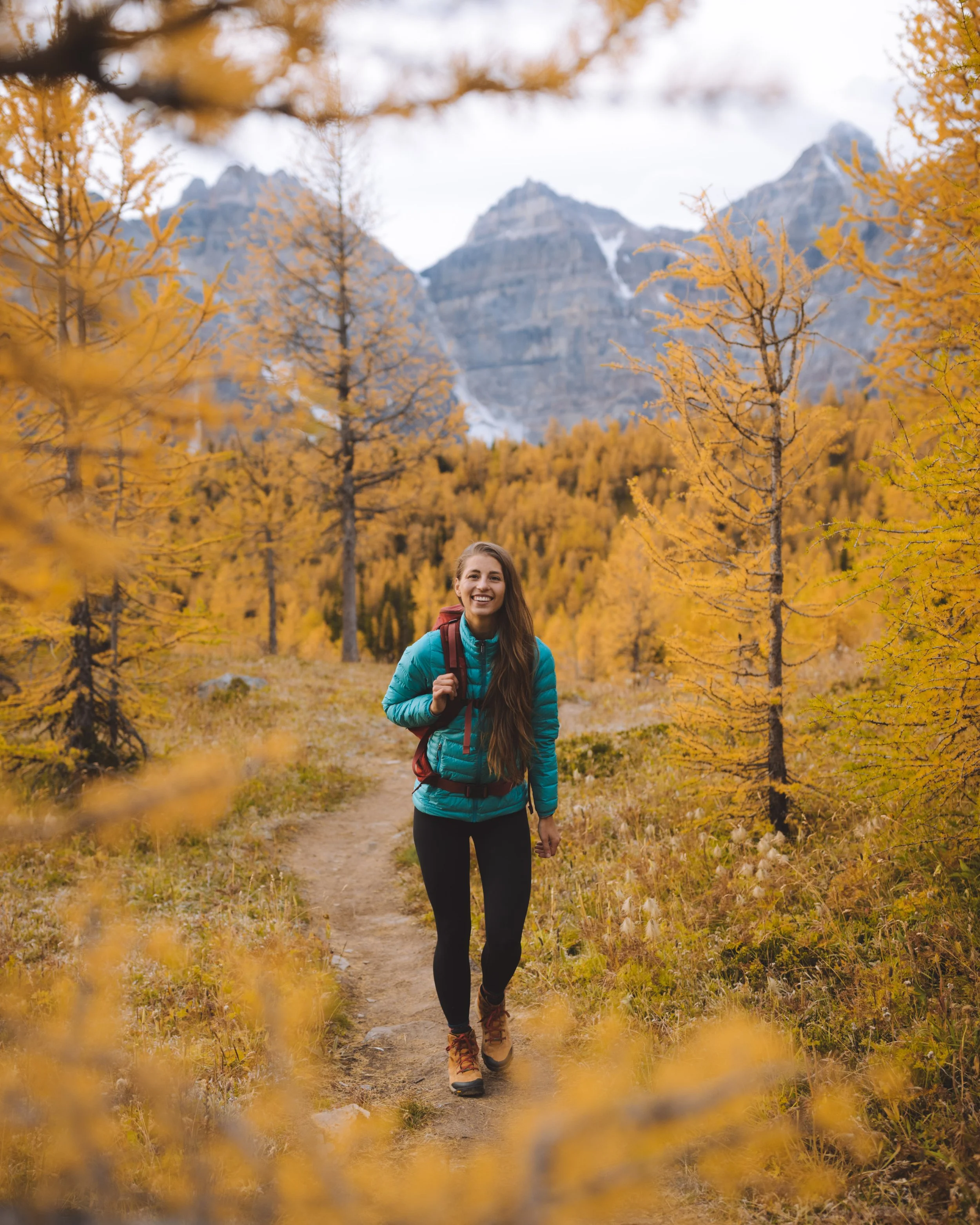
Larch trees are coniferous trees that lose their needles every fall. Before the needles drop they turn from green to a spectacular golden yellow. In Alberta, the variety that we see are alpine larches (Larix lyalli). Because they usually grow in groups at high elevations, the impact of their foliage display is nothing short of stunning. Larch season in the Canadian can be unpredictable in timing and short lived given our tumultuous weather patterns but typically they start to turn from green to yellow the middle of September and (barring no heavy wind, rain or snow storms) will last until mid-October. I have compiled a list of some of my favourite hikes to view larch trees in the Canadian Rockies at every skill level.

Beginners Guide to Cold Weather Camping
I am not a cold weather person. My blanket statement is that I am either a very terrible Canadian or somehow skipped adulthood and went straight into the snow-bird lifestyle. In true Canadian fashion my parents signed a young Andrea up for figure skating, and then hockey… I eventually learned to ski and even took a swing at the rodel when I was in Austria - but no amount of exposure or ‘fun’ would compare in my mind to even the simplest of summer days. I could go on forever about the mis-adventures of winter and I but in the end it all adds up to me skipping the past few Canadian winters and heading anywhere but home

A Beginners Guide to Canmore
One of my favourite towns in the world, under an hour and a half from downtown Calgary and a five minute drive from Banff National Park east gate, Canmore has the heart of a small town with nearly every outdoor activity to offer as well as amazing food and great local shops .

Banff National Park
Banff is the oldest national park in Canada. Established in 1885, the park is located in the Alberta Rocky Mountains. Calgary is the nearest city, and the main commercial center of the park is in the town of Banff, in the Bow River valley. Known for mountainous terrain and alpine landscapes — including more than a thousand glaciers, ice fields, forests, valleys, meadows, and rivers — the park is part of UNESCO’s Canadian Rocky Mountain World Heritage site. Natural sites around the park include Canada’s largest cave system, Castleguard Caves, numerous glacier-fed lakes such as Lake Louise, and the Legacy Trail — a trail for walking, cycling, and in-line skating.

Jasper National Park
Extending over 11,000 square kilometres, it is the largest national park in the Canadian Rockies and part of UNESCO's Canadian Rocky Mountain Parks World Heritage Site. The townsite now known as Jasper was originally named Fitzhugh after an individual who was at the time the Vice-President of the Grand Trunk Railway. It was changed to Jasper in 1913 and the National Park was established as a National Forest in 1907 and gained its National Park status in 1930. The most recent numbers note that Jasper has approximately 4,500 permanent residents.

Waterton Lakes National Park
Waterton Lakes National Park is the fourth oldest Canadian national park, it is in located in the southwest corner of Alberta along the Canadian-American border with Glacier National Park (US) on the American side. The park features breathtaking landscapes and beautiful natural scenery including a unique combination of thick and beautiful pine-tree forests, Prairie grasslands, rolling hills, beautiful meadows, a selection of lakes and waterfalls, towering snow-peaked mountains, a charming and lovely townsite, a fantastic selection of hiking trails from easy to challenging, rugged and unspoiled wilderness, and an abundance of wildlife.

Moraine Lake : a dozen views
One of the most photographed lakes in the world, I am grateful to be able to call Moraine Lake my backyard. Over recent years its popularity has grown and for good reason. I have compiled a list of a dozen of my favourite things to do, all starting from the parking lot of one of the most beautiful bodies of water on earth.