Seven (Alpine) Trail Running Essentials
In partnership with REI
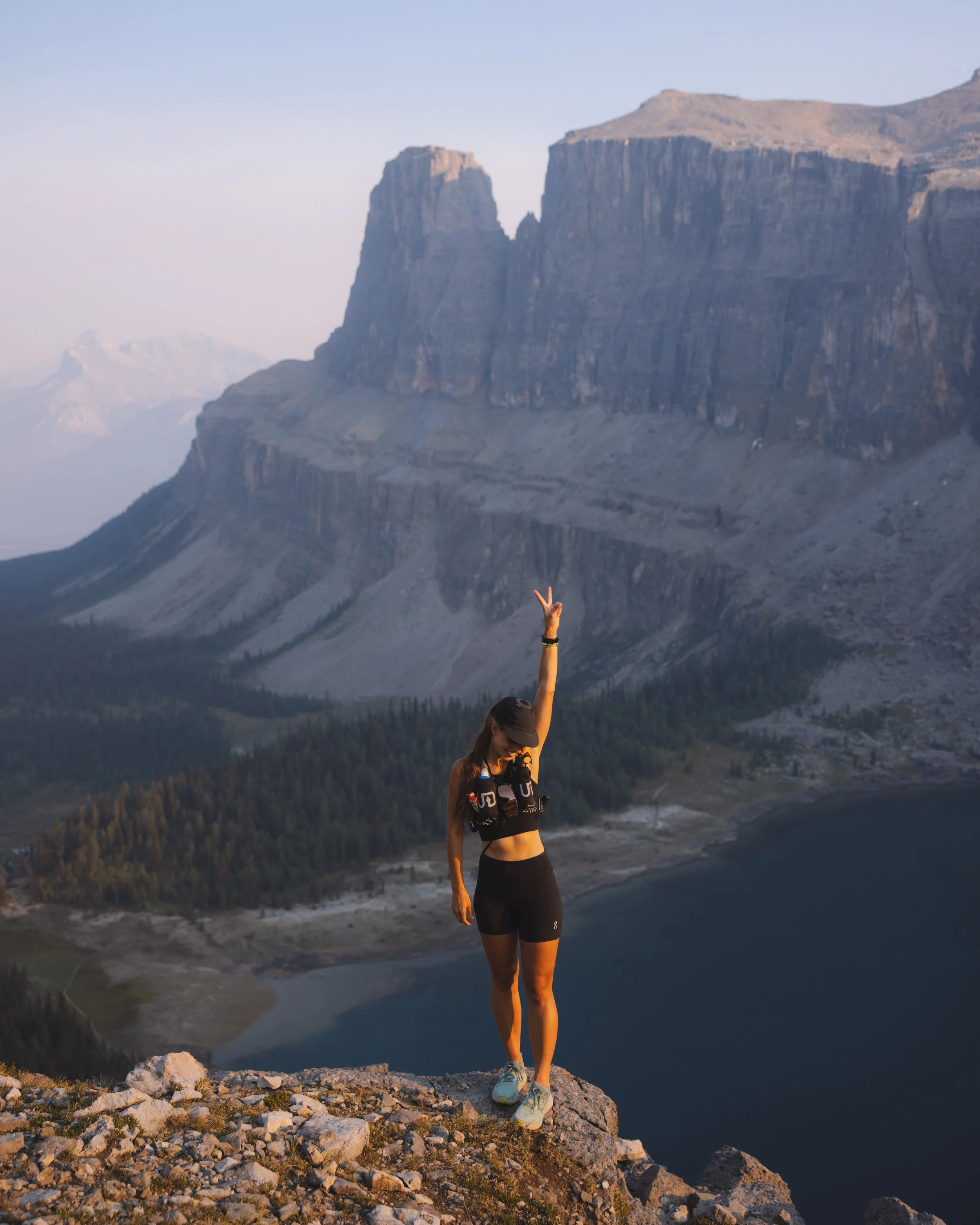
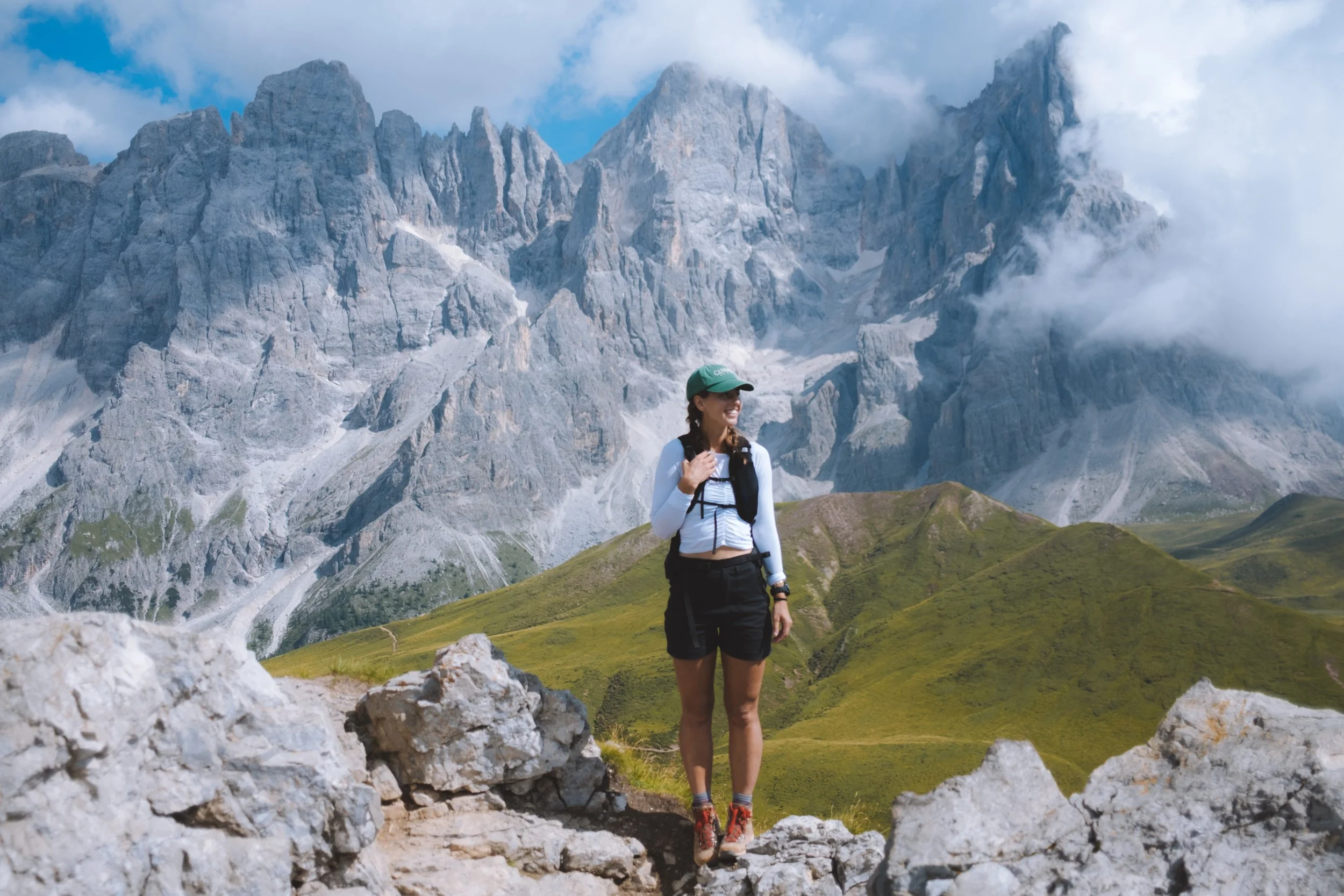
I can’t remember the first time that I set out on a trail run - it felt like a very natural merging of two things that I loved. Running, and time in the mountains. Moving quickly (relative term) and with very little weight amidst towering peaks, glacial lakes, and lush meadows, alpine environments are where I feel most at peace and running is the place in which my mind calms.
But trail running does not have to be any more than an off the pavement run through your local city park, along an ocean boardwalk or along a dirt path though the desert. Trail running is more defined as any run that is taking place off of a paved pathway. Yes, oftentimes it takes place in alpine environments where you need to pay more attention to your surroundings (with steep ascents and descents, uneven terrain, animal encounters and ensuring that your footing is stable) - trail running is a really fun way to connect back to nature.
There are, however, a few key differences between road and trail running and that is what I am here for! These are seven pieces of gear (plus all of my favourite clothing items) for trail running, how to find trails and a few last minute tips and tricks to get you off the pavement and into nature.
If you are looking to get into road running I have another guide that may be more helpful. I will link it below.
Gear you will need, use and want to have

1.Shoes
Unlike road running shoes which are lightweight and offer little cushion and tread. Trail running shoes are built to withstand the elements and any terrain in which you take them to.
A great basic trail shoe (like the Hoka Challenger or On Cloudvista) should be more than enough - especially when just getting started. But as you move into more technical terrain you will tend to gravitate for shoes with large lugs on the soles (such as the Hoka Speedgoat or Salomon Speedcross).
Trail running shoes, like any running shoes, are a very personal decision and I recommend stopping by your local REI or chatting with their experts to help you find a shoe that works well with your foot and running style and goals.
As a note, some trail runners also like poles for the uphills—research says they don't actually save you very energy but they do significantly lower the rate of perceived exertion. I do not personally use poles but have had these Leki Ultratrail FX.One poles recommended many times over by trail runners I trust.

2. Layers
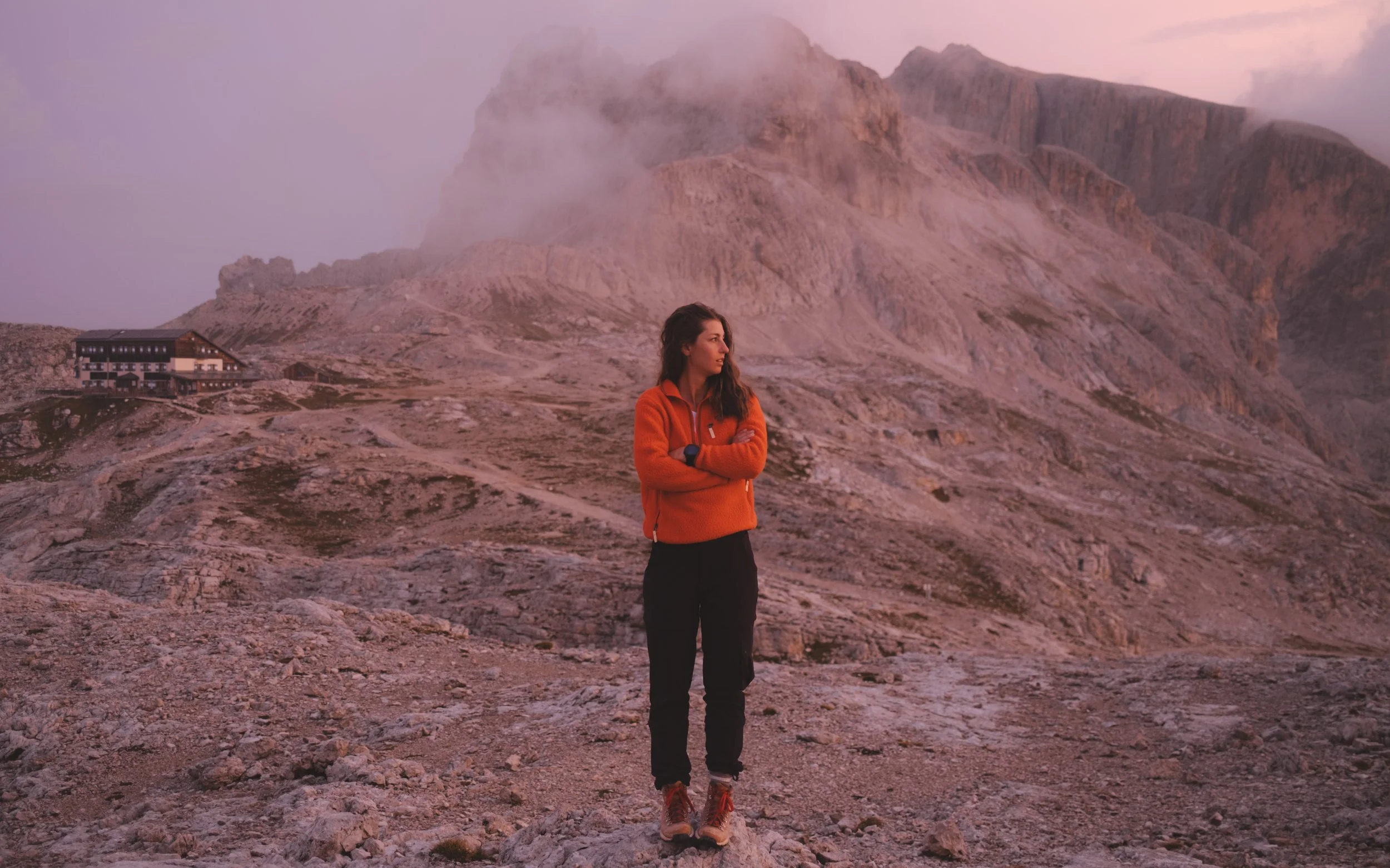
The mountains are notoriously unpredictable when it comes to weather and here in the Canadian Rockies (and what I have heard from the Eastern Sierras), afternoon storms come often and without notice. So I try and be the most prepared I can while also balancing being lightweight to move fast in the alpine.
What I wear:
Sports Bra
Lately I have been opt’ing out of wearing a running tank and opt for a longer sports bra that covers (most of) my midriff. I was finding that tank tops and tees were riding up or bunching creating an annoying bunching on my stomach and causing me to constantly pull my top down. An energy wasting distraction. Below are a few really great options for mid length tops with built in bras:
I will note that I am a proud member of the itty bitty tittie committee. So all of these are lower support options - if you have any recommendations or bigger busted trail runners that you think I should chat with to make this a more inclusive/helpful post. Please let me know in the comments!
Shorts or tights
This decision will be based (for me) on both the trail as well as the weather conditions. If I know I am going to have river crossings on my route. I will opt for shorts so that I don’t have to worry about running with wet tights, if there is a lot of overgrowth on the trail I will try to wear tights to protect my legs. I will also wear running tights if I know I am short on space and can use the thigh pockets for my phone or snacks.
The choice between spandex running tights (such as the On Sprinter Shorts that I am very fond of) or wearing a looser fitting short with bust in panties (such as the adidas Run Fast 3" Shorts or the Vuori Clementine 2.0 Shorts - 2.5" Inseam - they also come in a 4’ inseam here) is completely a personal preference. I am new to the spandex short game but have been enjoying the bonus pockets on them and find that they hold my muscles(my bum) in a little bit extra but the looser shorts are a little bit more modest.
For running tights, I primarily wear the REI Co-op Swiftland 7/8 Running Tights - they are a little bit on the thicker side and squat proof. They provide a slight compression while still being comfortable and have a drawstring waist to help prevent any sliding down even when you fill your pockets. I have also worn them in which brush and fallen on rocky surfaces and they seem to be quite durable!
Socks
Your trail running shoes are only as good as the performance sock you pair them with. And nothing can derail a good trail run faster than a subpar running sock.I personally like to wear ankle socks (speciallficaly these : Smartwool Performance Run Zero Cushion Low Ankle Socks) when I am road or trail running. I know a lot of people prefer a higher calf length sock with some added compression but as many times as I have tried, I do not notice a difference my my performance or recover but do notice some really fun new tan lines. So I stick with my ankle socks.


What I pack in my trail running vest:
Lightweight base layer top: I will only bring th9si when I know I will be running after dark or on chillier days, a great lightweight option is the REI Co-op Swiftland Long-Sleeve Running T-Shirt and for slightly heavier weight options I like the REI Co-op Swiftland Half-Zip Running Pullover or (a pricier but really great option) the Arc'teryx Rho Lightweight Zip-Neck Base Layer Top - which has a little arm pocket that is great for stashing smaller items.
Wind breaker or waterproof jacket: I will always bring an outer layer in case of emergencies - but wind or water is dependant on the forecast. For warmer days with very low chance of rain I will grab my The North Face Trailwear Wind Whistle Jacket and for dicier weather days I will go with the Norvan Shell Jacket from Arc’teryx.
3. Running vest (or backpack)
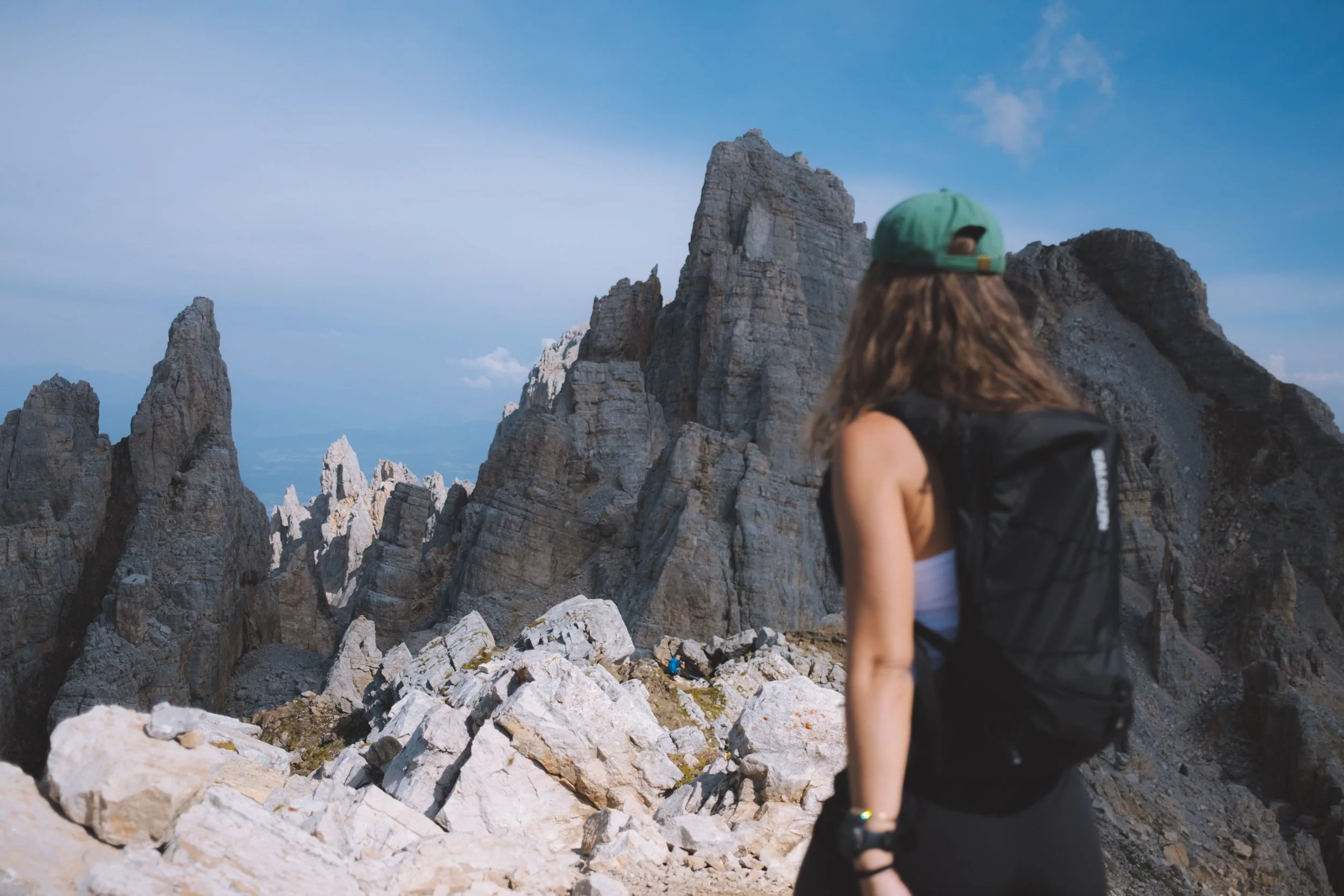
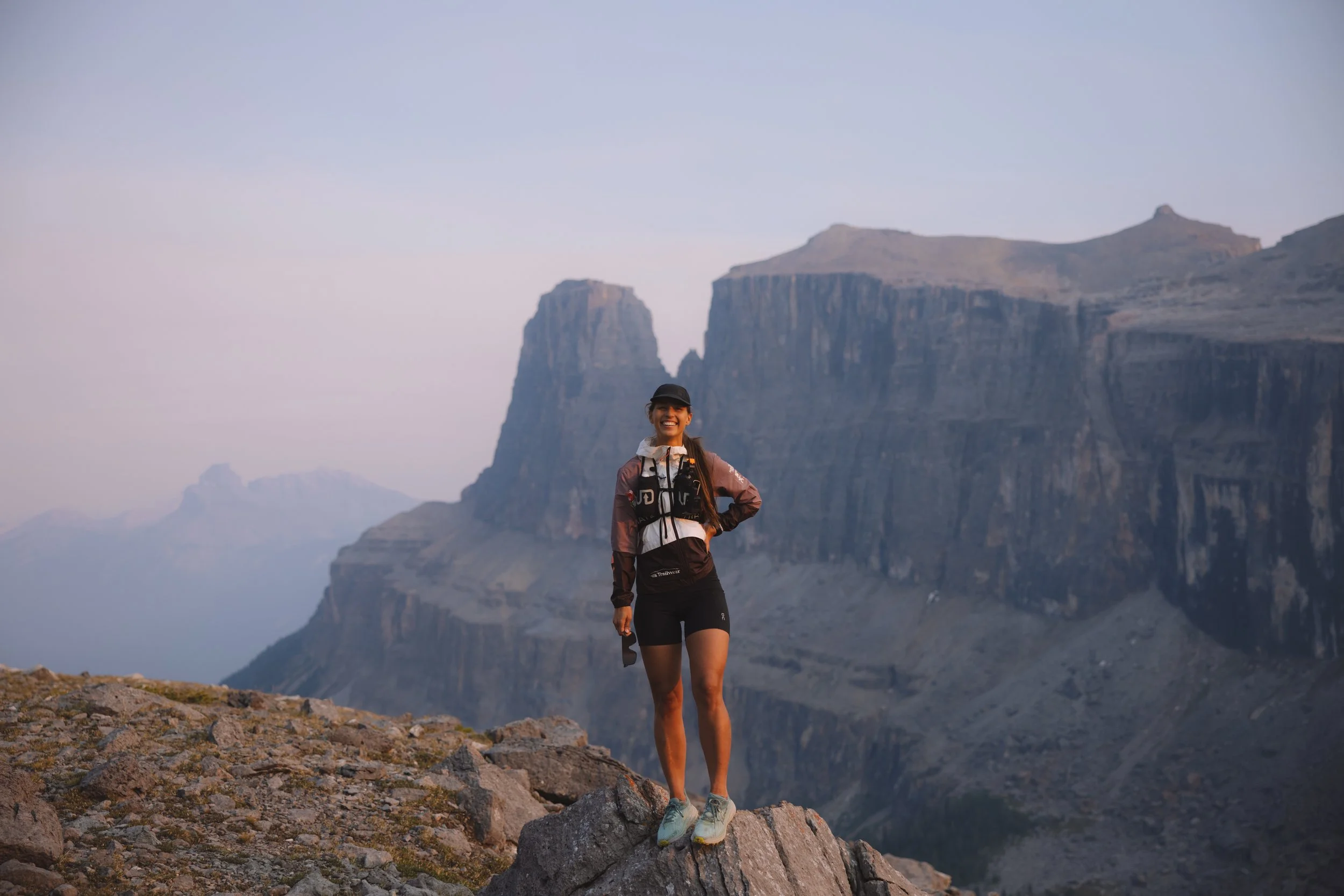
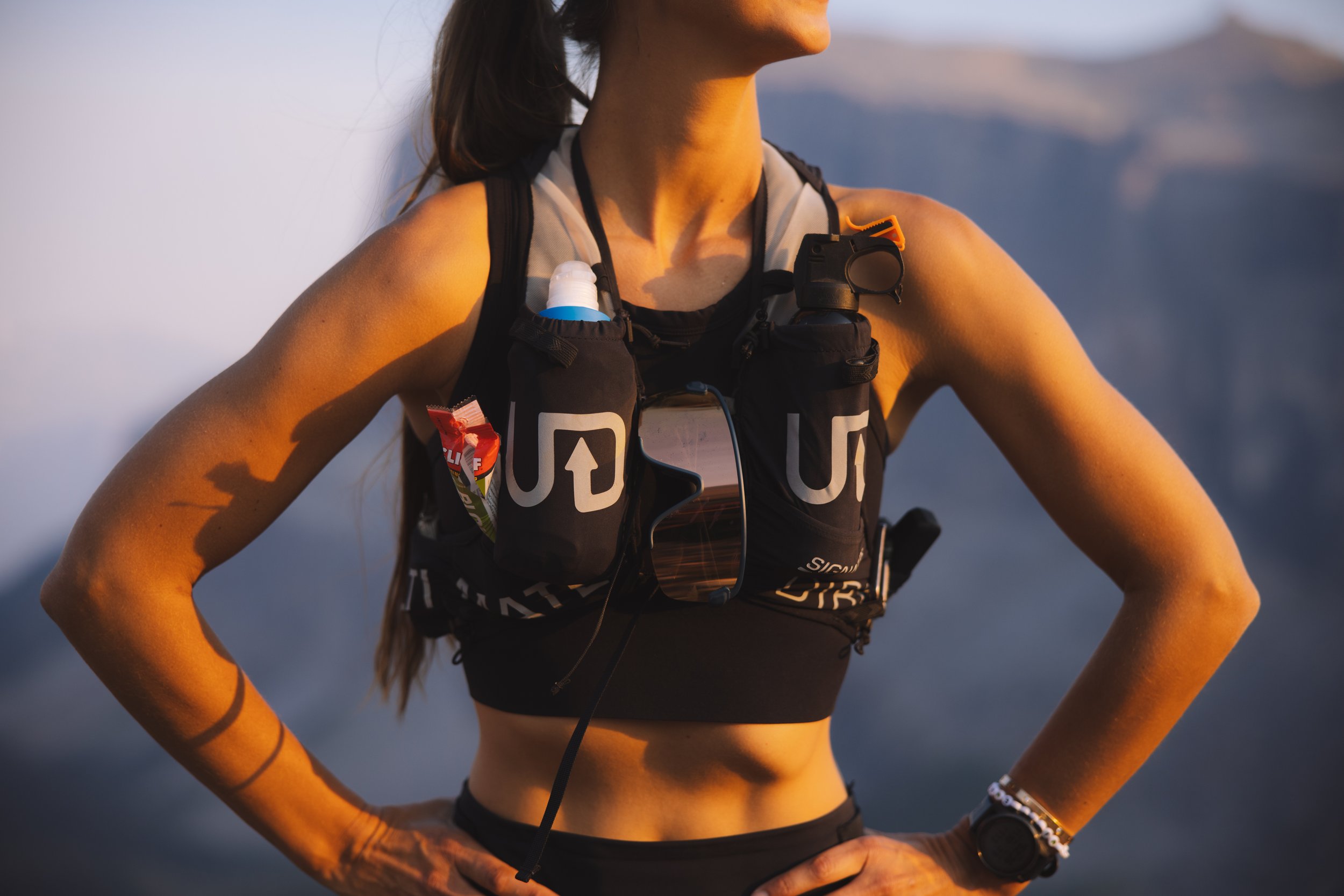
This is the piece of gear that really allows you to go the long distances. it is a way to keep all of your snacks, hydration and laters (as well as safety gear) on your body and, unlike a backpack, safe from moving around or bouncing as you run.
The size of your vest will be largely determined by how long (and far) of a run you are going on. I have a very narrow torso so I have been loving a few of the womens specific trail vests - my two current favourites are the Ultimate Direction Ultra Vesta 6.0 Hydration Vest, the Salomon Sense Pro 5 Set Hydration Vest and the Arc'teryx Norvan 7 Hydration Vest.
4. Sun protection
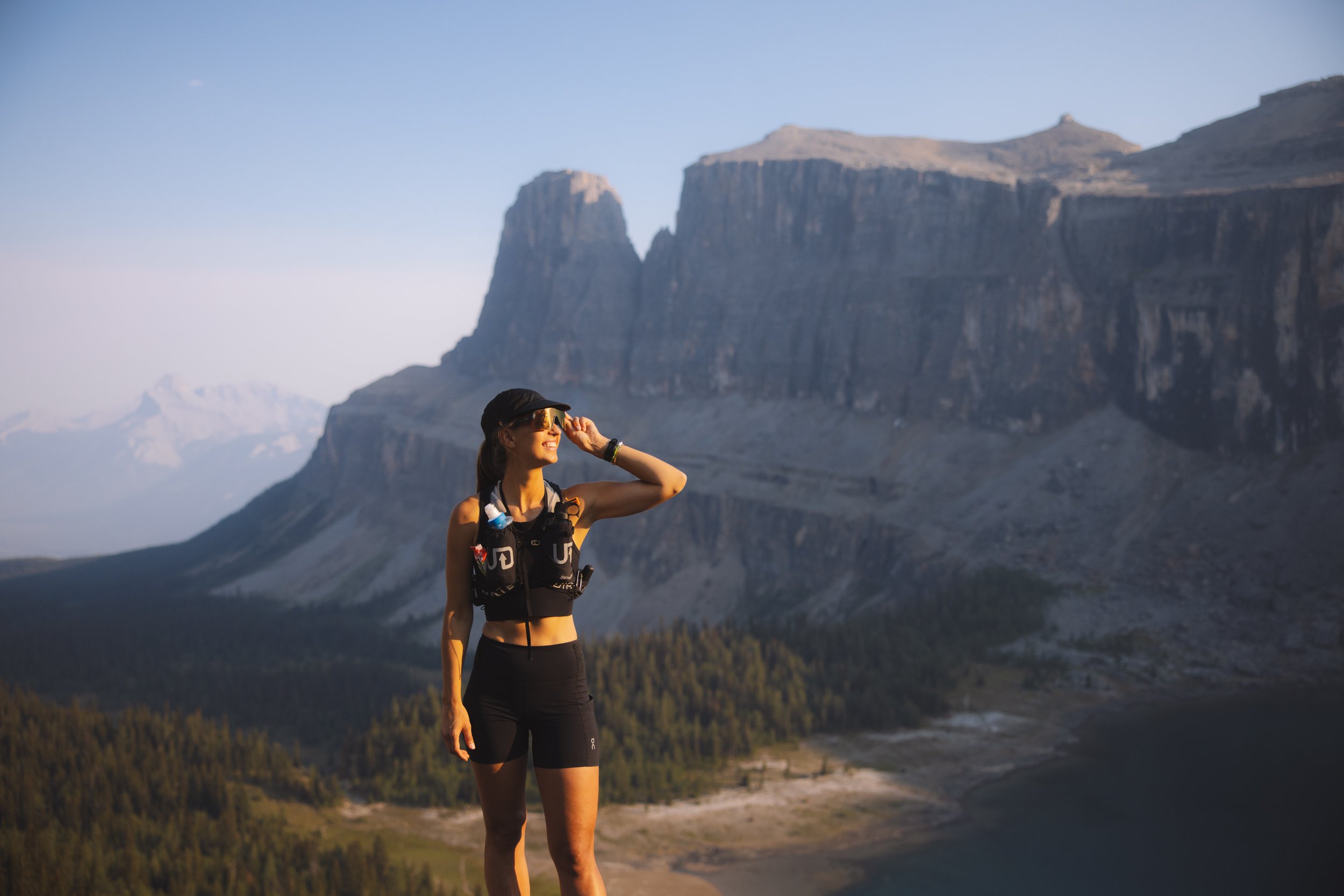
I would typically lump this in with safety gear but feel with the exposure to the elements that trail running has - it deserves its own section. Before I go out running I will always lather myself in a zinc sunscreen (any exposed skin but especially my face) and will re-apply to my face often on the trail. I bring this little Sun Bum Mineral SPF 50 Sunscreen Face Stick with me.
I had a hard time finding sunglasses that worked on my smaller face but the Smith Bobcat ChromaPop Sunglasses have been my go-to for nearly two years now. They have a smaller frame size and are super lightweight so I hardly notice them on my face while still having full sun protection that wraps around. it is the first pair of sport sunglasses that I really love and use.
Running hat - you will want something that is lightweight and can be packed away easily. I like a hat from On Running that is seemingly no longer in production but have heard amazing thigns about the ciele athletics GOCap Hat (and they are Canadian - yay!)
5. Hydration
Hydration when doing any alpine activity is all the same - you will want to start very hydrated. Ensure that in the days leading up to a trail run you are drinking the recommended 1.5-2L of water per day.
There are several ways to carry your hydration while running :
flasks in the chest pockets of a running pack (this is my go-to)
a water bladder with drinking tube in a hydration pack
a water bottle belt or pack
a flask or water bottle in your hand
a thermal flask for extreme temperatures
For the sake of being able to provide firsthand information I will stick with the first option. I use two x 500ml water bottles in my hydration vest (it comes with the bottles). One will have electrolytes (such as NUUN) and the other will be pure water. When on longer runs or when I know I will need more water I will bring my Katadyn BeFree 1.0 L Water Filter Bottle and fill up and filter water straight from water sources along my route.
And remember - once you are finished your run be certain to rehydrate with recovery drinks.

6. Nutrition
I use running an an excuse to eat all of the snacks that I can get my hands on! But a good general rule of thumb is:
Night Before a big run : Eat a big meal high in carbs; low fiber, fat and protein
Morning (2 Hours Before) : Eat more carbs with a little protein.
During Run : Reach for your easily digested carbs and sugars (snacks!) having a little fat and protein is okay on longer runs
After Run : Eat more carbs and a little protein. And again, super important - hydrate with water and recovery drinks\
The average trail runner will burn arouind 600-1,000 calories per hour of trail running. Eating that much isn’t super sustainable (nobody enjoy running on a full stomach) but aim for a minimum of 100 calories every 30 minutes of running. This can be in the form of gels, bars, waffles, whatever snacks you will eat - you can find all of the snacks you are looking for at REI.

7. Safety, tech and misc
Saving the most important for last, all of the smaller pieces that will keep you safe while running in the alpine.
Running Watch - I love my Garmin Fēnix 7s Solar Sapphire. The battery lasts forever and its tracking is amazing. There is a feature on the Epix 2 Pro that would be useful - it has a built in flashlight for emergencies (or for when you wake up in the middle of the night and have to use the restroom, but thats neither here nor there).
Headlamp - I use this Petzl Tikka Core Headlamp for my runs, I will bring it even when going out mid day. It is the same one that I use hiking and the battery seems to last forever.
Charged Phone - for downloaded maps and also the new iPhone does have an emergency satellite function. I have never needed to use it but like knowing it is there in case of an emergency. Also, you need photos to add to your strata activity!
Basic Medical Kit - I will bring a few bandaids and a sheet of blister tape just in case.
Garmin inReach mini - when hiding far from service it feels like there are more things that can go wrong, for peace of mind I will bring my inReach with me… just in case. I have the subscription for when I am hiking and it feels like such a small added weight to have in the case that I am out of service and something goes (very) wrong.
Bear Spray - when running in bear country this is annoying to carry but imperative. I will typically swap out one of my water bottles for my bear spray and have it ready to go. I have never knock on wood encountered a bear while trial running but I know a lot of ultra races require it and with how quiet trail runners are and how fast I pretend I am…. it feels like a good idea to have a little protection just in case!
Anti-Chafe cream - now this isnt something I bring with me but I will apply Bodyglide For Her Anti-Chafing Skin Protectant before leaving the car. On my inner thighs, the backs of my arms and on my sternum where my bra band can sometime rub. It is a game changer!

The best trail running websites for finding a route
Want to try trail running, but don't know where to (literally) start? Even if you know of all the trails in your area, maybe you want to scout trails to visit elsewhere. Here are a few of the best resources for finding a running trail online.
REI : Lets Run Together. A page dedicated to connecting runners. And although it is primarily city running - I have four some of my most loyal and favourite trail running partners and routes from going to in person, in city run clubs, meetups and events. You can also run with REI Virtually on Strava here.
Trail Run Project: Runners have contributed 227,500+ miles of trails to Trail Run Project. This us a US based trail mapping app and you can search by location or use the map function to find a trail near you.
Trail Link: On Rails-to-Trail's Trail Link, you can use an advanced search feature to narrow your search to a specific terrain, like dirt or grass.
AllTrails: We all know AllTrails from hiking, but hiking trails also make great trail running trails. And with the $3/month pro version, you are able to download maps for offline use and give up to 5 contacts access to your realtime location when you're on a trail. (Safety first!)
RootsRated: No need to wade through thousands of user reviews. RootsRated sources its information about trails from local guides.
Active: And if you are like me and need to put you money where your mouth is to actually commit to a sport… why not sigh up for a trail race! Head to Active to find an event in your area or worth traveling for!

A few last minute tips & etiquette
Trail running (in my opinion) is one of the most fun ways to move in the mountains. You are lightweight and move fast and it is r
Stick to established trails.
Life up your feet! Trail running is extra fun because of all of the obstacles - but unlike road running you will need to practise lifting your feet a little bit higher to avoid things like tree roots and rogue rocks on your path.
Practice Leave No Trace
Be conscious of other trail users. Loudly call out “On your right (or left)” when approaching others from behind to avoid startling other runners, or hikers and/or taking them off guard. Make room if you hear someone is coming up behind on a narrow, single track.
Do not listen to headphones - or at least leave one bud out or consider using open ear headphones especially when in areas with higher animal populations. This will help you be aware of your surroundings and can help you avoid any unpleasant encounters.
Keep it positive. Try to contribute to the trail community and expand it, even if it’s just with a smile, a nod, or a few short friendly words of encouragement.
Don’t forget to have fun!

*Please note that some of the links above are affiliate links, and I may earn a small commission on any purchase made - at no additional cost to you. As always, all ideas and opinions expressed in this post are entirely my own. Thank you for your support!