
Mount Kilimanjaro : A Packing Guide for Crater Camping inside Africa’s Tallest Mountain

What to [actually] pack for a nine day climb up Africa’s Tallest mountain : including one night inside of the crater.
In 2023 I hiked to the summit of Mount Kilimanjaro with Soraka Tours. We took the Rongai Route up in four days and then the Marangu route (commonly known s the Coca-cola route) down. In total I spent five days on the mountain.
I am currently preparing to climb again, this time with the goal of sleeping inside of the crater of Kilimanjaro - my personal goal to spend more time with the glaciers while we still have them.
This is everything I am packing to bring with me. With a note about what is being provided by Soraka Tours at the end.

As with any and all alpine adventures - you should have the ten essentials with you at all times. Most of these are being supplied by our guiding company. But it is also important to refresh on them before heading out on any adventure.
gear
25-35L Daypack - I recommend this Patagonia 22L , this REI 32L or my mountaineering bag, this 25L from Mountain Hardware (and I add on this little hip pocket for easy access to snacks).
90-100L Duffel Bag - the porters will carry this and it will be filled with only your personal gear. It should be waterproof or water resistant (thats what mine is). You can also line it with a thick plastic trash bag to protect it even more.
Sleeping bag - if sleeping in the crater it is recommended to have a 0°F bag, otherwise a 15°F - 30°F bag will be more than enough. I will either bring this 0°F Sleeping Bag or else this 15°F Sleeping Bag (and pack this sleeping bag liner with me).
Camp Pillow - This one is inflatable and about the size of a pillow at home. I will wrap my down jacket around it for a little bit of extra comfort. But as a side sleeper I found this one has the height that I like.
Garmin InReach Mini + subscription
Garmin Fēnix 7S Solar Saphire (or any sport watch) AND bring its charge cable if you plan on tracking your hike for the Strava.
Thermarest Seat Pad - I liked having this at camp. You could also pack a small camp chair if your weight permits.
Trekking Poles (optional - I do not use them but did pick these up to have just in case - and they re at a really great price point)
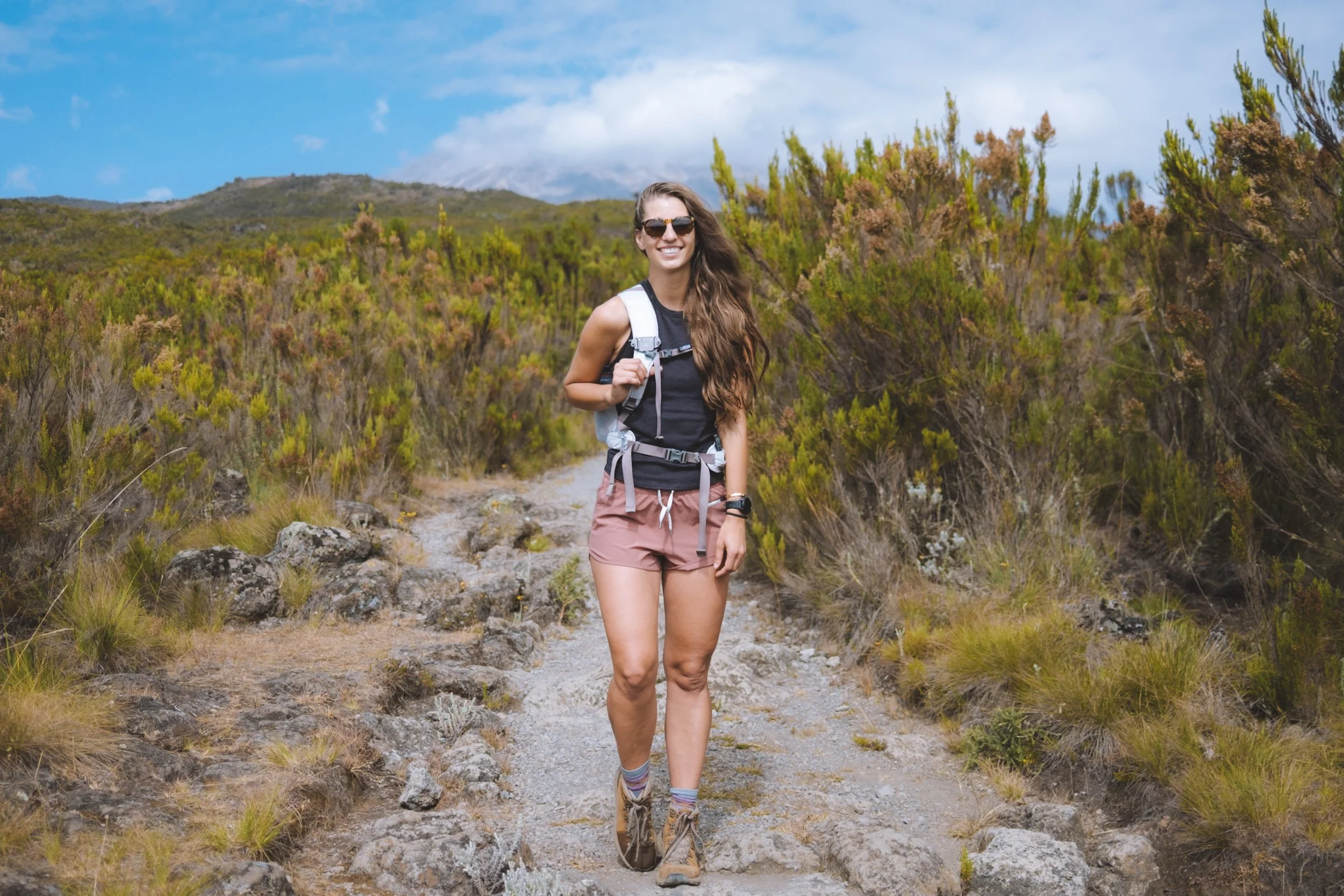
clothing
1 x hard shell rain jacket
1 x warm insulating down or synthetic jacket
I normally would (and will) bring my Patagonia Fitz Roy but at the time of writing it is sold out for the season.
1 x mid-weight fleece jacket
2-3 x short sleeve hiking shirts or tank tops
REI Co-op Active Pursuits Ribbed Tank Top (my personal favourite right now)
2-3 x long-sleeve hiking shirts - I aim for a lightweight sun shirt and a thicker base layer top
1-2 xHiking shorts
Patagonia Barely Baggies Shorts they also do come in a longer length
2 x leggings
Fast and Free tights from lululemon (with pockets of course)
REI Thermal Running Tight - I don’t find these super warm but do find them to be really soft and flattering.
2 x trekking pants - one thin for daily use and one thicker (with room to layer under) for time in and atop the crater
Light rain shell pants
Pyjamas - I typically will wear a set of base layers - these are some of my favourite pieces
Arc’teryx Rho Lightweight Crew Neck Long-Sleeve Base Layer Top
Smartwool Classic All-Season Merino Long-Sleeve Base Layer Top
Wool hiking socks
Sports Bras and Panties

Accessories
Hiking Boots (worn in)
Shoes, sandals or camp slippers
Gloves
Sun hat + Sunglasses
I like this running cap a lot - it is lightweight and dries quickly
And bring a ball cap with me for when I am at camp or want a longer brim
Toque
Loop Ear Plugs - use code “LOOPXANDREA” for 10% off of your order

toiletries & misc
REI Co-op Camp Mug + instant coffee - I like this one
You can also bring a more elaborate coffee system. I outline three of my go-to methods in this blog. They will have hot water so no need to bing a camp stove.
2 x Nalgene 32 oz - for water (you can also use a 2.5-3L bladder if you prefer although I would NOT recommend this for the crater as the lines freeze often and easily)
Nalgene 16 oz - for electrolytes and my morning AG1
Altitude Sickness Medicine - to me, this is mandatory - get it from your doctor
Toothbrush + Toothpaste
Deodorant
Sunblock - I bring face and body

electronics
Solar Powered External Battery pack + cables
Fujifilm XT-5 + 16-55 f2.8mm Lens
Camera clip - to hold my camera to my backpack strap
Tripod - this one will hold either my phone or my camera

provided by the guiding company
Guides, porters and cooking team
Bottled oxygen, for emergency use
3-person waterproof Mountain Hardware all-season tents (double occupancy)
Sleeping pad, Exped Deep Sleep Mat 7.5 Sleeping Pad
All meals and beverages
Medical supplies including daily health checks
Kilimanjaro National Park permits, camping fees, rescue fees and
Value Added Tax (VAT)Transportation to and from the trailhead

*Please note that some of the links above are affiliate links, and I may earn a small commission on any purchase made - at no additional cost to you. As always, all ideas and opinions expressed in this post are entirely my own. Thank you for your support!


