Hiking 101 : Everything you need to know before your first day hike
Written in partnership with rei

My hiking journey began more as an exploration of my backyard. I was fortunate enough to be raised in the countryside, on the western slope of a foothill - our front window looking out over the Canadian Rocky Mountains. My brothers and I would be locked out of the house and told to go, explore and play. We built tree-forts in the forest above our house, swam in dugouts intended for irrigation and roamed the quarter section our parents made our home as if we were explorers to a new land. My first hike, in contrast, was a steep scramble up the side of a loose mountain. Far out of my skill set; I had never heard the words “leave no trace” and if you count a handful of gummy bears form a gas station as nutrition, I may have one of the ten essentials. It took me years to learn the basics.
All of this to say, welcome! If you are reading this you are already far ahead of where I began and I am so excited for you!
Ten things I wish I knew when I started hiking
(I learned these the hard way so that you don’t have to)

Leave No Trace (lnt)
These are the fundamental principals that guide all outdoors people. They are what I revert back to when I am unsure of what to do when faced with a decision and as you go through them they will feel very intuitive. I included a link to the LNT website which dives deeper into the seven principals.
Plan Ahead & Prepare
Travel & Camp on Durable Surfaces
Dispose of Waste Properly
Leave What You Find
Minimize Campfire Impacts
Respect Wildlife
Be Considerate of Others


The Ten Essentials
You can read my full ten essentials packing list via the button below - these are the items that you should have with you on every single hike.
Check out the button below for a more detailed blog or tap below for my go-to in each category:
navigation (map, compass, satellite phone)
insulation*
repair kit and tools (this one will depend on the gear you bring with you - I typically do not have anything with me on day hikes that would need repairs - but always on backpacking trips)
nutrition*
hydration*
*keep scrolling - for insulation, nutrition and hydration I go into more detail later in this blog post

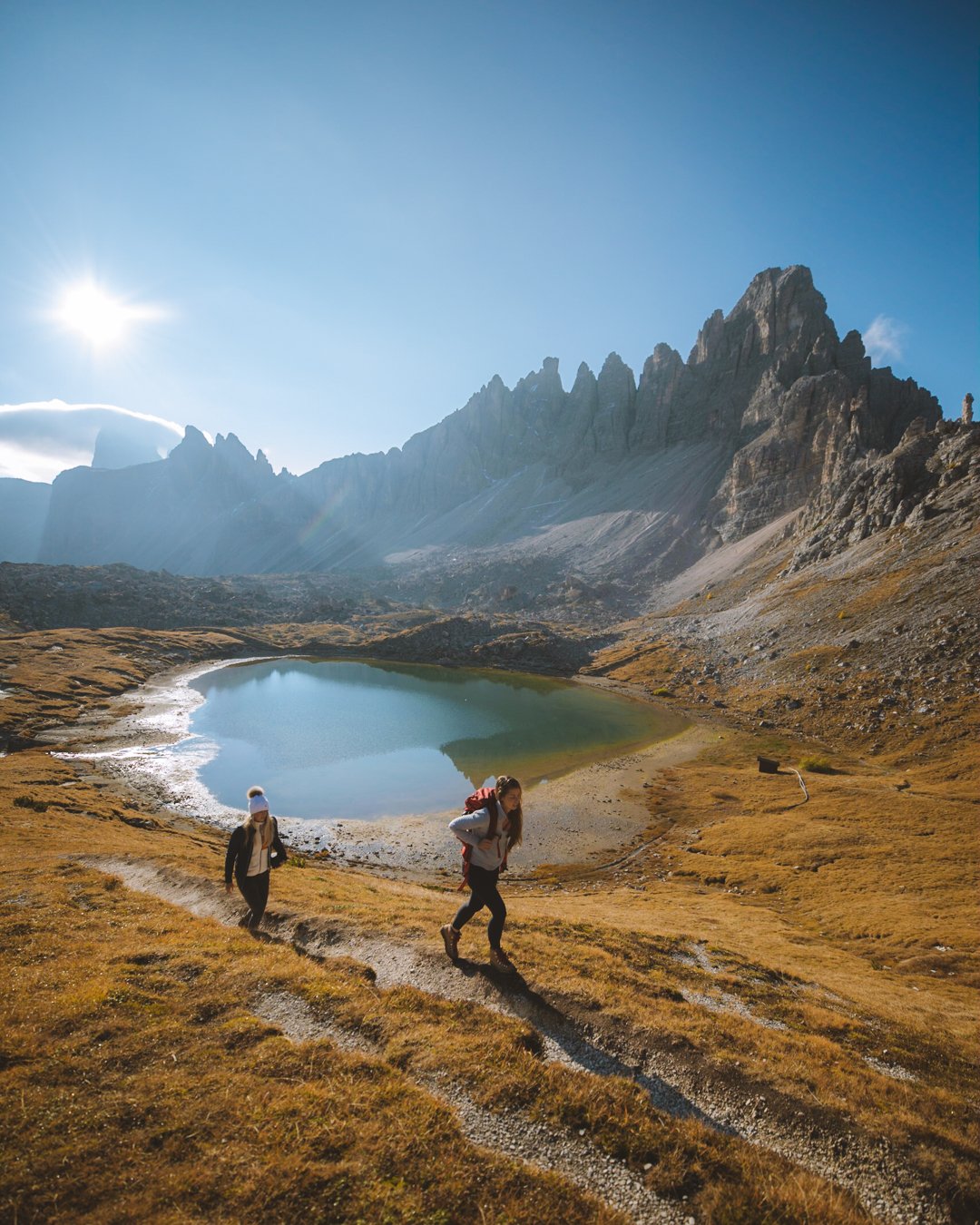
Find a friend to hike with
This is one of the hardest parts for beginner hikers. However, with access to the internet and social media there are so many ways to make new trail friends - as this is one of the tricker parts for starting out hiking I wrote an entire blog on this with all of my best tips and tricks! You can check it out and hear a few stories of how I have made my favourite adventure partners here.
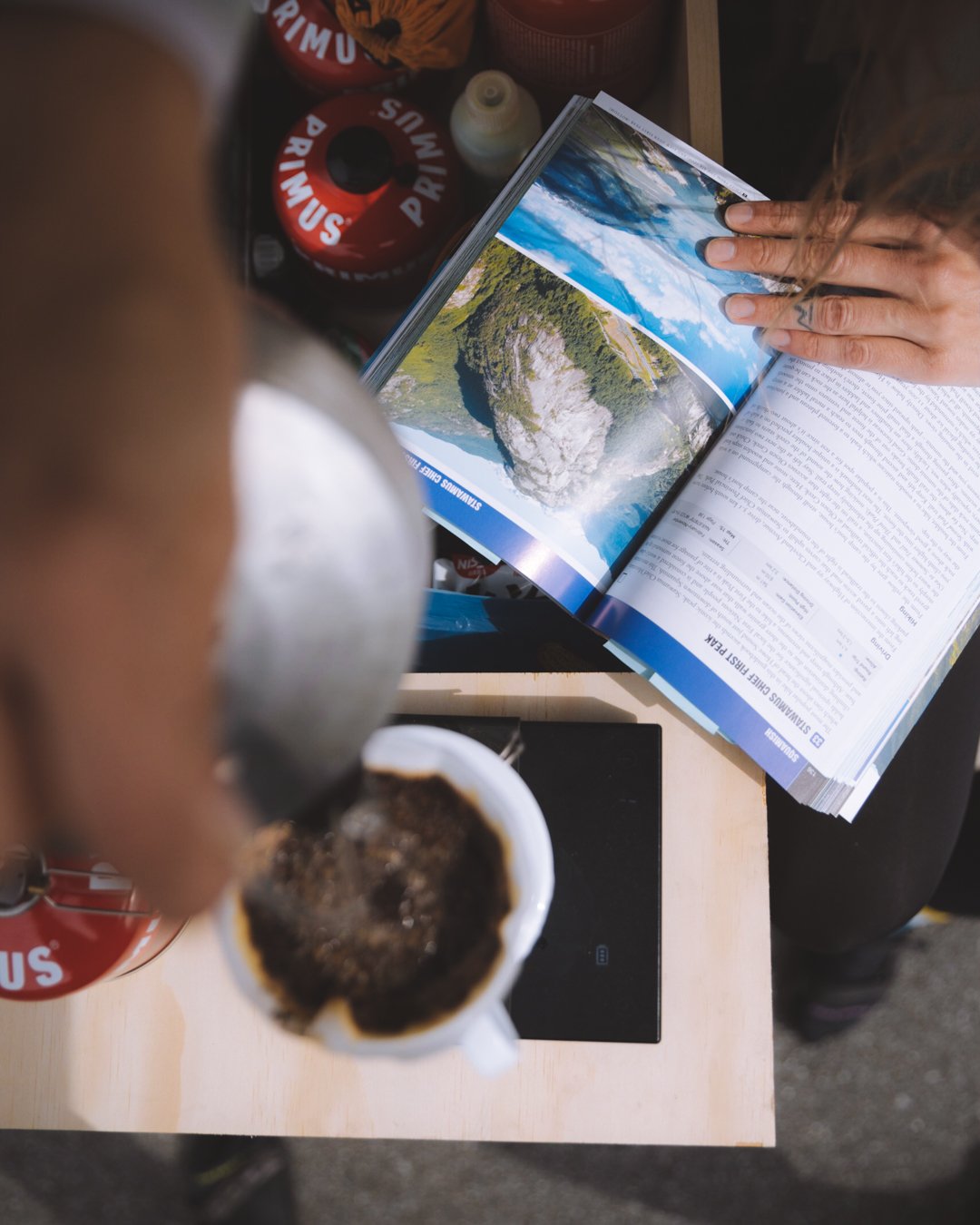
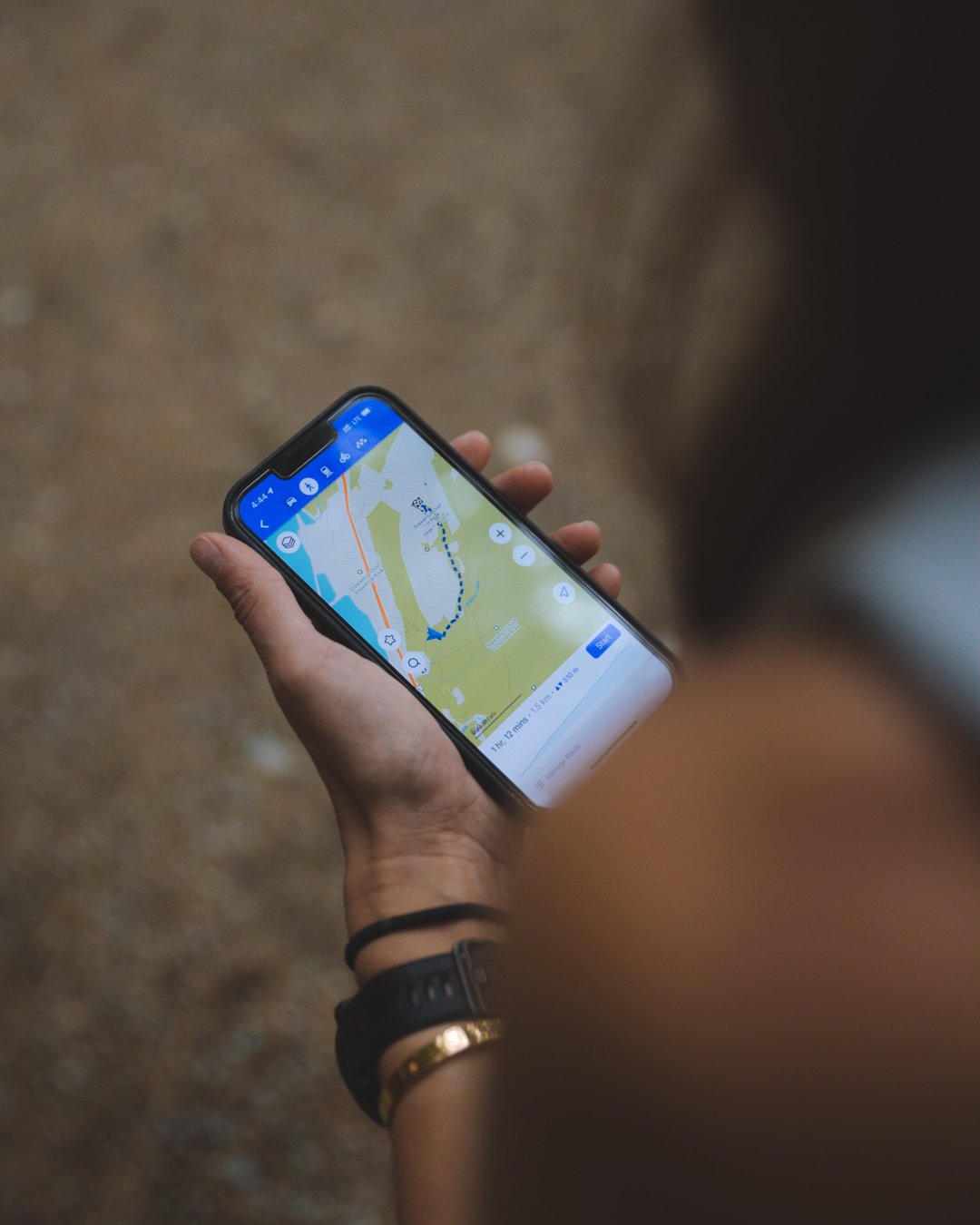
Research your hike
In all fairness most of my hiking inspiration comes from perusing the pages of social media. However with the onset of LNT’s Social Media guidelines - I have veered away from posting specific locations on my platform. Not as an act of gatekeeping or elitism, but a little bit twofold.
I grew up with Moraine Lake as a relatively quiet location that my family and I could spend the day enjoying - and with the onset of social media there isn’t even a chance to get parking without showing up at 2am. Social media changes a lot of places and not always for the better.
Most of the places I hike these days are really great and a little bit more remote and therefore not very busy. And if someone has the desire to go to the lengths that I did to find them, they deserve to have that same experience.
I did, however, write a blog with a dozen free or extremely inexpensive ways to find super cool places to hike with low to moderate effort. And I think it is a great place to start.


Give someone a heads up before you go
This is important regardless of your skill level or experience. I have close friends who are world class mountain guides and will see them, before we dip out of service, send the same information to their moms/friends/partners that I do.
Easy peasy, a quick message to my mom that includes the following:
Where you are going (I send GPS coordinates and a link to the hike - and then swear her to secrecy)
Who you are going with and their contact information
When to expect you back - and also when to be concerned. Have a conversation about this - when to call Search and Rescue (SAR) and the ways to try and contact before necessary.
What gear you have with you - this is helpful and will be asked by SAR - I also send a selfie to my mom before hikes. She then knows exactly what I am wearing in the case of an emergency.
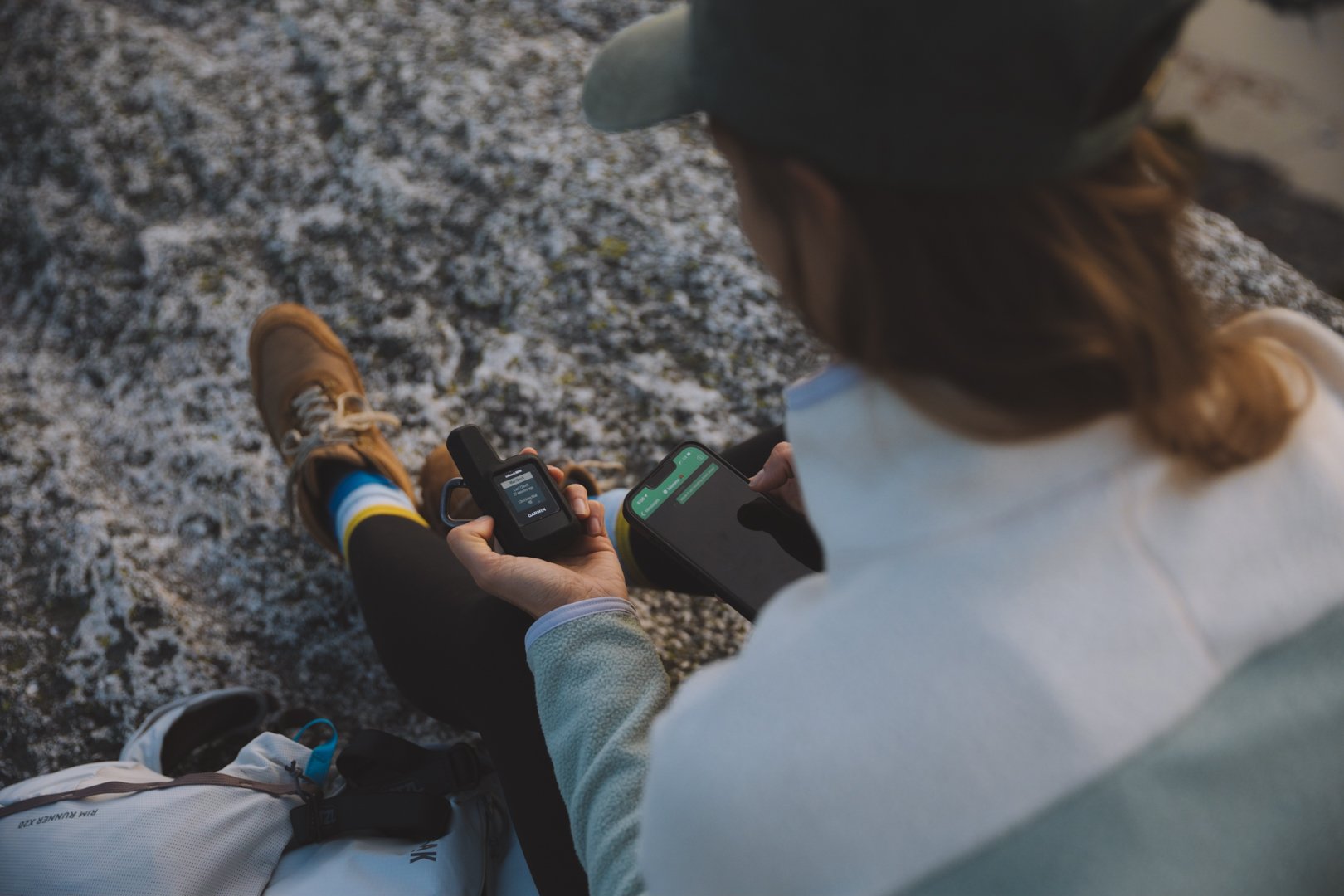
On top of this I also carry a Garmin inReach mini satellite phone to communicate with my emergency contact and SAR in the off chance that something does go wrong and I require assistance.


Wear (and pack) layers
You don’t need to invest in everything all at once. Borrow from friends and family, rent, purchase used - REI’s Re/Supply is a great option for purchasing gently loved gear at a great price. But spend some time to get a feel for what works best for you and then keep an eye on sales. And if you ever need advice - REI’s Virtual Outfitting (less daunting than it sounds) is a no-obligation way to have a 1:1 conversation with a gear expert from the comfort of your own home.
Below are the layers that I will bring, or consider brining, tap on each item to link to the exact model I am currently using.
Sports bra (I prefer a longer bra that I can wear and not feel super exposed when its warm out)
My decision between shorts, tights and hiking pants will depend on the weather and terrain and I view packing rain pants as only necessary in rainy conditions. I will, however, always ensure I have my rain jacket and down jacket in addition to any other top layers I wear/deem necessary to pack. In the case of an emergency situation too many layers are always better than not enough.
I have my full day hike packing list linked below but for a day hike I will pack everything into a 20-30L backpack. This is my current go-to. It is an REI member exclusive product that I picked up earlier this year for all of my day hikes.


Always bring extra food and water
Not just in case of an emergency, but especially when getting started out its hard to know how much water you will need and how hungry you will get. Unless prohibited (like in Yosemite due to bears) I will also ensure I have snacks and water in my car waiting for me when I get back. I also have, on many occasions, shared my additional food and water with strangers on the trail that were in a more emergent situation. And on the flip side on a hike that I did not research enough and was unaware water sources would be dry in late season, had to once ask for water from fellow outdoors people.
Step one : always hydrate the night before your hike and on your way to the trailhead.
Check water conditions on the trail before you go hiking. In normal conditions bring or ensure you have access to at least:
Minimum 1L but generally 0.5L for every 30 minutes I plan to be on the trail (if over 3h I will split in two bottles - one with a NUUN tablet and one without)
In extremely hot weather or in a desert climate - double your water.
For food, plan on eating around 200-300 calories per hour. If it's a harder hike – meaning more vertical gain, tougher, and/or more obstacles – aim for the 300-calorie/hour marker.
If you are relying on water from lakes, creeks or rivers I always recommend bringing a water filtration - two really great, portable, options are Steripen (UV) and Katadyn BeFree (filter). Even if you know the source of the water you never know what is upstream and it is better to be safe than sick.
Trail Etiquette
Trail etiquette is an important part of this hiking for beginners guide. Most of these tips are pulled directly from the National Park Service:
Know your right of way. Check signage for the trail you are hiking, and follow the correct right of way yields. Signs may vary from park to park, but generally speaking it should make sense - whoever has the easiest way of stopping or moving out of the way should,
Hikers coming uphill have the right of way. If you’re descending the trail, step aside and give space to the people climbing up. (I actually disagree with this personally, I will generally give downhill the right of way because if I am going uphill it means I get a break, and also because if someone falls when going uphill it is generally speaking less consequential)
Solo hikers should yield to larger groups.
Slower hikers should move aside for faster hikers or trail runners
Hikers with dogs should yield to other hikers (or everyone stops and plays with the dog)
Bicyclists yield to hikers and horses or other pack stock. Come to a full stop and step to the side to give the right of way. Be mindful of the plants or animals that are near the trail if you must step off the trail. Bicyclists should always ride within their abilities. Before your visit, check individual park regulations to see if biking is allowed. However: oftentimes in practice it makes sense for hikers to yield to mountain bikers because the tread on a mountain bike stopping is far more damaging to the trail than a hiking boot stopping. Also, because they are going fast and may not see you or be able to safely stop in time. Although you may be *technically* in the right, you may also be out a season with an injury from a collision.
Hikers yield to horses and other pack stock. Slowly and calmly step off to the downhill side of a trail. If you approach from behind, calmly announce your presence and intentions. Horses and other pack stock can frighten easily, so avoid sudden movements or loud noises.

Make yourself known. When you encounter other hikers and trail users, offer a friendly “hello” or a simple head nod. This helps create a friendly atmosphere on the trail. If you approach another trail user from behind, announce yourself in a friendly, calm tone and let him/her know you want to pass.
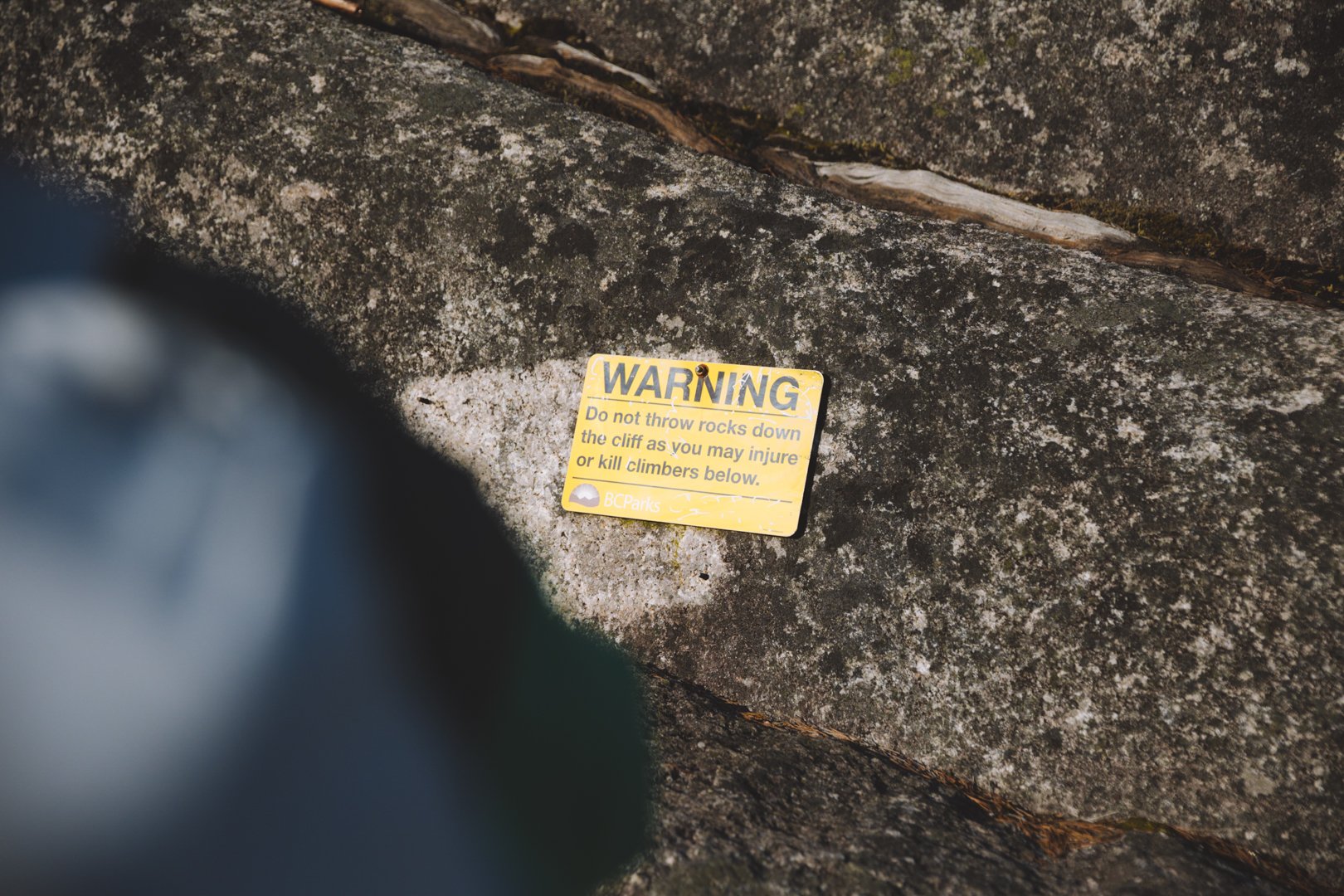
Stay on the trail. Don’t step off trail unless you absolutely must when yielding. Going off trail can damage or kill certain plant or animal species, and can hurt the ecosystems that surround the trail. Always practice Leave No Trace principles: Leave rocks, vegetation, and artifacts where you find them for others to enjoy.
Do not disturb wildlife. They need their space, and you need yours, too. Keep your distance from the wildlife you encounter. Some parks require you to stay a certain distance from wildlife, so check park regulations before your visit. Never leave the trail to try and get a closer look at an animal because it can hurt the habitat and the animal and put you in danger.


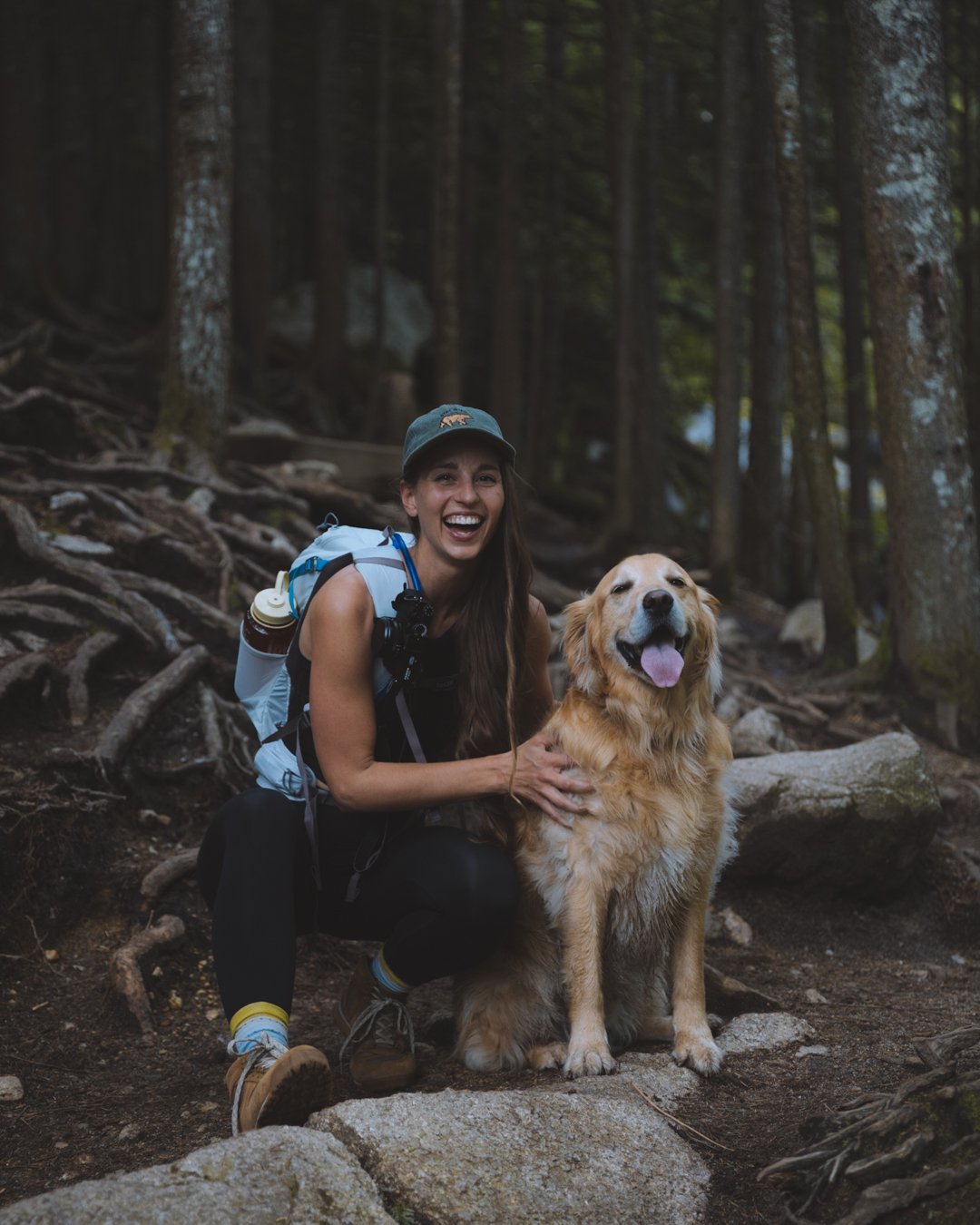
Be mindful of trail conditions. If a trail is too wet and muddy, turn back and save the hike for another day. Using a muddy trail can be dangerous, damage the trail’s condition, and damage the ecosystems that surround the trail.
Take time to listen. When hiking in the great outdoors, let nature do all the talking. Be respectful of both nature and the other users, and do not play music from external speakers. Not only will other visitors appreciate the peace and quiet, but so will the wildlife. Many wildlife species rely on natural sounds for communication purposes, and disrupting those sounds can hurt their chances of survival.
Be aware of your surroundings. Always be aware of your surroundings when hiking in our national parks. It will help keep you and any members of your group safe, and it will help keep wildlife and their habitats safe and healthy. Know the rules for hiking in bear country, and know what to do if you encounter a bear on the trail.
Use the facilities on-site at the trailhead. Most popular trails will have pit toilets at the trailhead. I like to pretend I am my mother and ask everyone in my group to try to go before we start hiking. I also recommend bringing your own TP and hand sanitizer as it is not always available. However, hikes can be long and when moving and drinking water - holding it isn’t always an option. I wrote a full guide to doing your business in the outdoors.

And for even more information for how to be a more responsible, prepared outdoors person check out REI’s Primary Edition Toolkit.

Hiking boots, shoes or sandals?
Hiking boots, shoes, sandals or trail runners? One of the hardest and most expensive questions to figure out when getting into hiking. At the end of the day it is a personal choice of what fits your foot (remember that getting insoles is always a great option), what is within your budget and what is best suited for your activity and lifestyle.
Questions to ask yourself when determining the proper footwear include:
What terrain are you hiking on (granite slabs, muddy trails, sandstone, gravel, thick brush, sand etc…)
How much weight you are carrying
How quickly you want to move
What the weather/temperature looks like for the hike
A few things I have learned along the way:
There is little to no difference in ankle support whether you wear a hiking boot or low-cut hiking shoe. Ankle support comes primarily from the sturdiness of the sole.
Always go shopping for and try on boots at the end of the day when your feet are the most swollen.
Your size in running/casual shoes does not necessarily correspond to your hiking boot size (depending on the brand I am 1/2 to a full size bigger in hiking boots - in part because of the thicker socks I wear hiking and need/want for a little bit of extra toe wiggle room)
Prevent blisters by wearing wool-blend socks and/or pre-taping problem areas. And always have moleskin in your hiking kit.
Cut your toenails.
Break your boots in before your first trip.
Pro tip : REI offers Virtual Outfitting, a simple (no commitment to purchase) way to get expert advice and gear tips from the comfort of just about anywhere.
Case study : what to wear when
Hiking boots
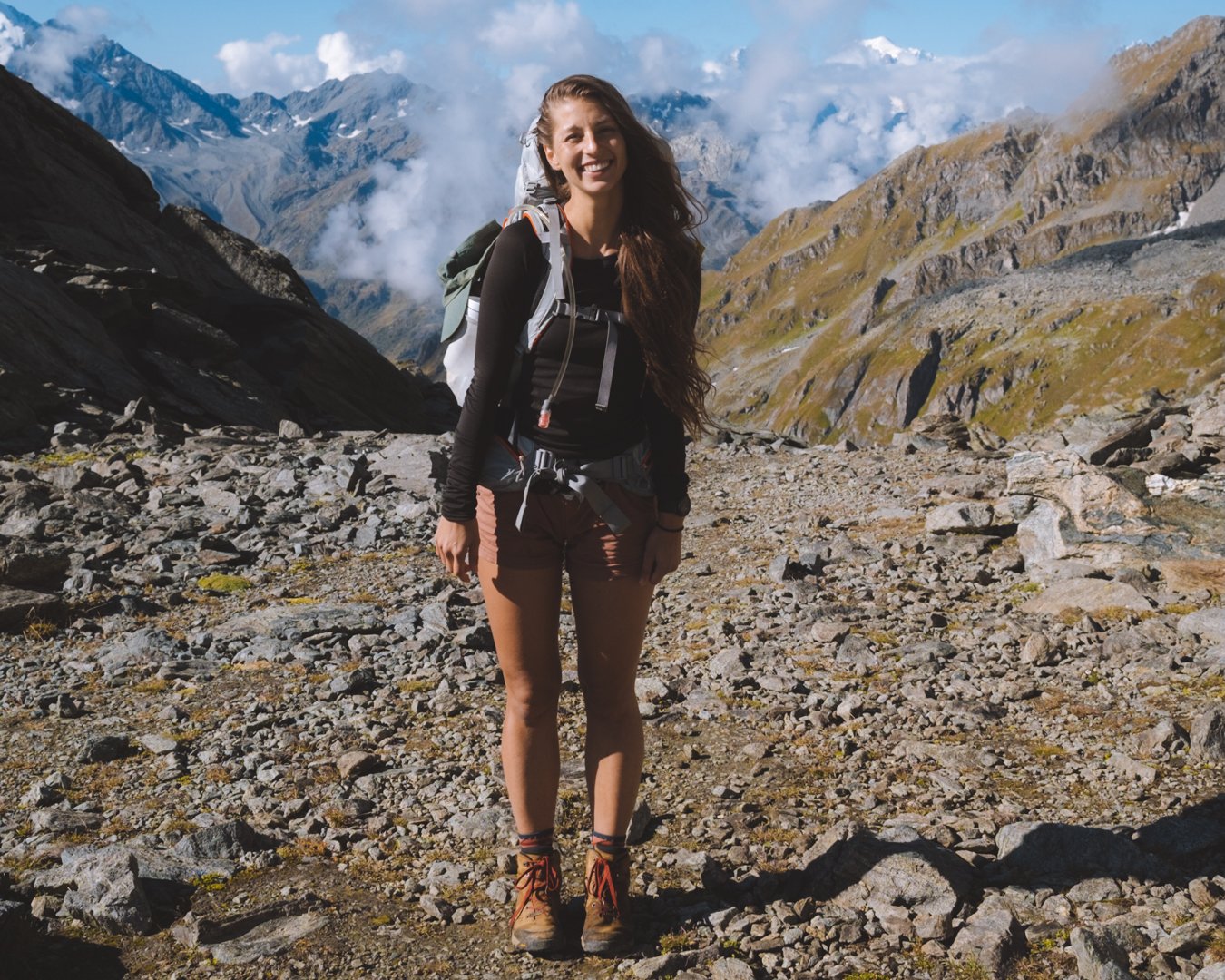
I wear hiking boots primarily when I am carrying a lot of weight (mostly for backpacking trips), when there are shallow river crossings and when I am looking for a little bit of extra protection for my ankles (example when walking through a lot of rough brush, when thre is poison ivy/oak on the trail or when in climate weather is rolling in)
My go to: Danner Inquire Chukka Mid Hiking Boots
Hiking shoes
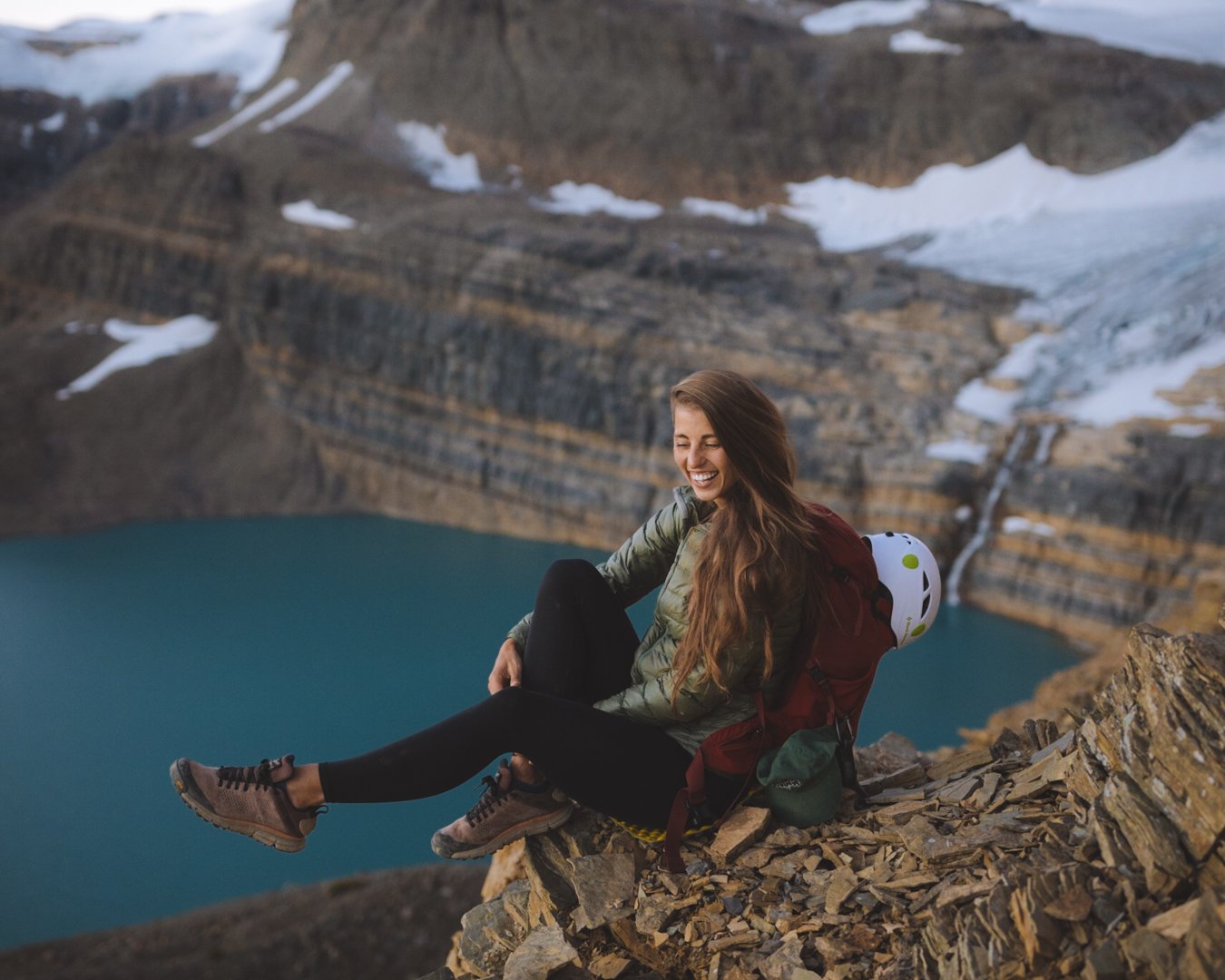
These are my most used item. As they are lighter than a hiking boot but provide more support for my ankles than trail runners. I wear hiking shoes on most of my day hikes. They feel more natural to walk in and generally have really great grippy soles for terrain such as smoothed sandstone or granite.
My go to: Danner Trail 2650 Hiking Shoes or Danner Trail 2650 Campo Hiking Shoes
Trail runners
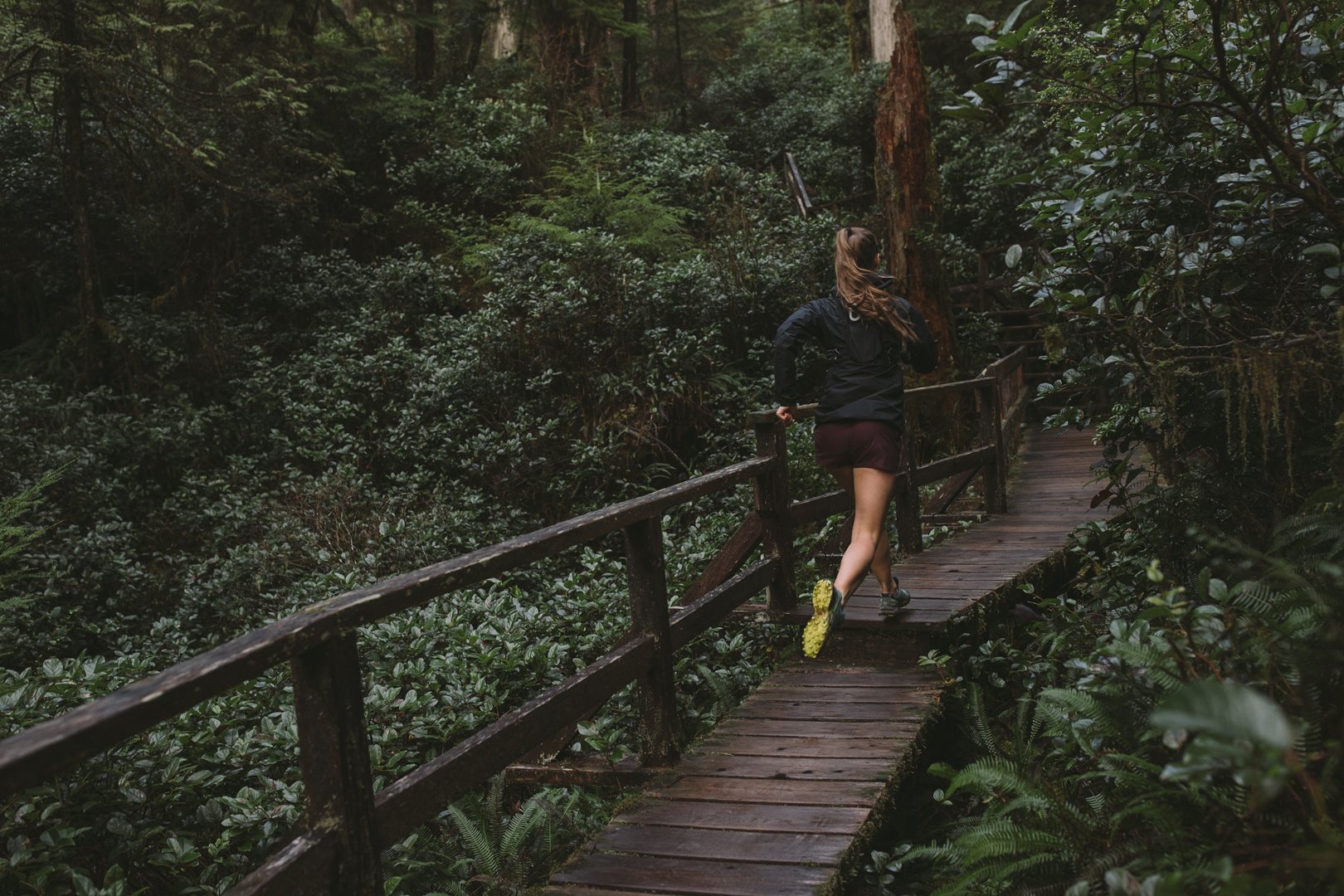
I wear these when trail running as they are lighter and the sole will typically have more give. You are trading ankle support for flexibility and a more comfortable running gait. I will also opt for trail runners when hiking on softer ground as they tend to have a deeper tread/longer teeth that will grip into the ground and prevent slipping.
My go to: Salomon Speedcross 5 Trail-Running Shoes
Hiking sandals
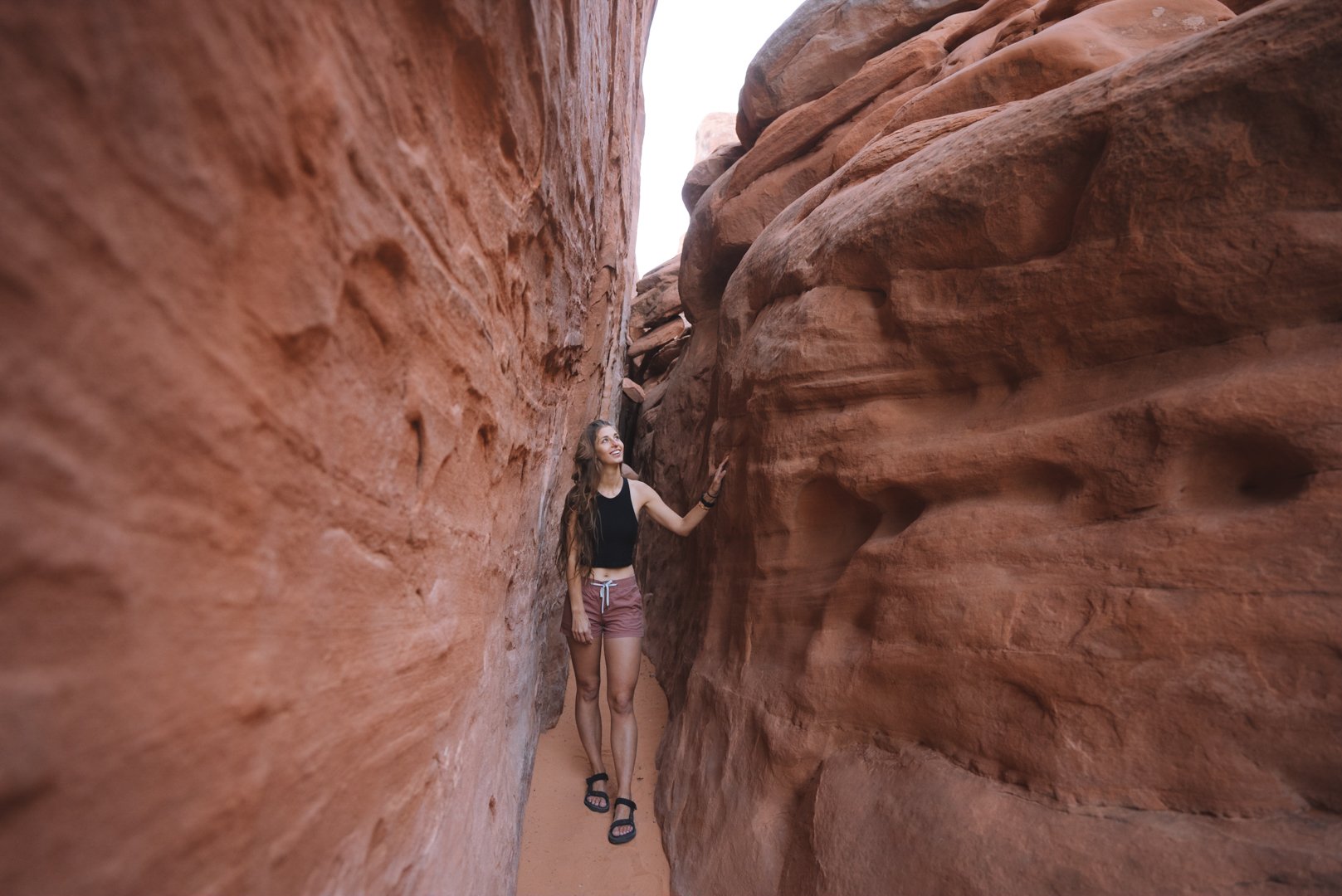
I used to only pack hiking sandals for river crossings and as camp shoes as they are lightweight and compact. However, after spending a lot of time in the desert I have started to enjoy easier hikes on established trails (with little weight in my backpack) while sporting hiking sandals.
My go to: Teva Original Universal Sandals
And most importantly : have fun!

*Please note that some of the links above are affiliate links, and I may earn a small commission on any purchase made - at no additional cost to you. As always, all ideas and opinions expressed in this post are entirely my own. Thank you for your support!