The Dolomites Ronda : Options Galore
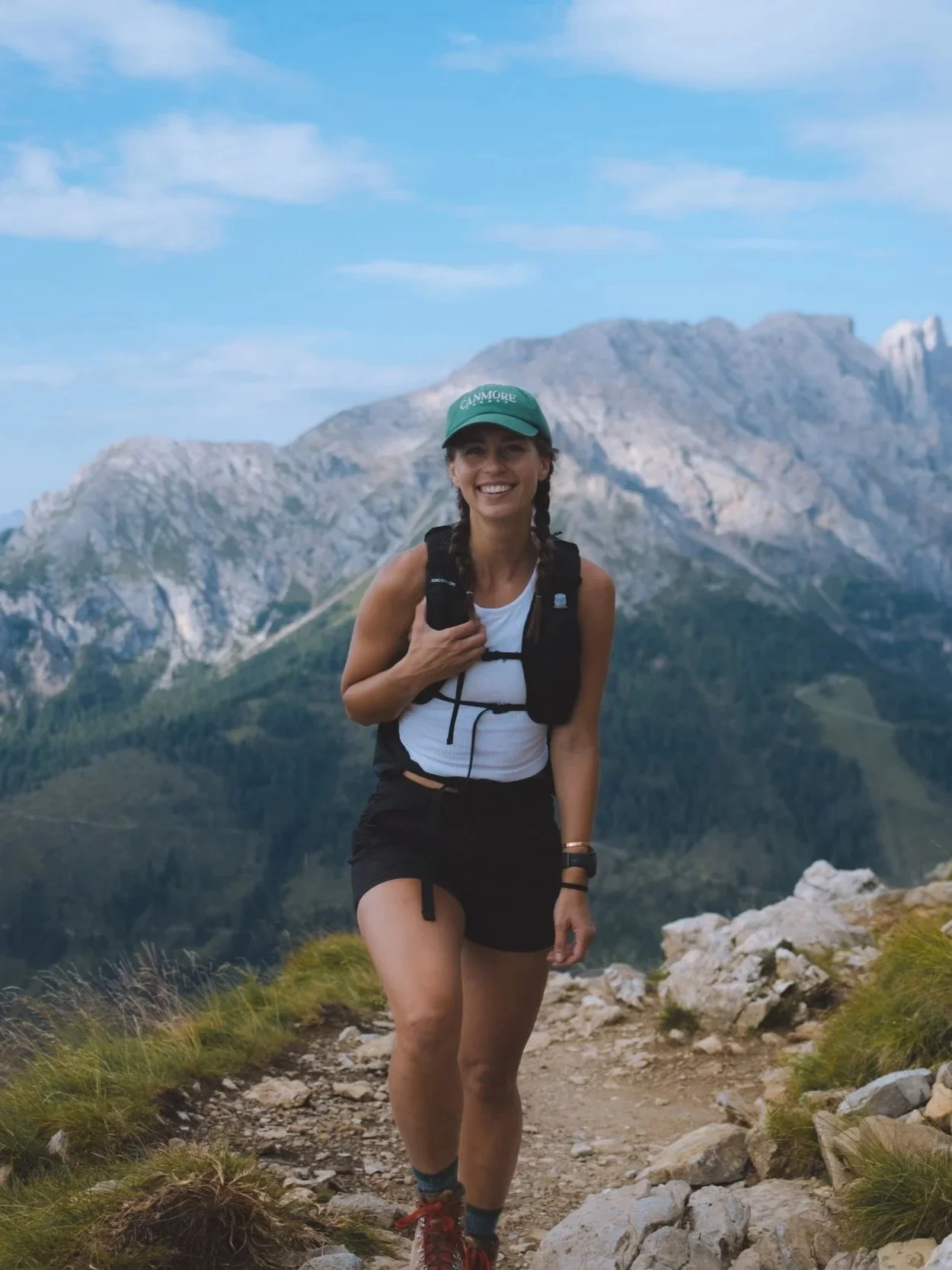
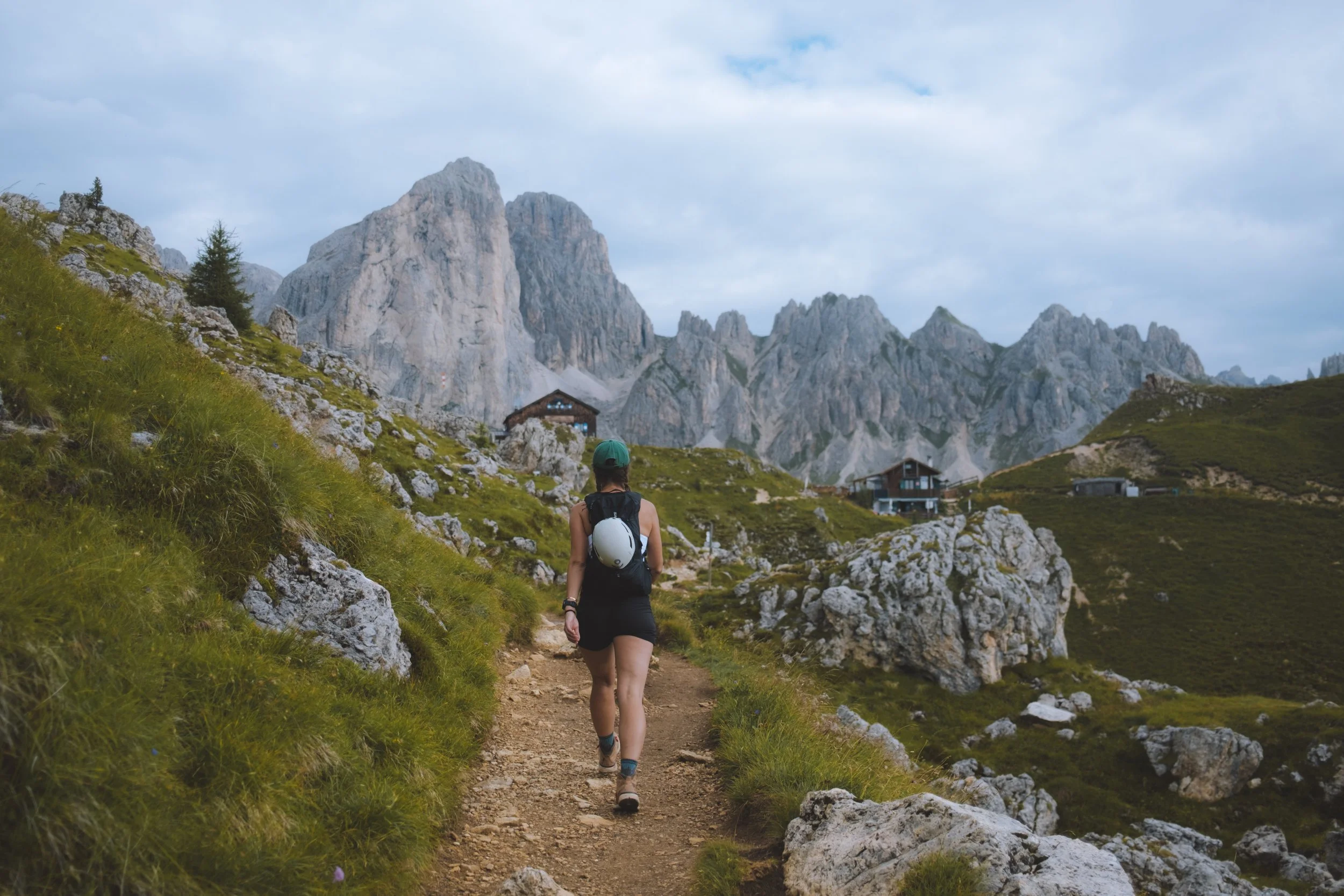
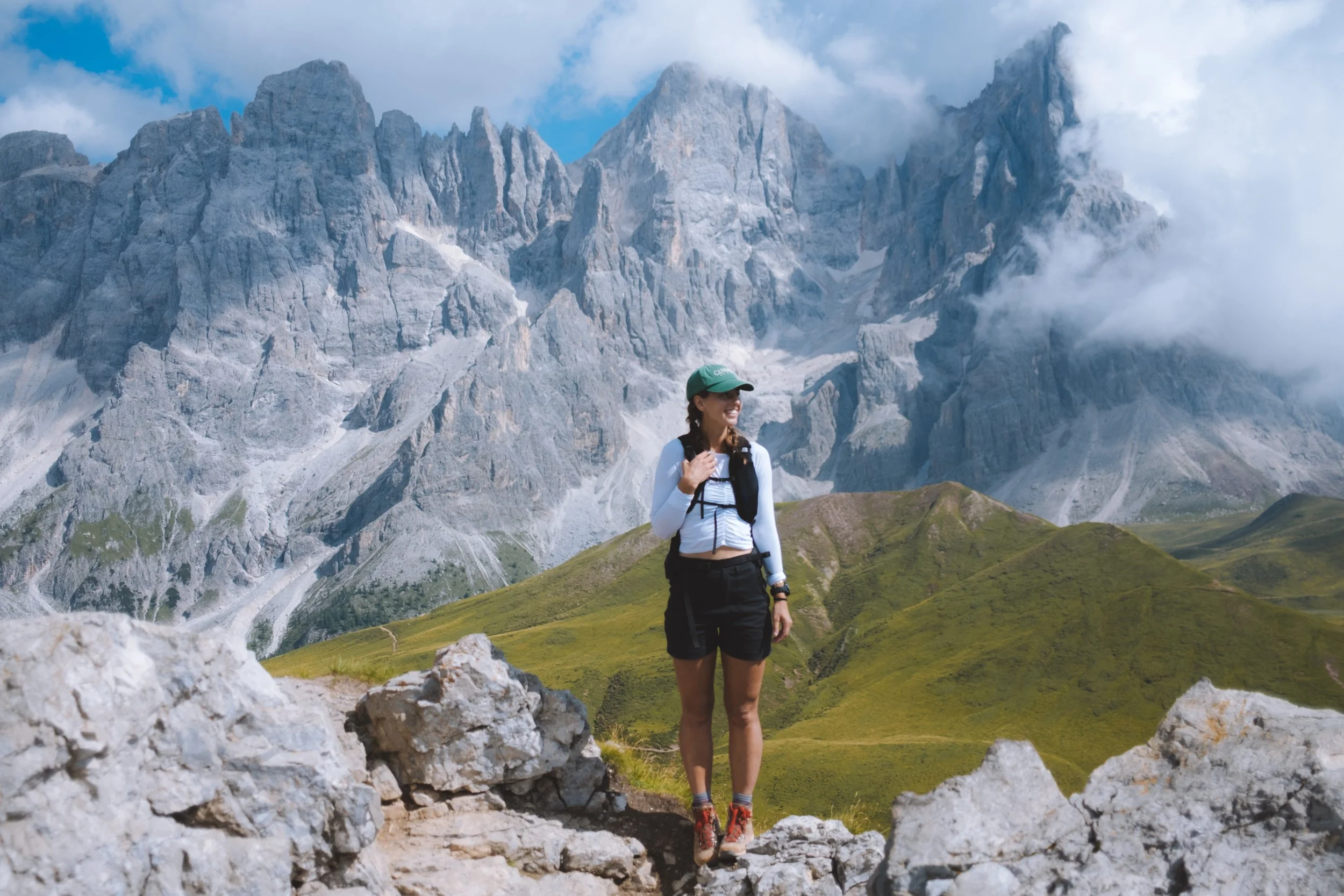
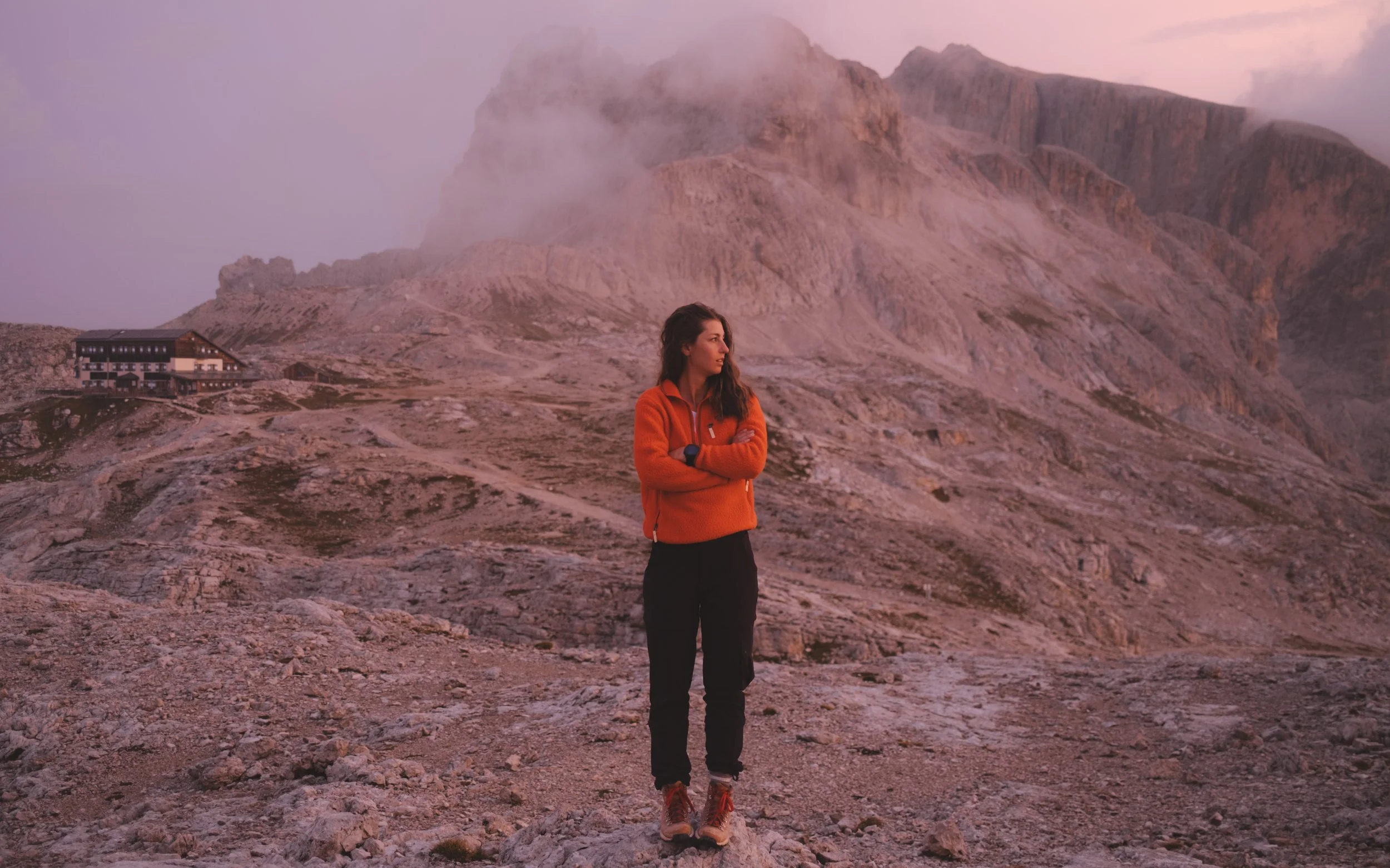
As you may be well aware by my annual pilgrimage, I love the Italian Dolomites. They are arguably my second favourite mountain range on earth (second only to the Canadian Rockies where I call home - I may have a slight bias). After a half dozen trips to the area I am still finding new ways to explore them. This summer I was invited by Dolomiti Superski to experience the Dolomites Ronda.
In my partnership with Dolomiti Superski (which I am still set on the idea of going back in the winter to experience) and the regions of Trentino and Sud Tirol I spent a week hiking through the Dolomites, exploring new routes and eating so much cheese that I questioned if I am more cheese or human at the end of the hike.
This is the first in a three part blog series on this trip. If you are looking for my day-to-day experience on the trial (including a few bonus adventures I went on while in the region) and what on earth to pack for this trip - that information can be found via the buttons below. This page contains everything you need to know (and likely more) before booking your trip to hike the Dolomites Ronda (1 or 2 or… 3?).
Before I get into this, just a general disclaimer that I did my best to put together all of the information I cold find to the best of my ability. It is, to my knowledge, accurate as of Summer 2025. I am not a professional guide - simply a girl who wants to see more people get out and do cool things!
More European Hiking Tips and Trips:
The Tour d’Erna
Haute Route Packing Guide
Haute Route Part 2 (Chamonix to Zermatt)
6 Amazing Swiss Mountain Huts
One Month in Switzerland - Packing Guide + More
What is the Dolomites Ronda?
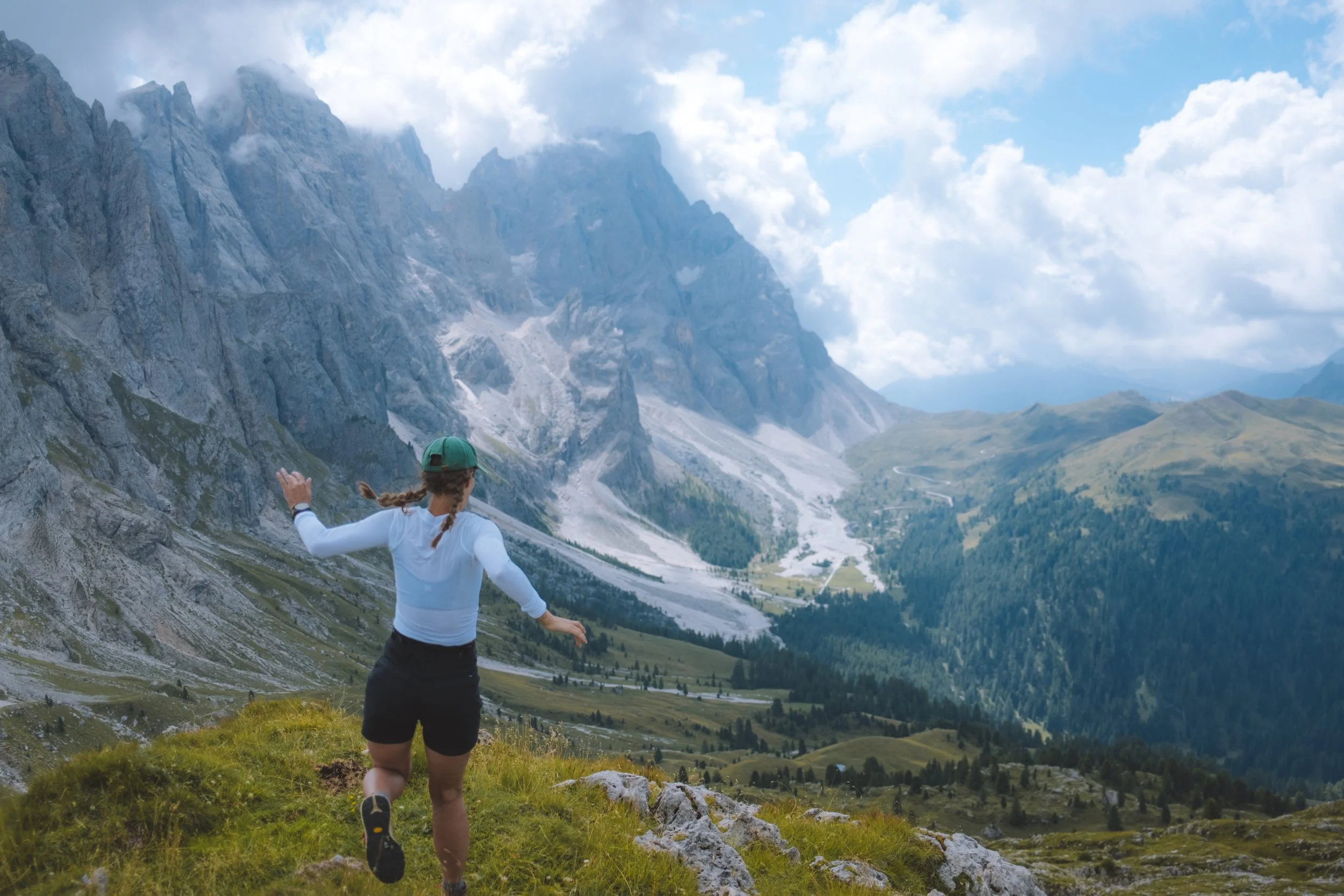
The Dolomites Ronda is less of a singular set route, but rather two routes as there are two (soon to be three apparently) variations of the Dolomites Ronda, and more of a way to experience the Dolomites. I decided on this option as opposed to a hut-to-hut hiking trip (like the Tour D’Erna the year prior) or a camping trip as I liked the idea of sleeping in my own, private, bed each night and with my upcoming race schedule, the luggage transfer mitigated the need to carry a heavy backpack and the flexibility of choosing how challenging I wanted each day to be was very enticing.
In their own words, Dolomites Ronda is:
You decide how you want to experience the Dolomites, according to your preferences. You have the choice between a light and a challenging route each day, as well as an alpine variation. To conserve your energy, you will reach the starting point of each daily stage with the help of the ascent facilities. When booking your individual multi-day tour, you choose the accommodation category in which you want to stay. All accommodations are reserved for you, and you will receive detailed travel documents, maps, luggage transport, and a 24/7 service number.
As mentioned, there are two variations of the Dolomites Ronda (numbered one and two) and the specific route information, daily hike options including distance and elevation gain and losses for each option on each day can be found via the buttons below.
When to hike the Dolomites Ronda
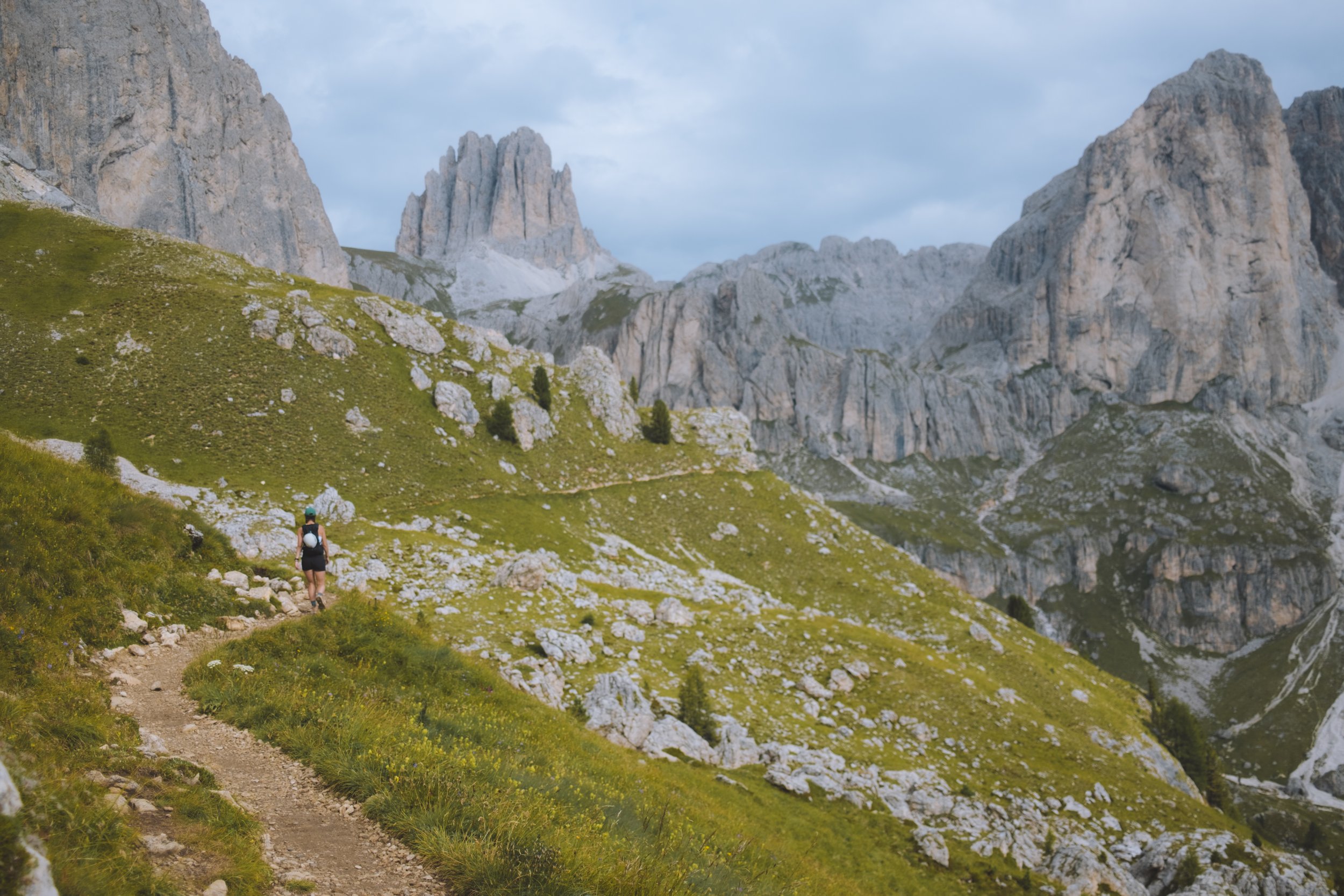
Late June to mid-September seems to be the consensus on the best time for hiking in the Alps. Early to mid-September is an especially enjoyable time to hike since September typically has less rain and a more stable weather pattern than either July or August, but the days are a lot shorter as the season goes on.
Accommodations are often full during July and August so plan to book those in advance.
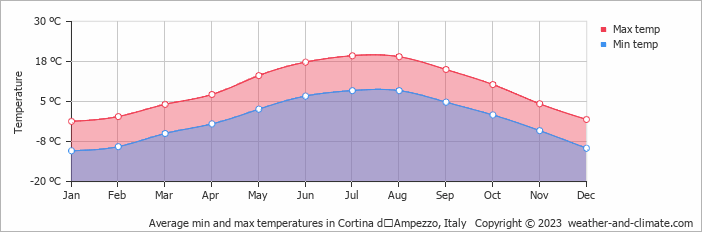
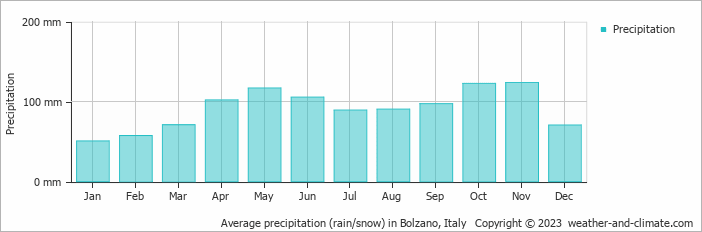
I did this hike in mid August (during the Italian summer holiday - I do NOT recommend this) and it was very busy, beautiful and hot!! Below is a general temperature and precipitation chart for both Cortina d’Ampezzo (Ronda 1) and Bolzano (Ronda 2) to give you an idea of what the general climate by month looks like. but remember that these are the mountains and weather can (will be) unpredictable so always be prepared.
Cortina d’Ampezzo
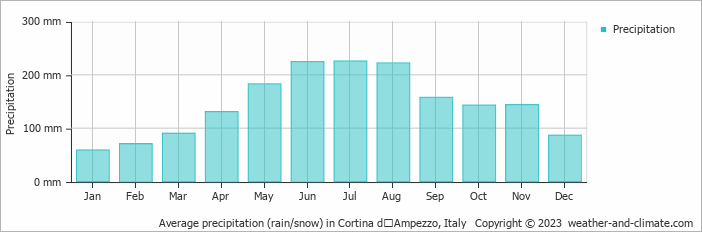
Bolzano

Is it safe to hike without a guide or as a solo person (male or female)?
One of the main questions from North Americans about hiking in the Alps is : can you do this without a guide?
100% yes. There was not a second on this trip that I felt unsafe or lost unsafe on the trail. Most of the trail had cell phone service and there are people everywhere (nothing more demoralizing than 9 hours of hiking to meet up with a family of 5 piling out of a mini van).
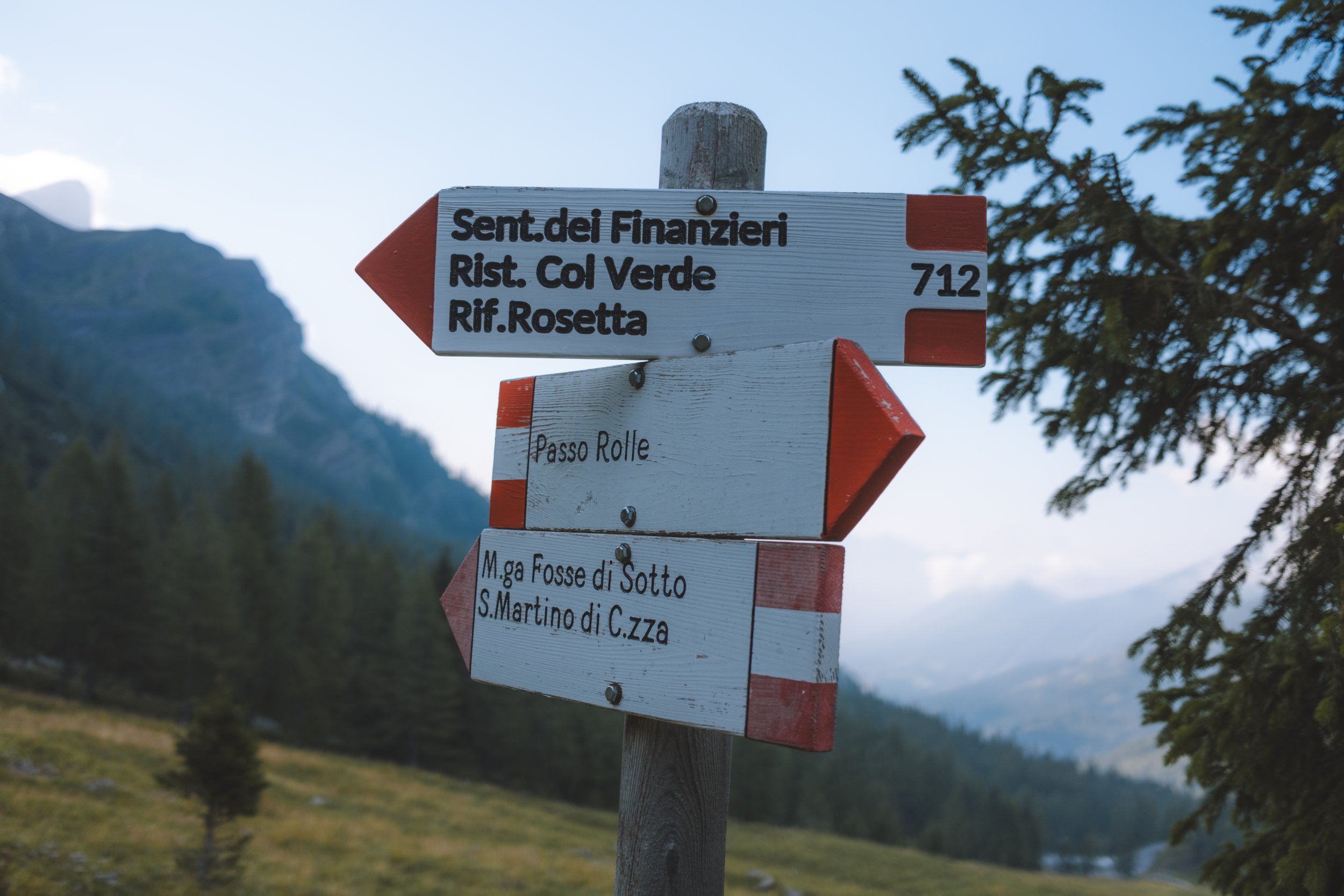
Almost all of the trail is marked (red and white for easy trail, blue and white for more challenging terrain) with signs indicating direction and hiking time to the next point of interest(examples below). The Dolomites Ronda also offers an app for the hike (with all three hiking variations in case you change your mind mid hike, which I did more than once) which makes it next to impossible to get lost.
As a note, in North America I find those time/distance signs time estimates to be pretty slow - in Western Europe they are accurate for a quite quick hiker.

Is the Dolomites Ronda a good option for families
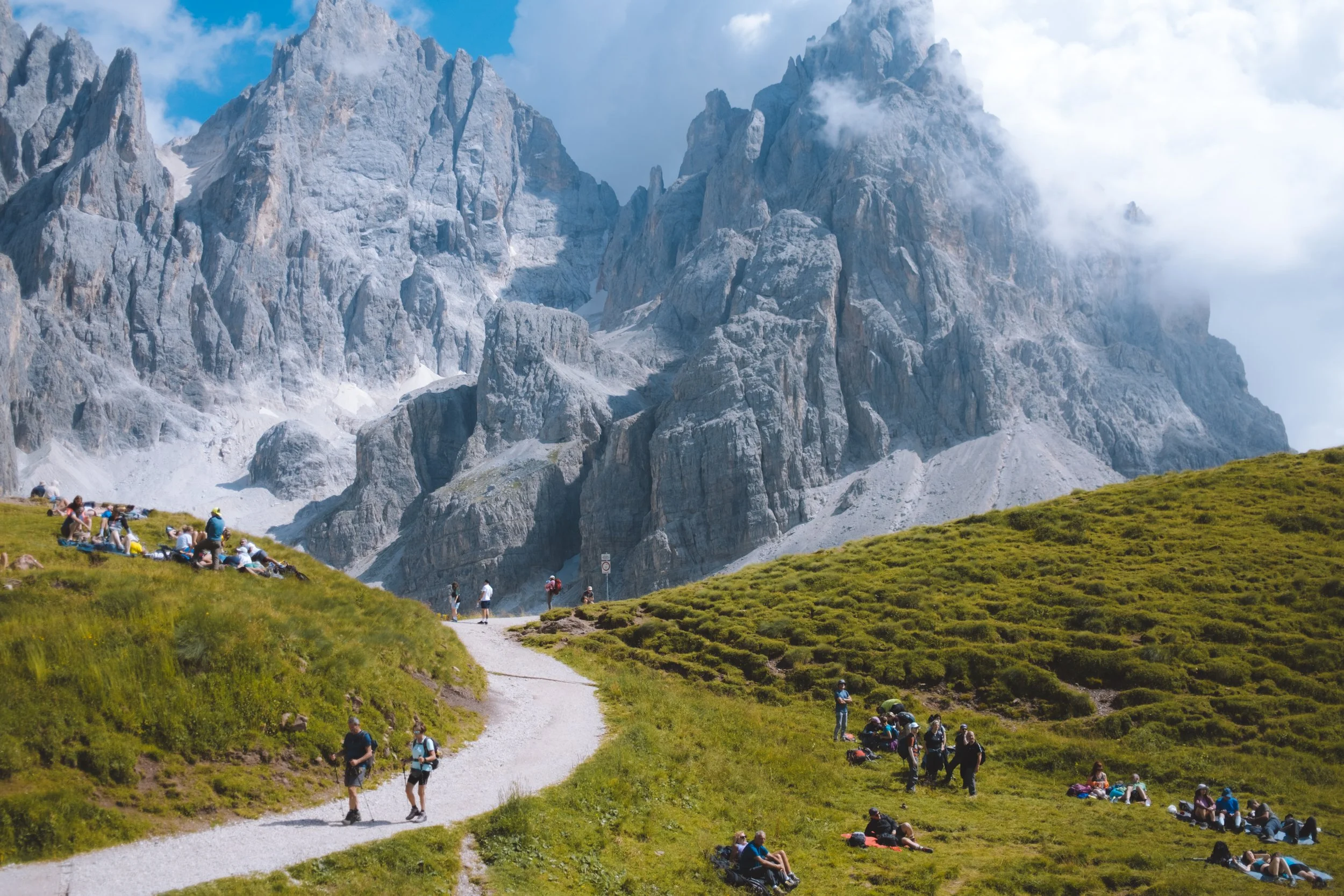
Yes! On my fourth day of this trip I messaged a friend of mine with two tween girls and told him that this was the perfect family trip in the Dolomites.
I will be honest that I did also suggest doing what I did and adding a night or two on the end so that the girls (as well as he and his wife) could experience the European Hut system.
Between the planning all being done but no need for a guide as well as the private rooms, luggage transfers and multiple daily hiking options this feels like the perfect multi day hiking trip for families looking to experience the best of the Dolomites.
Where to fly into for the Dolomites Ronda?
The below information and map are from the Val Gardena tourism website and can be found in their original form here. Although my route did not include this region - it does give an overview of where the Dolomites is in relation to major airports. The easiest international airport to fly into is Munich (I have also come to the region from Zurich, Vienna and Milan previously). I do find the train systems easy to navigate (even as someone who does not use public transportation ever - I grew up in the country and most places I go are not like Italy and therefore not accessible by transit).
By Car
The easiest way, in my opinion, to get anywhere in the Dolomites is by renting a car. In every single trip prior to this, I did rent a car and if I am being honest I likely would do that for the Dolomites Ronda but it is not necessary.
I always like to note that each country seems to have its own way of highway tolls that you should be aware of. For instance Switzerland and Austria both use a vignette system (purchased at petrol stations) whereas Italy uses a manual road toll system in which you pay (via cash or card) at a toll booth after using a section of roadway.
By Train and Bus
When travelling by train or bus, you can leave your car at home. Instead, you’ll arrive at your destination quickly, safely and stress-free by avoiding traffic, tolls, refuelling or poor weather conditions.
Travel times, costs and ticket information can be found online. I flew into Munich for this trip and then used google maps to find the best way to get to my starting point. I do feel as though the European transit system decided to pressure test me on this trip just to prove it can be done even when everything goes wrong - and it can. There was a scheduled maintenance closing the Austrian-Italian border the day that I arrived so I took a FlixiBus instead of a train there. And on the way home there was a broken down bus that caused a very long detour followed by a train derailment. So my route back (I was visiting family in Austria) ended up being two busses followed by an uber and then finally my two trains “home” - the thing about public transit in Europe is that is it amazing… until it is not. But thankfully there are always 101 workarounds and I do find google maps to give an abundance of options.
Search for a Connection
Italy: Trenitalia
Germany: Deutsche Bahn
Austria: ÖBB
Switzerland: SBB

What languages are used along the route?
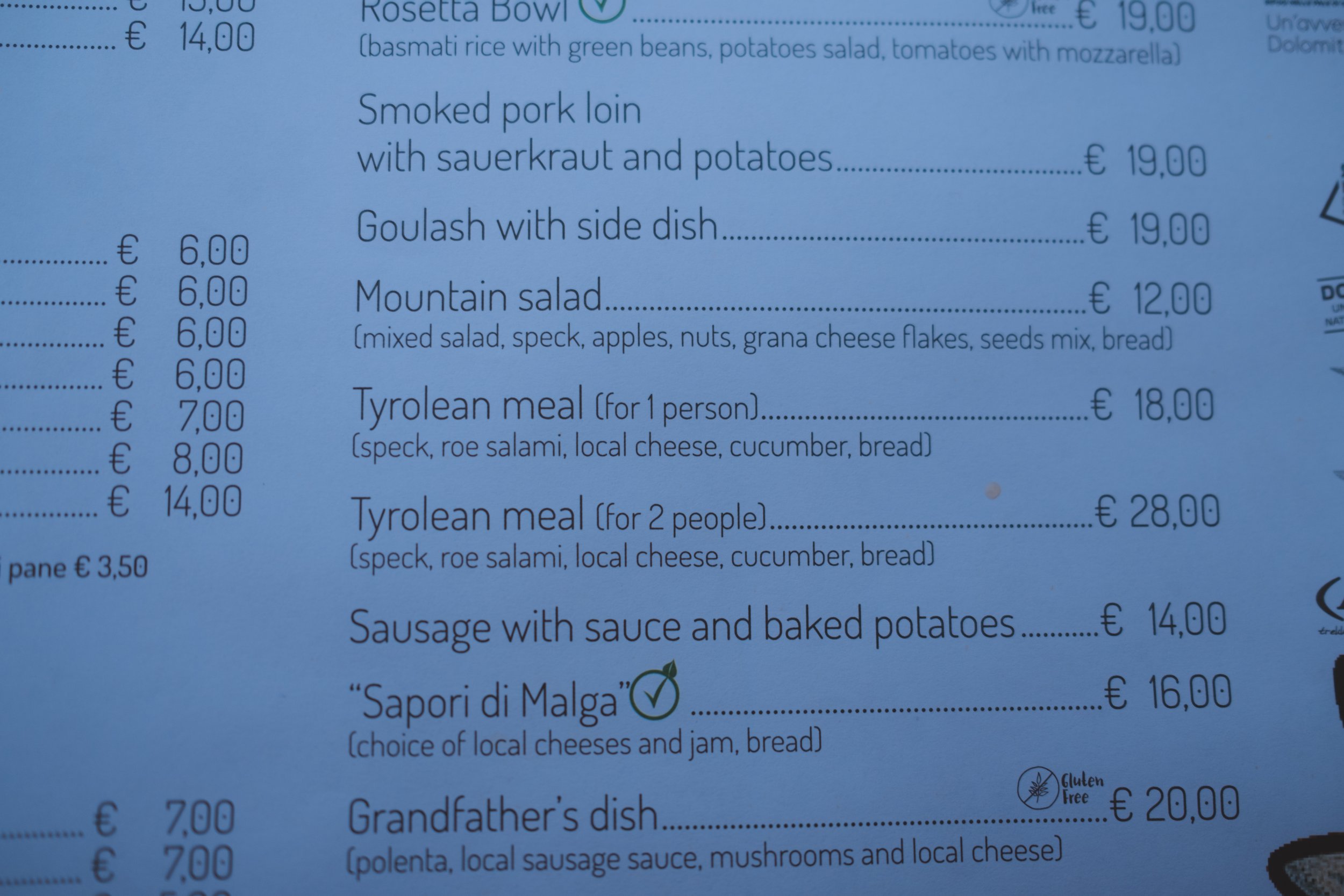
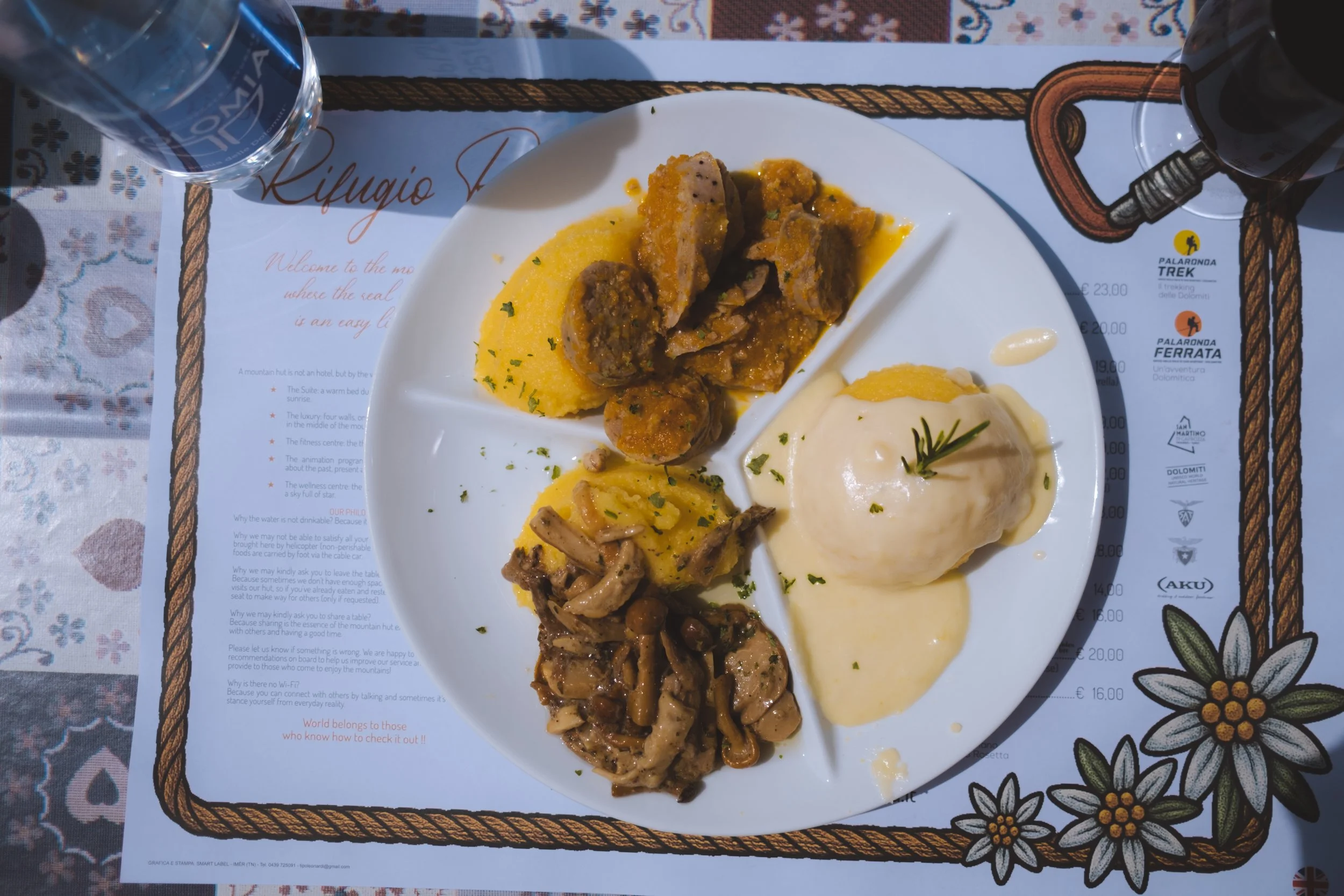
This is the fun part - since the Dolomites (South Tirol) were part of Austria until the end of the First World War - most of the trails speak German. However it depends valley to valley and Italian is also commonly spoken as well as Ladin. Nearly everyone spoke English with me and as seen below even the huts offered English menus. On the trail you greet one another in Italian with a quick “ciao” or “buongiorno”
Just be extra patient and appreciative - remind yourself often that if they are speaking English to you that they are doing you a favour as it is their country in which English is not one of their native tongues. And download a translation app.
What do you eat on the Dolomites Ronda?
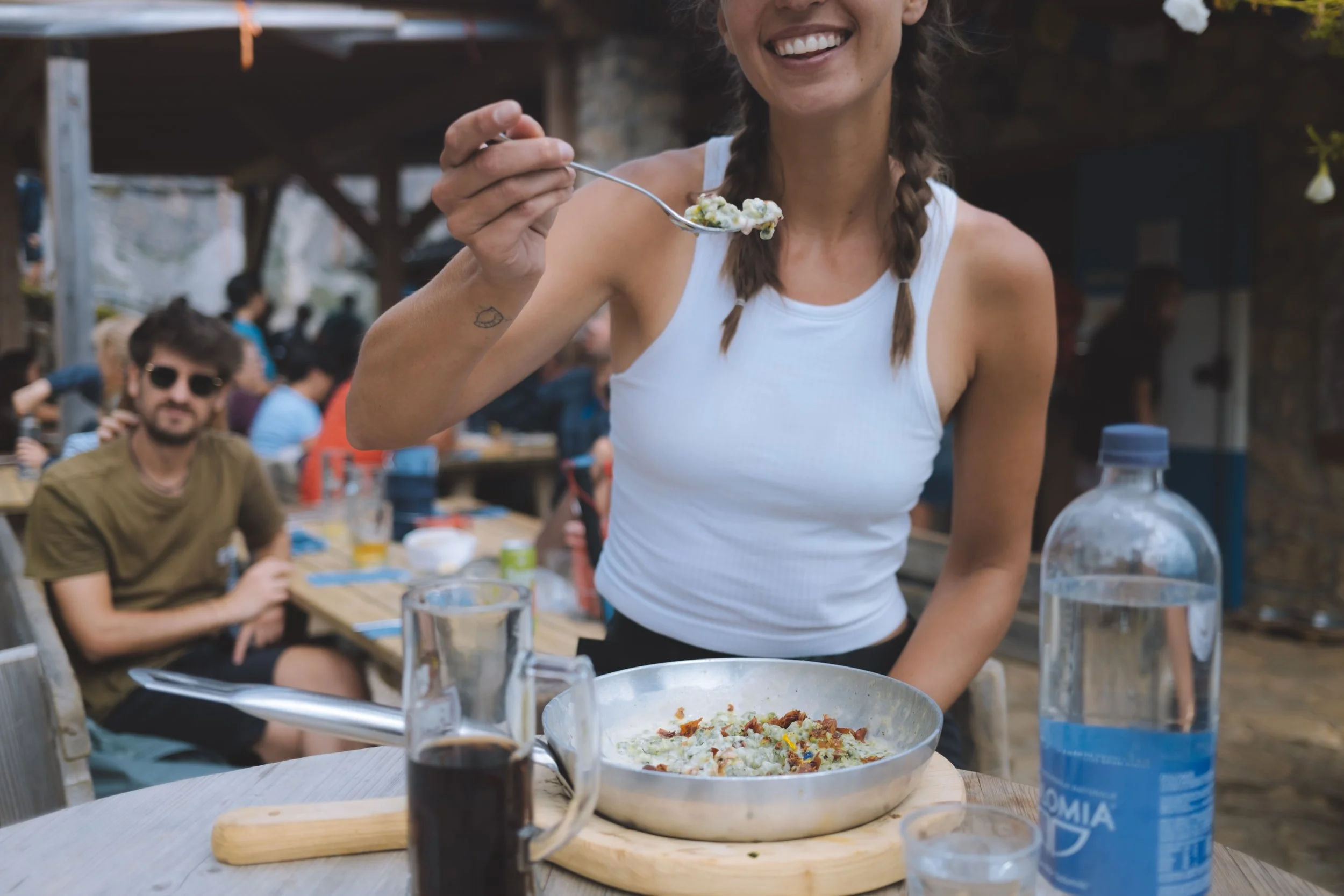
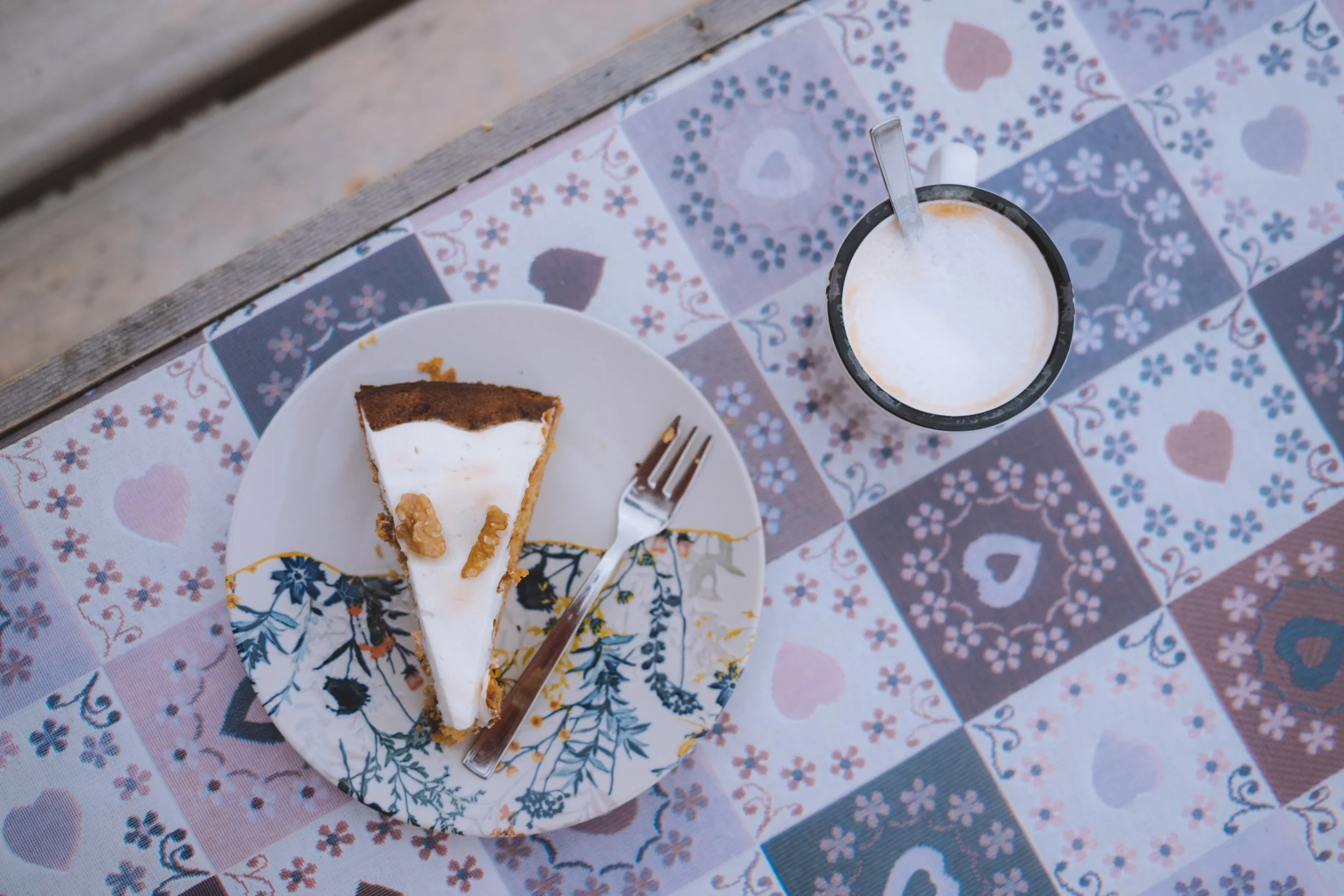
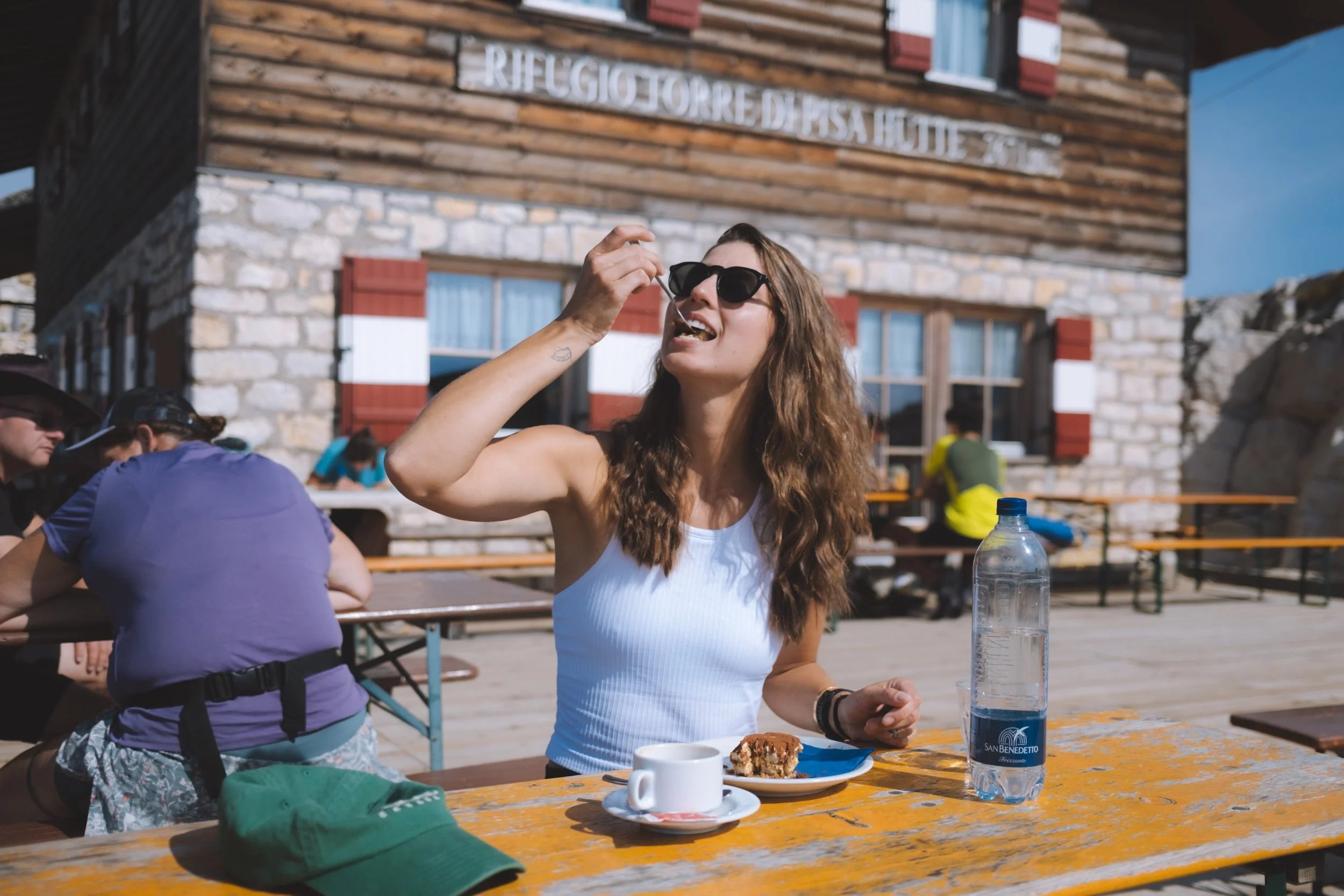
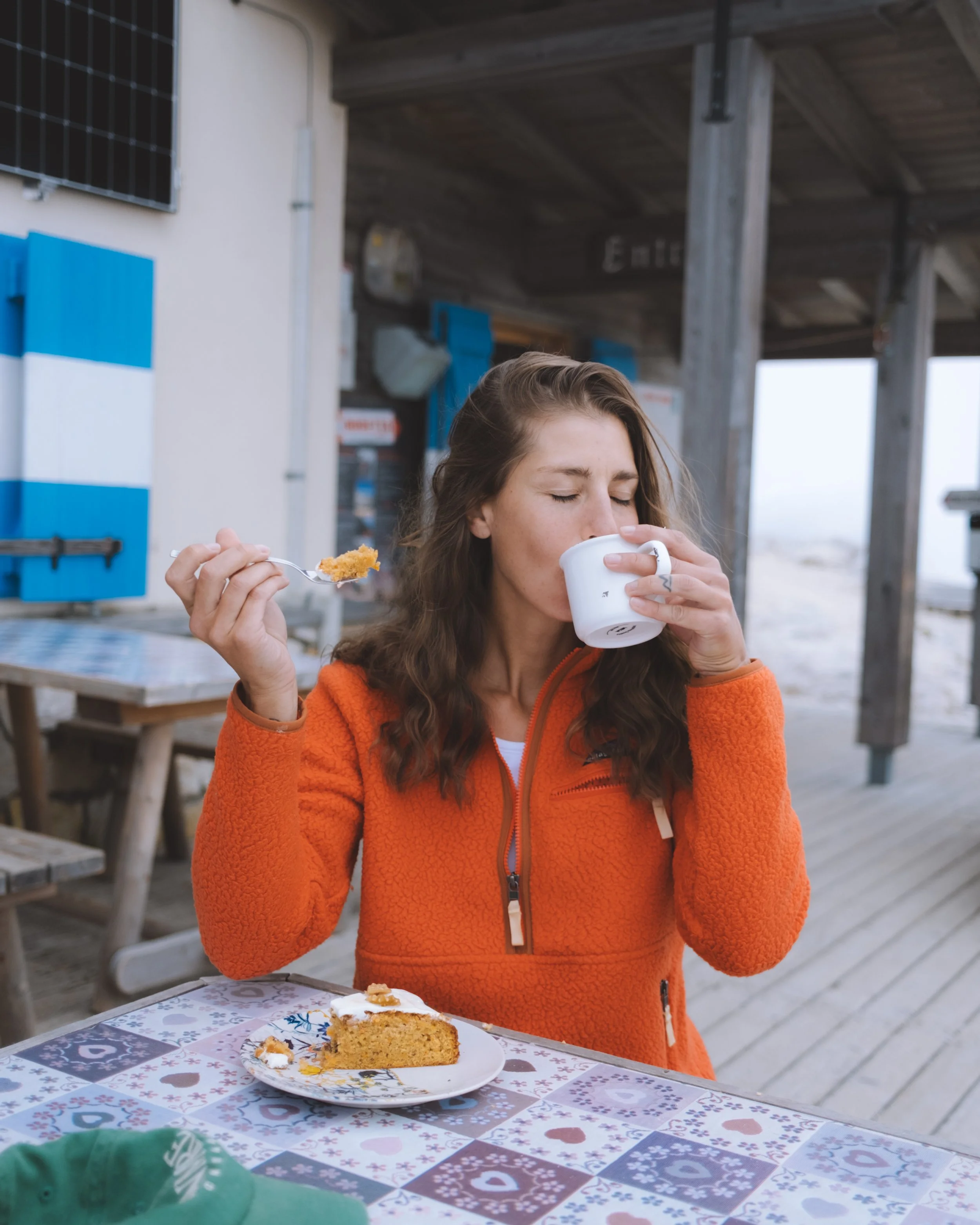
My overnight stays in hotels we had “half board” which included a set meal dinner and breakfast. And for lunch I would stop at a mountain hut on the way and have lunch, this was one of the mistakes I made - not stopping often enough. I would aim to have lunch around noon and then stop early afternoon for a cake and coffee (there were a lot of afternoon rain storms so this was a great way to take shelter).
At a restaurant or mountain hut:
Beer: 5 euro
Coffee: 5 euro
Pastry: 6-8 euro
Lunch from a mountain hut: 15-30 euro


Is there water along the trail?
Yes, unlike in North America, Europeans do not filter their glacial water (unless there is livestock around). There are small “fountains” all along the trail and streams to fill up with that have potable water - I don’t think I ever needed more than 1L at any given time. Just remember to fill up before heading up a pass. And bring electrolytes with you. They are hard to find in Europe.

Will I need cash?
Yes - for lunches and snacks - most huts do accept cards but there are the odd few huts that do not and they do not openly advertise that they do not, so always be prepared. I would recommend bringing 150-200 euro per person with you just in case.
Note: USD is not accepted anywhere (I hate that I even have to say that)
So…how much does it cost to hike the Dolomites Ronda?
This is, of course, the biggest question, always.
Flights to/from Europe
This varies depending on where you are flying from and how far advance you book (or if there is a sale). The nearest large international airports to the Dolomites are with Munich or Milan (most locals recommend flying into Munich).
Transportation
I typically will rent a car but this trip decided not to (it was a long trip and having a car would have actually been very nice for this portion but would have been logistically very challenging later on) and instead flew into Munich. My bus ticket from Munich to Bolzano was ~€100 (the train ticket would have been between €19 and €120 - book in advance if you can) and then the regional bus tickets are €1.50 to €2.50 but are free if you are staying in a hotel in town - you just need to ask the front desk to register you (there is also an app - so many apps).
I will note that every country has their own train system (and corresponding app of course) - and the trains typically do not need to be booked in advance. But having the app makes it easier to plan your route. You can also buy tickets at the train platforms - or what I did was plan my train and then purchase the ticket as soon as I got on (just in case I missed the train I was hoping for)
For the lifts, the Dolomites Ronda does include a pass for Dolomiti Superski and it is loaded with the exact number of list tickets you will need for your hiking trip.
Meals and Accommodation on the Ronda
All accommodations, your Dolomiti Ronda lift pass and half board are covered by the fee - full information and a link to book can be found here. But the cost begins at € 1,295 (per person) for a 3 star hotel option and are a maximum of € 1,825 (pr person) for a 4 star hotel option (where no 4 star hotels are available an upgraded room is provided).
Other
Phone plans : I have a phone plan which includes international data. Otherwise any eSim works. Most of the hotels and huts do also have free wifi.
Travel Insurance: I purchased via TD as it is who I have my car insurance with so it bundles and gives me a discount - it was $300CAD/year (you can only be out of Canada 30 consecutive days). But previously have used Manulife. Also check with your credit card. I believe my American Express Platinum card also offers some coverage.
Packing
For my full Dolomites Ronda Packing Guide - click here.
What to do with extra luggage?
In all of my trips past this has been a very stressful piece of the puzzle. Especially because there has not been a multi-day hike that I am not doing something else entirely before or after the trip. In this case I was going from the Dolomites Ronda to visit family in Austria and then on to run a race at UTMB week in Chamonix before returning home to Canada.
But not Dolomites Ronda. They have thought of everything to bring you piece of mind. Including a built in luggage transfer between your accommodations. I did not necessarily need everything I brought with me - but on a few of the shorter days it was nice to have my laptop with me to get some work done (or back up photos and videos) as well as changes of clothing, my full skincare routine and a backup cache of snacks without needing to carry more than a small daypack each day.
My Dolomites Ronda 2
And if you want to hear my personal, firsthand journey on the trail including my exact route. You can see every step here. Also! My full GPS tracks are available by following me on Strava.
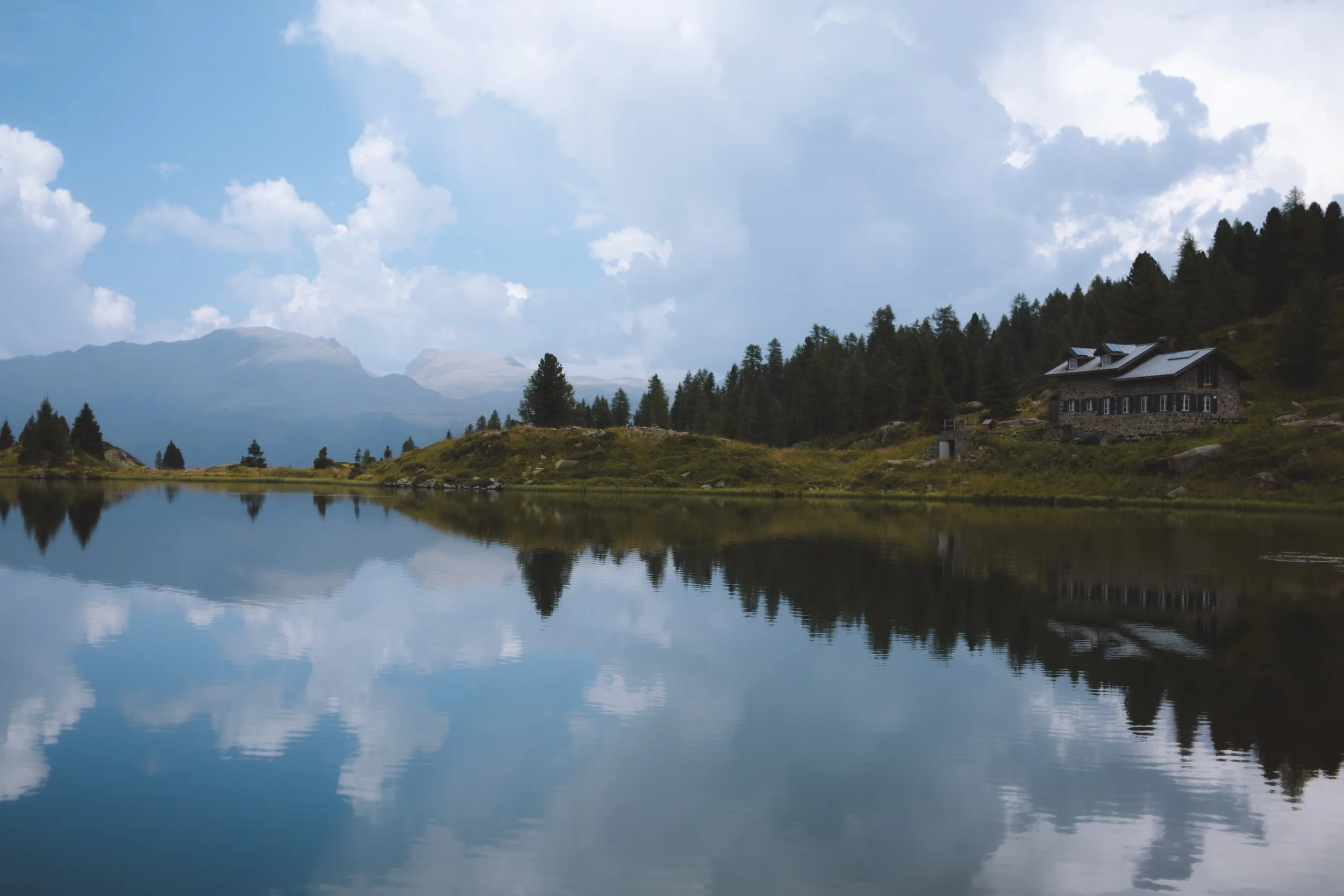
View from our bedroom patio.
*Please note that some of the links above are affiliate links, and I may earn a small commission on any purchase made - at no additional cost to you. As always, all ideas and opinions expressed in this post are entirely my own. Thank you for your support!
Like this post? Pin it for later and share it with others!