The Walker’s Haute Route - the ultimate guide to hiking the Haute Route from Chamonix to Zermatt
Hiking the Haute Route (also known as the Walker’s Haute Route: Chamonix to Zermatt) had been on my bucket list of hikes for years. And I figured when I eventually got around to doing it, I would spend a season training and prepping and planning… as I likely should have.
Unfortunately that is not what came to transpire. My friend Mike and I booked a month in Europe on a whim a week out with no plans or directions, simply a flight in and out of Zurich for the month of September. And the idea popped into my direct messages on Instagram: a reminder of this hike.
So, with less than a full week to plan and prepare for it… we set out on the Walker’s Haute Route. I go into more of the why’s below in my Haute Route Guide. But this is effectively a list of everything I should have known going into this hike and, for the information I can not provide - where to find it.
This was not an easy hike and should not be taken lightly (most of the people I spoke to had attempted but not completed the route). But there’s a reason it’s one of the best hikes in the world. It was some of the hardest and most rewarding ten days of my hiking career.
Before I get into this, just a general disclaimer that I did my best to put together all of the information I learned/found to the best of my ability. It is, to my knowledge, accurate as of Autumn 2021 when I hiked the Haute Route. I am not a professional guide - just a girl who wants to see more people get out and do cool things!
More Haute Route Tips:
Haute Route Packing Guide
Haute Route Part 2 (Chamonix to Zermatt)
6 Amazing Swiss Mountain Huts
One Month in Switzerland - Packing Guide + More


The Walker’s Haute Route Map
What is the walkers haute route?
The Walker’s Haute Route (walk in this context is more akin to hike, and is used to differentiate between the winter alpine route) has been named one of The World's 10 Best Treks. La Haute Route (the high route) begins in Chamonix, France at the base of the Mont Blanc Massif, through Chamonix Valley and the Swiss Alps, and finishes in Zermatt, Switzerland where the Matterhorn towers above. It is regarded by many as the most magnificent hut-to-hut hiking trail that the Haute Route Alps has to offer.
As with most multi-day trails in the Alps there is a “main / classic” route and then many variations, shortcuts and detours for hikers to choose from on the networks of mountain paths. The main route is:
Difficulty: Medium-high
Distance: 213km / 132mi
Duration: 10-15 days (13 at steady pace)
Highest point: 2,987 m / 9,800 ft
Total elevation gain: 14,000 m / 46,000 ft
Average day: 10-15 km/6-9 mi over 6-8 hours with an elevation gain of 1,400 meters / 4,600 ft
Number of mountain passes: 11
By including alternative routes, it’s possible to shorten the trail by up to 40 km / 24 mi and reduce your total elevation gain by 3,000 m / 9,850 ft (2 mountain passes), or, increase it by a further 15km / 9 mi. These differences combined with the different speed and experience of hikers means that it can take anywhere from 6 to 15 days to complete the journey from Chamonix to Zermatt.

Haute Route Map
When to hike the Haute Route?
Mid-July to mid-September seems to be the consensus on the best time for the Haute Route Season. Early to mid-September is an especially enjoyable time to be on the Haute Route hike since September typically has less rain and a more stable weather pattern than either July or August, but the days are a lot shorter as the season goes on.
Accommodation in huts is often full during July and August (and have limited capacity during COVID times) so plan to book those in advance. However, by mid September a number of the huts along the route begin to close - but those that were open seemed to be available with a day or two notice (especially during the weekdays).
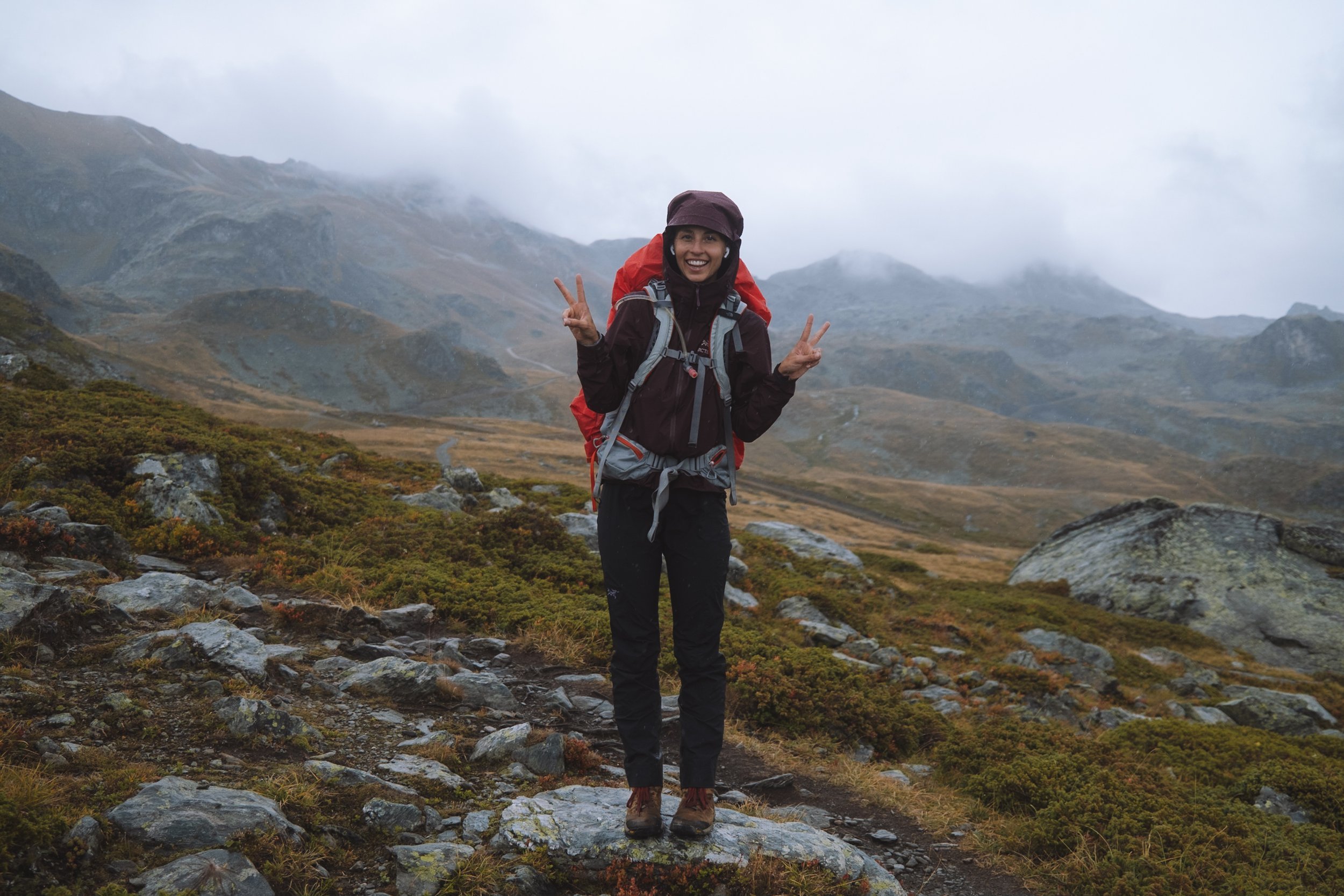
We started our hike September 8th, 2021 and had overall impeccable weather, two days of rain but a few of the huts we would have stayed in were either full or closed for the season already.
The Haute Route
How long does it take to hike the Haute Route?
The most common itinerary takes 12-14 days to walk the Haute Route. It can be condensed into fewer (we did it in 10 because of time/weather conditions and it was hard) or stretched into longer for a more relaxed/enjoyable pace. We found it to be rather expensive in Switzerland so adding in more days will increase your costs as well - something to consider.
I go into my exact route on my “My Walker’s Haute Route” blog and do not necessarily recommend it for everyone. However,The Hiking Club (who helped me plan my route - more about that below) created the below table for what the standard, 14 day, Walker’s Haute Route from the Cicerone guide book would look like in terms of distance, elevation gain and loss, estimated daily hiking times and nightly stops.

Our Hiking Club custom route
Is it safe to hike without a guide or as a solo person (male or female)?
One of the main questions about this trail is: can you do the Haute Route without a guide?
100% yes. Hiking the Haute route without a guide is what most people do. There was not a second on this trip that I felt unsafe and in the summer a mountain guides are not necessary. Most of the trail had cell phone service and there are people everywhere (nothing more demoralizing than 9 hours of extremely difficult hiking to meet up with a family of 5 piling out of a mini van).
The huts were safe and the staff, fellow hikers and alpinists were so friendly; everywhere we went people were offering us stories about their self guided haute route experience, as well as really cool information about the hut, the mountains or the region and even a few glasses of wine and cups of espresso.
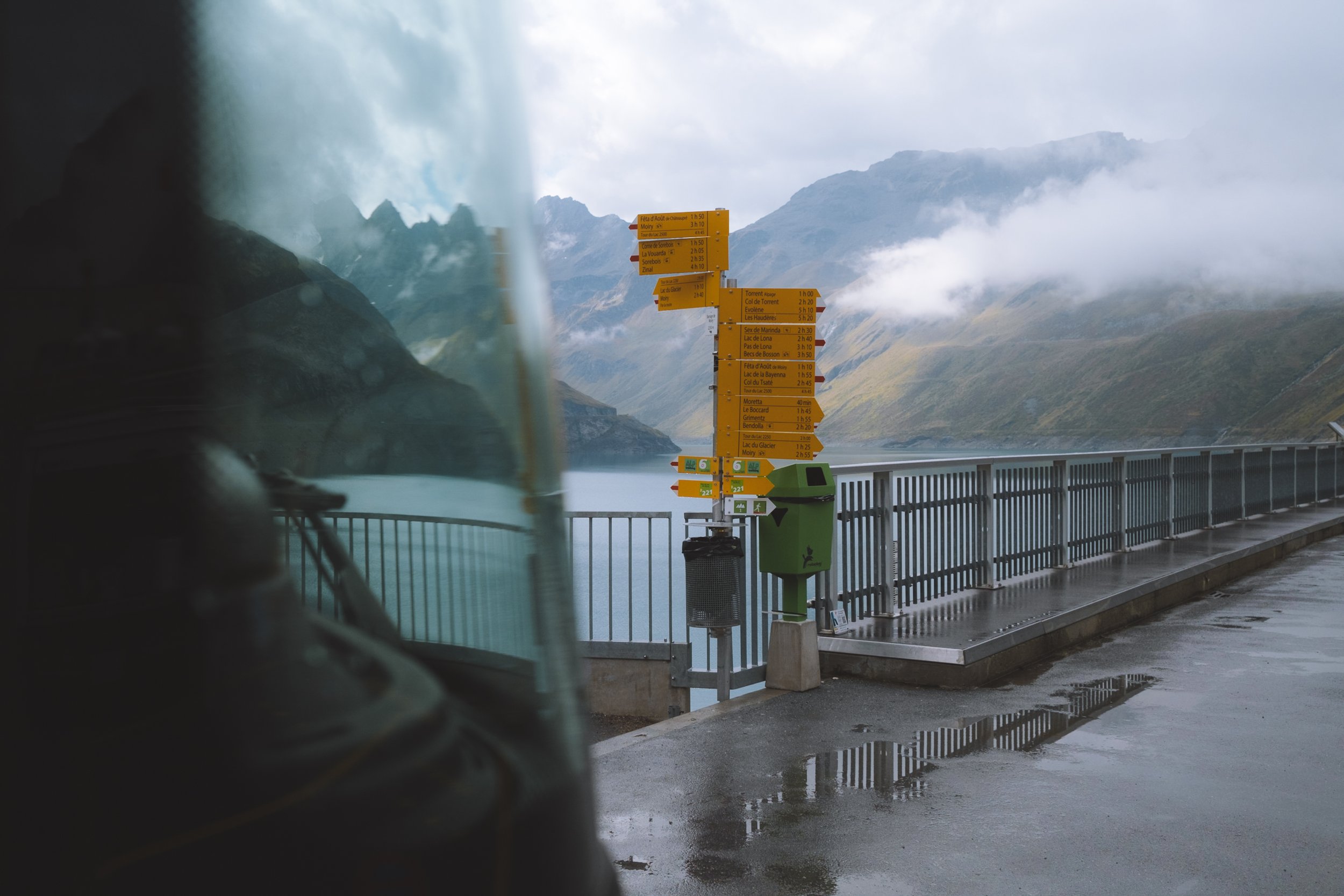
Almost all of the trail is marked (red and white for easy trail, blue and white for more challenging terrain) with signs indicating direction and hiking time to the next point of interest(examples below). We also had a gps map on our phone if we wanted to triple check anything.
As a note, in North America I find those time/distance signs time estimates to be pretty slow - in Western Europe they are accurate for a quite quick hiker.


Where to fly into for the Haute Route?
Most people fly in and out of Geneva as it is the nearest airport to both ends of the hike. We flew into Zurich and took the train to Chamonix and then took the train back to Zurich from Zermatt.

Traveling by train from Zurich to Chamonix
How did you decide on a route?
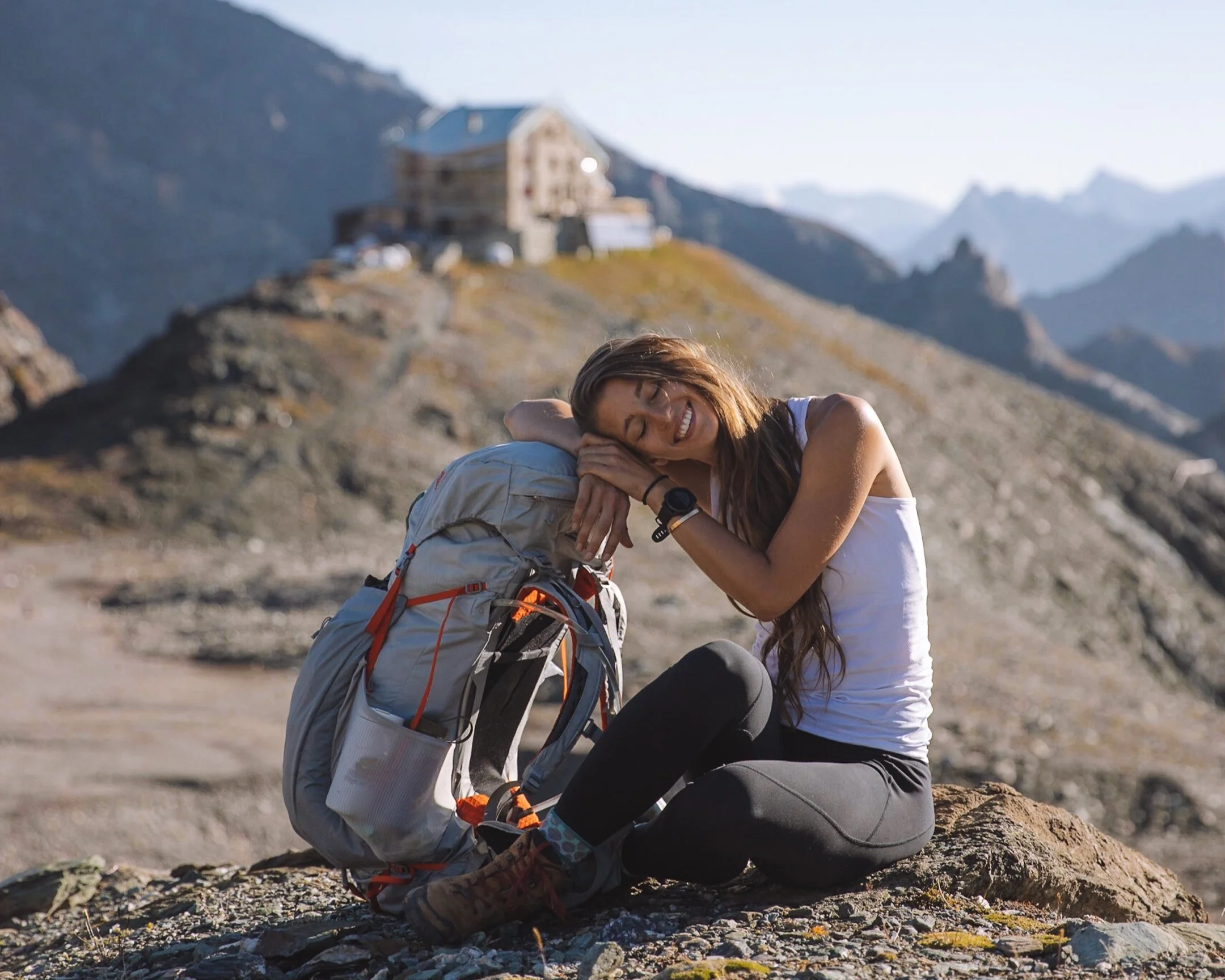
As mentioned above, The Walker’s Haute Route hike isn’t one single established trail but more of a starting and ending point with braided routes within. You can choose your path to have more or less distance and elevation, pass through towns (or avoid them) or to see specific sights along the way(for us, it was a full day detour for Mike to see a specific Alpine Hut he wanted to photograph- photo below).
We built our route with The Hiking Club - for €79.00 they will help you plan your trip down to the smallest detail. They will provide access to a planning portal from which you will be provided a personalized itinerary, interactive GPS map (including recommended grocery stores, restaurants, pubs and coffee shops along the route and pricing for different transportation options as well as which stops to get on/off of) and support (if need be) while on the trail.
We simply filled out a questionnaire in the portal regarding how many days we wanted to be on the trail, how far we wanted to hike each day (we overestimated this), which mountain huts were important that we saw and if we wanted to take additional transportation (such as gondolas, busses, funiculars and trains) when available. Based on our answers we were given a route with the option to change things or customize based on how we felt - we did swap out a few days.
Once we figured out the best route we were provided with a personalized itinerary (this can be found on my My Haute Route blog) and an interactive GPS map that pops up on the app maps.me (if you are unfamiliar with this app - I highly recommend using it). We were also able to WhatsApp with The Hiking Club and added in a rest day and then they helped us mash two days of hiking into one exhaustingly long day (our choice).
There is also the option for Accommodation Booking Support for an additional fee. The Hiking Club will book all accommodations that are not available to be booked online for you (and will call to check availability and swap days if need be). The cell phone service isn’t always great on the trail and a lot of the smaller huts (the best ones) do not take online/e-mail reservations.
And if the above information isn’t confusing enough, there are 6 major trails in this region (the Haute Route hike being one of them). Click the map below for a brief overview of all of options. You can combine any of these trails and build your own adventure. There are so many trails in Europe.
Can you camp instead of staying in huts?
Yes, absolutely. A number of the other Haute Routers that we saw were doing a combination of camping and huts. The Hiking Club can plan your route based on camping vs. huts vs. hotel and even by price.
For example, one of the hotels we were slotted into was over $700 per night which was not within our (my) budget so we ended up hiking into a nearby town and staying there instead.
We personally love camping but opted out of it on this trip for two reasons:
We wanted to experience the European hut system and;
Our bags were already very heavy (without camping and cooking gear) and we were doing it in a shorter amount of days than most with very short days so knowing our limitations we decided that it was worth the financial cost to us.
You didn’t hear it from me, but there are technically two ways to camp:
OfficiallyOfficial campsites along the route are situated at Chamonix, Argentière, Le Peuty, Col de Forclaz, Champex Lac, Arolla, Zinal, Randa and Zermatt. These get a little busy during the summer months but they are cheap (between 10 and 15 CHF per night), and generally offer some (or all) of the following services: WiFi, kitchen, laundry, showers, and plug ins for your electronics. Not your North American campgrounds by any means.
Not-so officially: “Wild camping” is not legal, yet is possible in the higher, undeveloped areas. It is more commonly referred to as “Bivouacking” or “camping between dusk and dawn with a non-permanent structure, such as a tent, in a non urban area (above treeline)” - there are a number of areas along the route that this is strictly forbidden. The below button provides a lot more information.
Regardless, stay in at least a few huts. They are worth the splurge for the experience (and food) alone.
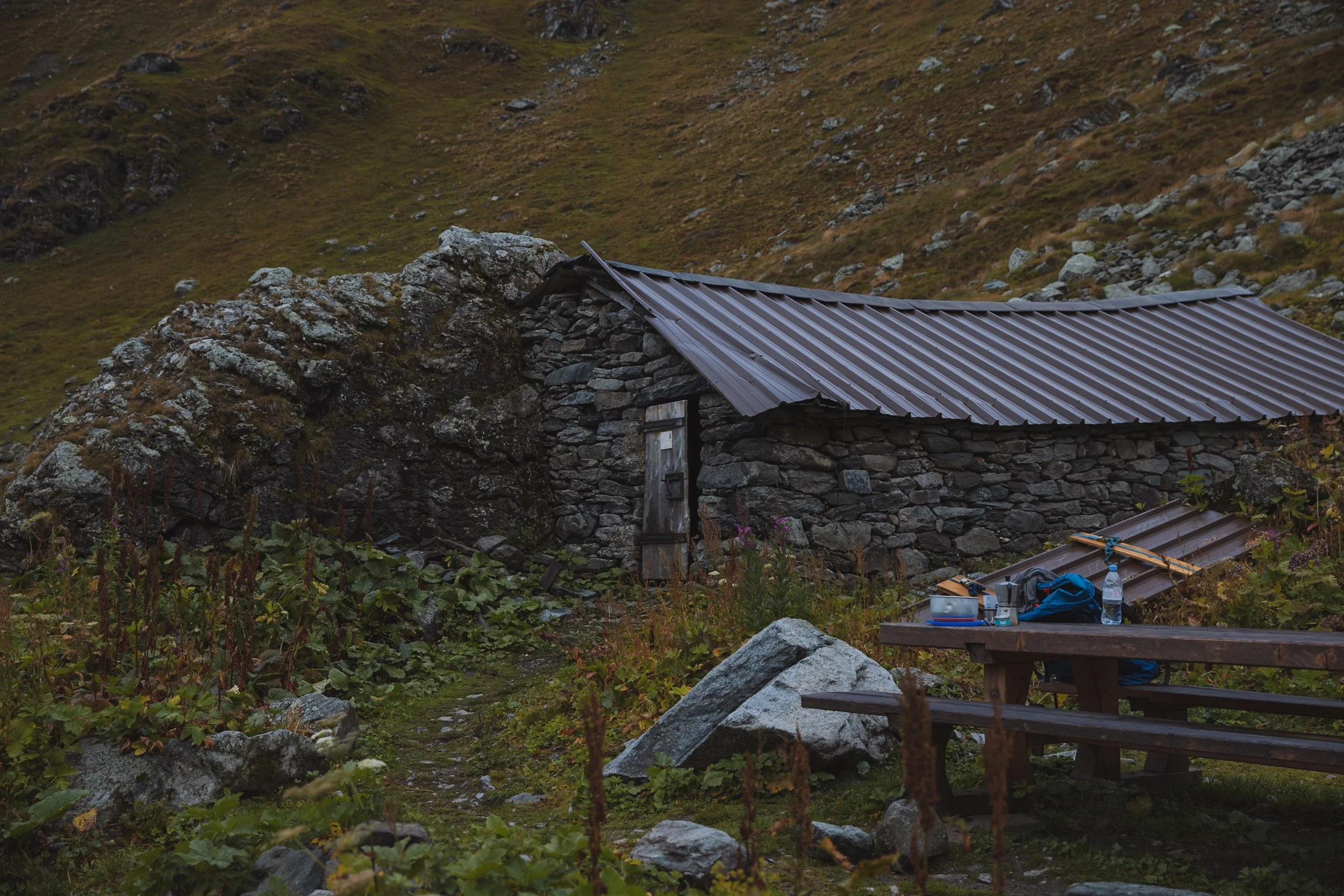
I do not have any camping photos, as we did not camp, but one morning we came across people who clearly had. On the less-than-legal side.
What are the mountain huts/refuges like?
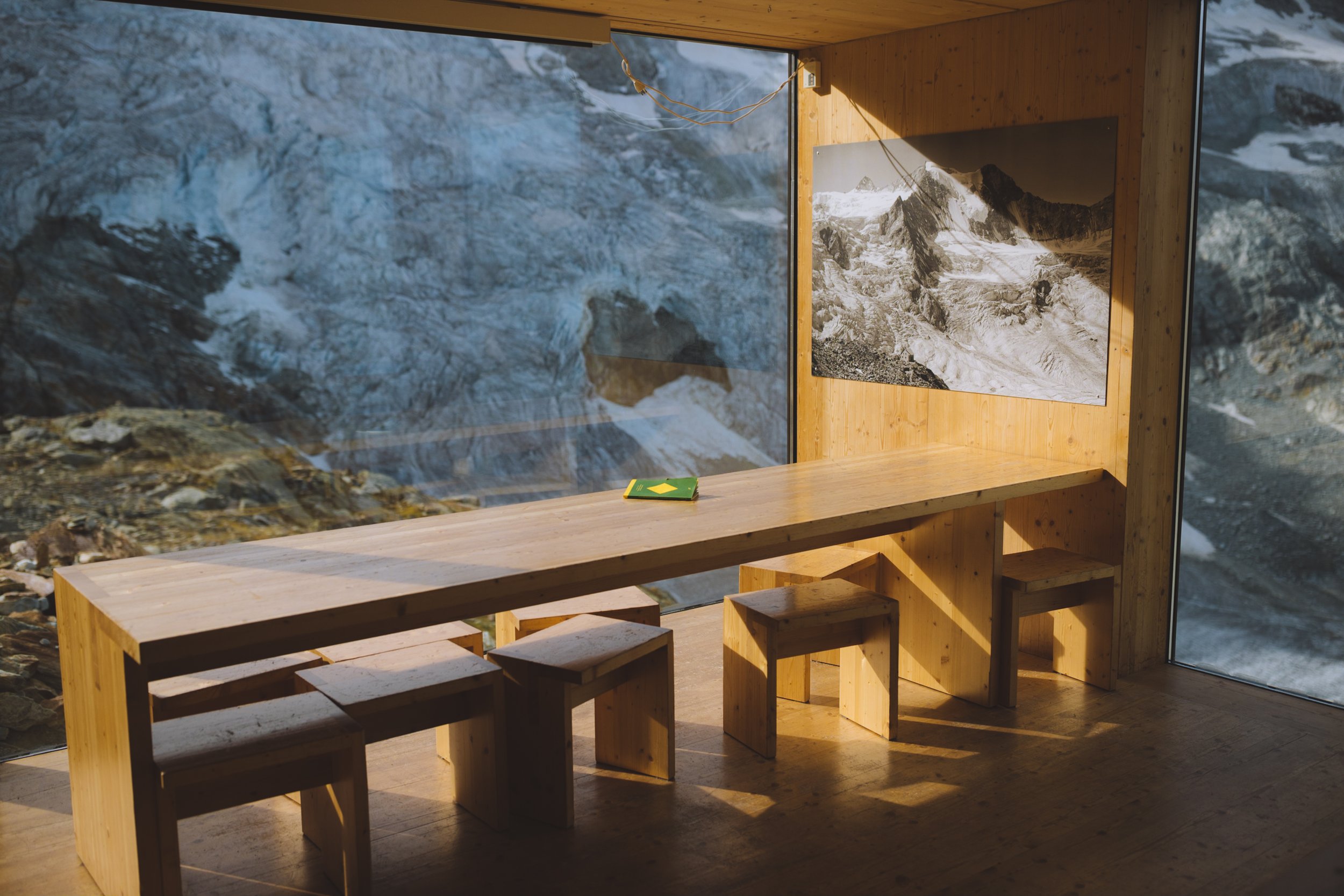
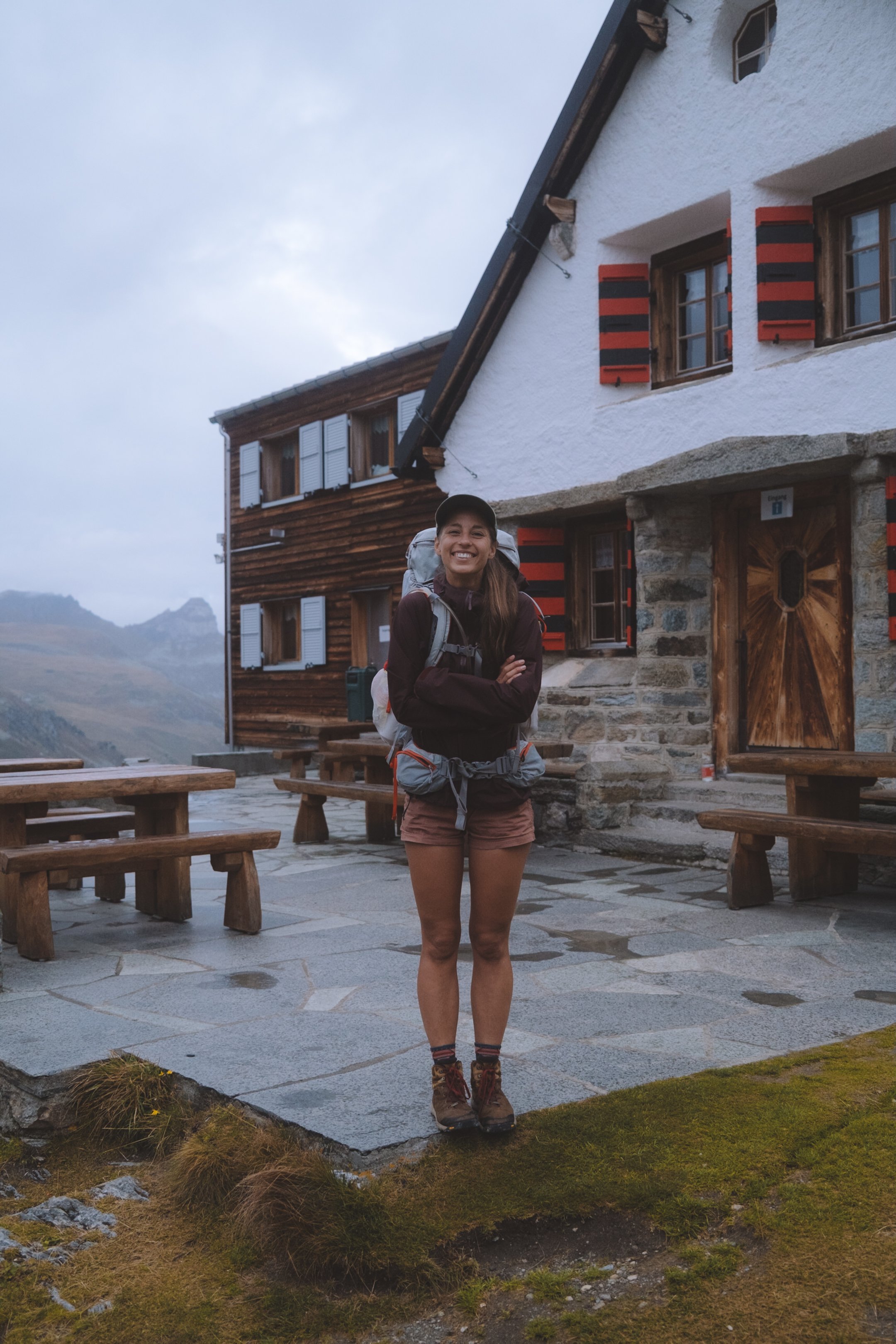
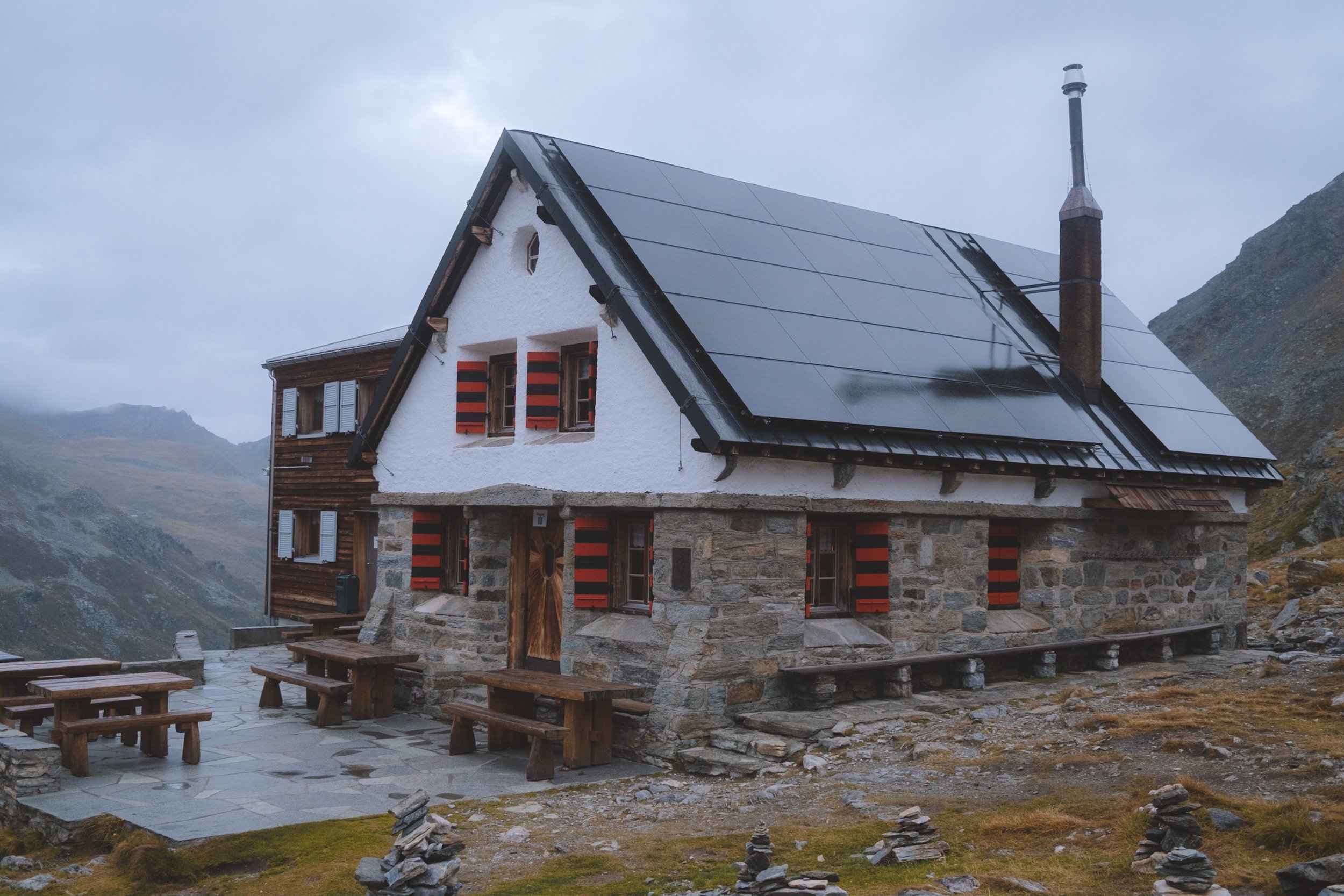
Mountain refuges on the Haute Route walk are nothing like North American hiking huts. They range from high alpine hotels to more dormitory style rustic hostels. Most along the Haute Route are found in remote locations or high altitude that can only be reached by foot or helicopter.
The rooms in the huts are large and contain anywhere from 4-16 beds(generally bunk beds stacked two or three high) However, with COVID protocols Mike and I were often alone, or would find one other group of hikers in our rooms. Only once fully occupied.
You’ll be provided with a mattress, pillow, and blanket, but you will need to bring your own sac à viande (meat bag or sleeping bag liner) and pillowcase. I outline all of this in my packing guide.
Most Haute Route refuges provide half-pension (also called demi-pension or half board). This includes your bed for the night, as well as dinner and breakfast. Dinner is often a lavish, multi-course affair.
They can typically cater to vegetarians, vegans and those with gluten free diets with a few days notice. Breakfast is very simple and typically consists of cold cereal, bread with butter and jam, and tea/coffee.
Although you can bring your own food, I found the dinner to always be worth the cost - even if the breakfasts were very basic compared to what I am used to. Plus, it’s a very social time to swap stories with fellow hikers and alpinists alike.
The cost of these huts vary from 60 - 150 CHF per night including half-pension.
Notes that apply to some, but not all, of the huts:
Alcohol and snacks can be purchased a-la-carte.
A packed lunch can usually be ordered for the next day (around 15 CHF)
Electronic charging may be an additional fee
Showers are typically 5 CHF/5 minutes
There is no wifi and most have extremely limited cell phone serve, or none.
Not all have potable water, we brought a SteriPen for these but bottled water can also be purchased
Bed bugs have been reported in some huts, call in advance
Bathrooms are shared
The huts get really warm, even at low capacity.
People snore, bring good quality earplugs.




What languages are used along the route?
French is the most commonly used language along the route. We crossed into the German part of Switzerland on the very end of day 8. I speak French and it was helpful albeit not necessary - the vast majority of people know at least little English.
Just be extra patient and appreciative - remind yourself often that if they are speaking English to you that they are doing you a favour as it is their country in which English is not one of their native tongues. And download a translation app - it helped us a lot the last few days.
What do you eat on the Haute Route?
On our overnight stays in huts we purchased “half board” - mentioned above. Fun fact, we learned on day three that you can ask for a second helping of dinner - or third which was the case with some pretty hardcore mountaineers we ran into. For lunch we would stop in towns and pick up supplies - one of the best ways to keep your costs down.
A few days we stopped at huts and purchased lunches but found them to be relatively expensive and really small portions. Two of the days we brought dehydrated meals as we had our JetBoil for coffee with us anyways and those days were extremely long (we wanted extra calories) and we weren’t passing through any significant towns at the time we would need to eat. Also note that in Switzerland most stores close over lunch and close for the day at 6pm.
At a restaurant or mountain hut:
Beer: 5 CHF
Coffee: 5 CHF
Pastry (we had a lot of pie): 6 CHF
Packed lunch from mountain hut: 10-15 CHF
Sandwich from a mountain hut: 5-8 CHF
At a grocery store:
Ramen/Instant Meal: 2-3 CHF
Block of local cheese: 3 CHF (pro tip, keep these in your empty, cold coffee mug to keep them cold longer)
1 kg bag of granola: 3 CHF
Bag of nuts/trail mix: 2-8 CHF depending on the contents
Pre-packaged sandwich: 5 CHF
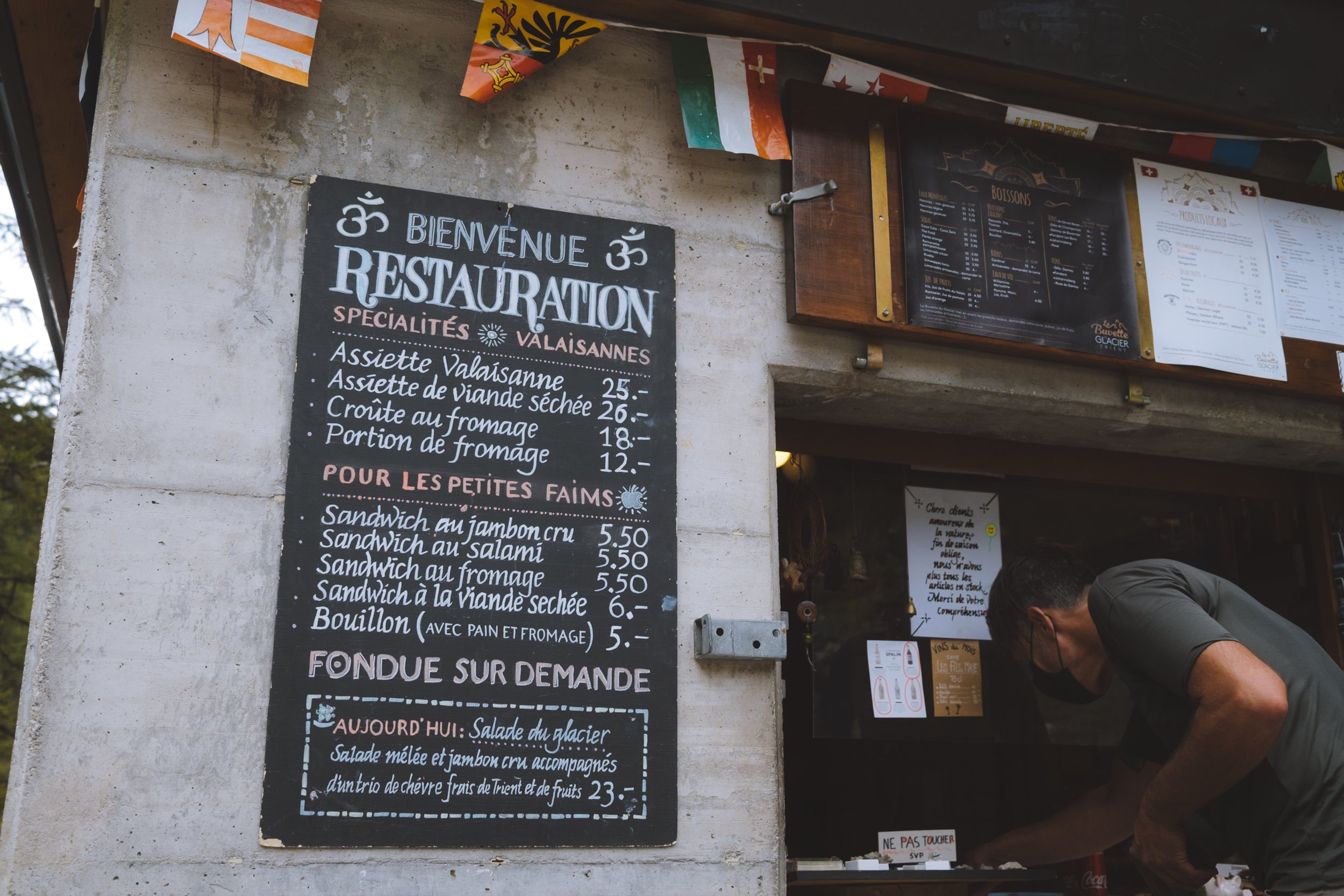
Notes from The Hiking Club about food
What to bring: snacks
I'm going to leave this to you to decide what to bring. I bring some muesli bars, nuts, chocolate and hydrolite with me as these are my baseline snacks no matter where I'm hiking in the world and pick up other snacks and things for lunch on arrival
Are there snacks on the Haute Route trail?
For your bigger snack/lunch restocks, supermarkets/convenience stores are located in the following villages on the trail Chamonix, Argentiere, Champex-Lac, Sembrancher, Le Chable, Verbier, Arolla, Zinal, St Niklaus, Zermatt
Snacks on the trail?
All the alpine huts (excl Refuge La Barma) will have a snack bar and drinks (both alcoholic and non alcoholic) for sale. Bakeries are located in the same small village stops that supermarkets are, however, some places will have small stand alone stores, such as Arolla
What I do for lunch?
I either plan to stop into a hut for lunch (omelette, soups and rosti are popular items on the menu!) or make my own using things I've picked up from the supermarket/bakery. Huts also sell a packed lunch for hikers to take with them each morning but I only typically order a packed lunch when I'm out of food/not near huts for lunch


Is there water along the trail?
Yes, unlike in North America, Europeans do not filter their glacial water (unless there is livestock around). There are small “fountains” all along the Haute Route trail and streams to fill up with that have potable water - I don’t think I ever needed more than 1L at any given time. Just remember to fill up before heading up a pass.
Some of the huts do not have potable water (as mentioned) so be prepared to purchase bottled water or, like I did, bring a SteriPen or other water filtration for those. And bring electrolytes with you. They are hard to find in Europe.
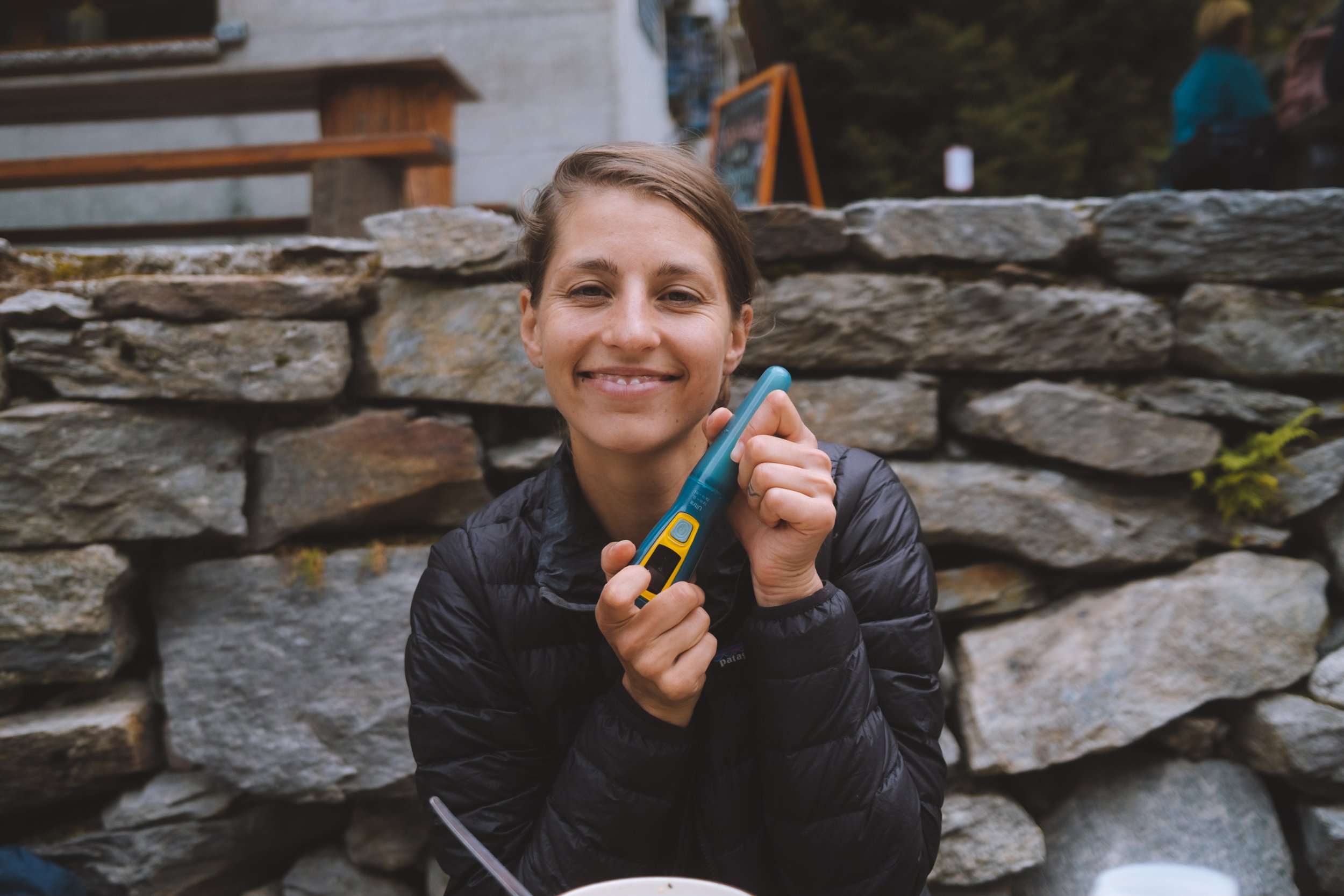
The only photo I have with my SteriPen haha. We got SO many confused looks pulling this out only North Americans filter all of their water
Will I need cash?
Yes! I would recommend bringing 150-200 of each CHF and euros per person with you when walking the Haute Route. Some of the huts did not accept credit cards and likewise with the lunch stops and busses. I have a hard time imagining what we would have done without cash or if we had to skip meal(s) along the trail.
A lot of the towns along the trails have ATMs and we would grab a little more cash any time we had less than 100 combined CHF and euro . We found that most places would accept either (begrudgingly) even if they had a preference for one or the other. USD is not accepted anywhere.
What to do with extra luggage?
This was one of our more stressful questions as we planned on staying in Europe past this hike and were not able to carry everything we needed on our backs. I mentioned we flew into Zurich and fortunately I had a friend from my time in corporate Canada who was living in Zurich and generously offered to let us store a bag in his apartment. (thanks Cale!)
However to most this is not an option, below are three services that may help:
Transfer Service: There are several companies that will transport your luggage directly from Chamonix to Zermatt and store it for you until you finish your hike. It is as convenient and secure as it is expensive. Taxi Follonier and Alpenwild seem to be the two major options but expect to pay around 400€ per item for this convenience.
Train: The SBB Rail Service offers a good option for transporting your bags to Zermatt from Geneva or Zurich (this option is only available in Switzerland - so you can not send bags directly from the resort of Chamonix) it costs around 12 CHF per bag and typically takes two days for bags to arrive at their destination. The train station in Zermatt holds bag(s) for five days at no charge before a 5€ per day fee after that. If you are staying in a hotel in Zermatt I believe you can also arrange for them to pick up and store these pieces. But don’t quote me on that one.
Post: If you have a few smaller unneeded items (such as an extra pair of shoes, clothes, laptop, etc), you may opt to mail your luggage from Chamonix to Zermatt. At the post office, look for a Colissimo box. For 46€, you’ll be able to send up to 5kg (box dimensions: 290x210x150mm) or for 56€ you can send up to 7kg (box dimensions: 400x275x195mm) directly to Zermatt with tracking numbers provided. You can also bring your own boxes. To have your package sent to the post office and held for you until pickup, you’ll need to address it to the Zermatt post office and indicate in the address that you want “Post Restante.” They will hold your parcel for up to two weeks. Detailed instructions and examples are available on the Swiss Post website.
So…how much does it cost to hike the Haute Route?
This was, of course, the biggest question. And my honest answer - far more than I thought it would. I am not used to paying to hike! But there is the breakdown of my own, personal, experience (and adding in a few ranges from what I found online).
Flights to/from Switzerland
This was $1,500 CAD roundtrip each Calgary - Zurich, we only booked a week out, with better planning could have found cheaper tickets. Most people fly into/out of Geneva - for us Zurich was cheaper and also our plan was to go to Austria and Italy afterward and Zurich put us into a better position for that.
Bag storage/transportation
I have a friend who lives in Zurich who generously offered to store our extra gear. So this for me was $0 but I have put options for bag storage or portering services above.
Transportation
We bought the Swiss train half fare card (30 days) at the recommendation of the ticket counter. It offers 50% off of all train, bus and boat fares in Switzerland and ended up saving us money in the end.
Swiss half fare card: 120 CHF
Train Zurich to Chamonix (at 50% off): 75 CHF
Train Zermatt to Zurich (at 50% off): 64 CHF
Misc bus/train/gondolas (some are unavoidable) : 50-100 CHF/person (cable cars/gondolas and funiculars are not included in the half fare card and can be quite expensive)
Meals and Accommodation on the Haute Route
Budget around 100 CHF per person per day if you plan on staying in Haute Route mountain huts and hotels - this includes half fare at the huts and purchasing lunch - or supplies for lunches at the grocery stores. If you are camping and cooking your own food budget around 30-50 CHF per day (if you like/plan on using dehydrated meals bring those from home, we found fuel for our stove in Chamonix (you can not fly with it) but the MRE supply was extremely limited and far fewer calories than we were used to in North America)
Other
We stayed in an airbnb Chamonix for two nights before the trek and wish we planned longer. Summer is the down season so there are a lot of really affordable airbnb options. The town of Chamonix is a really cool little town and I cannot wait to go back.
Zermatt: extremely expensive. But if you have the budget it is a great reward for finishing the hike. We stayed here and ended up getting gondola/train passes which were a godsend for getting up the mountain with minimal effort. We ended up working with the tourism board and they covered our hotel rooms for three nights the Christiania Hotels & Spa in Zermatt.
Phone plans : most EU phone plans will not work in Switzerland. We ended up finding a SIM card in Chamonix at “Sonnettes Sarl les” that for €65 (including activation) offered 20GB of data and unlimited local call/text for 30 days. ‘Local’ included Switzerland and the entire EU (it worked in France, Switzerland, Italy and Austria without issue). It also just jumped to the strongest network available - highly recommend.
Travel Insurance: we are both Canadian and purchased Manulife - it was $300CAD/year (you can only be out of Canada 30 consecutive days) and it included COVID coverage.
Breakdown
$1,500 CAD - Flights to/from Zurich
$300 CAD - travel insurance
$106 CDN ($212 total) - two nights in Chamonix
259 CHF - Train on and off the route
75 CHF - Misc transportation
150 CHF - Misc food/lunches
725 CHF (1,450 CHF total) - Huts and half board for 10 nights
€65 - phone plan
Total for my and Mike’s 10 day Walker’s Haute Route
~ $3,649 CAD* / $2,903 USD*each including flights, insurance and hotels on either end
~ $1,743 CAD* / $1,393 USD* each trail costs (including airport transfer)
*At the exchange rate in September 2021
The Hiking Club also does a breakdown of average costs on the webpage below.
Packing
For my full Haute Route Packing Guide - including what I ideally would have packed as well as what I packed in reality. Click here.
spoiler: I made every mistake possible on this front
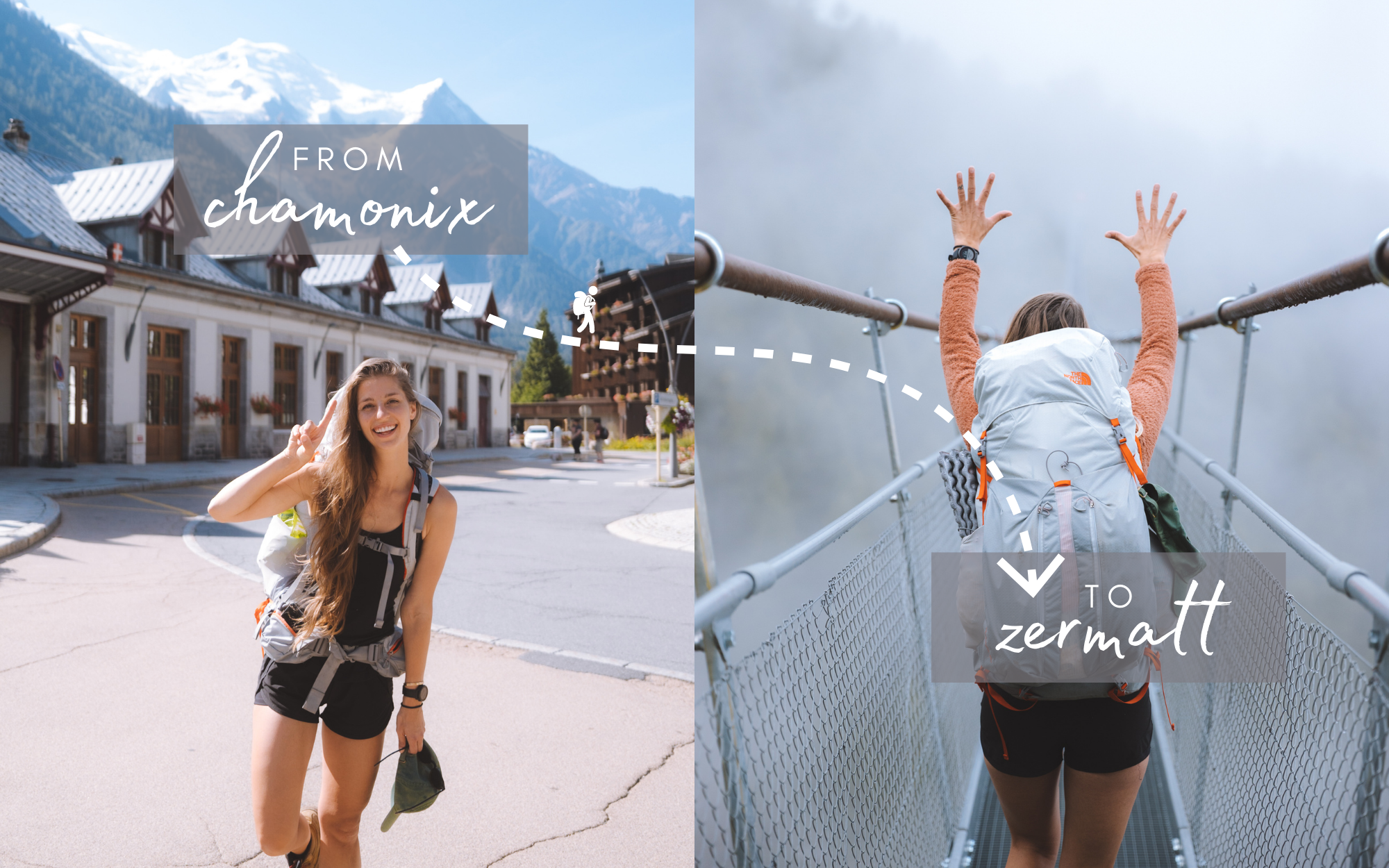
My haute route
And if you want to hear my. personal, firsthand journey on the trail including my exact route. You can see every step here. Also! My full GPS tracks are available by following me on Strava.
For avid hikers, outdoor enthusiasts and adventure seekers, the Haute Route really is one of the great hikes of the world. With amazing views, challenging trails and an experience like no other - there’s a good reason that the Haute Route is on every hiker’s bucket list.
*Please note that some of the links above are affiliate links, and I may earn a small commission on any purchase made - at no additional cost to you. As always, all ideas and opinions expressed in this post are entirely my own. Thank you for your support!
Like this post? Pin it for later and share it with others!